
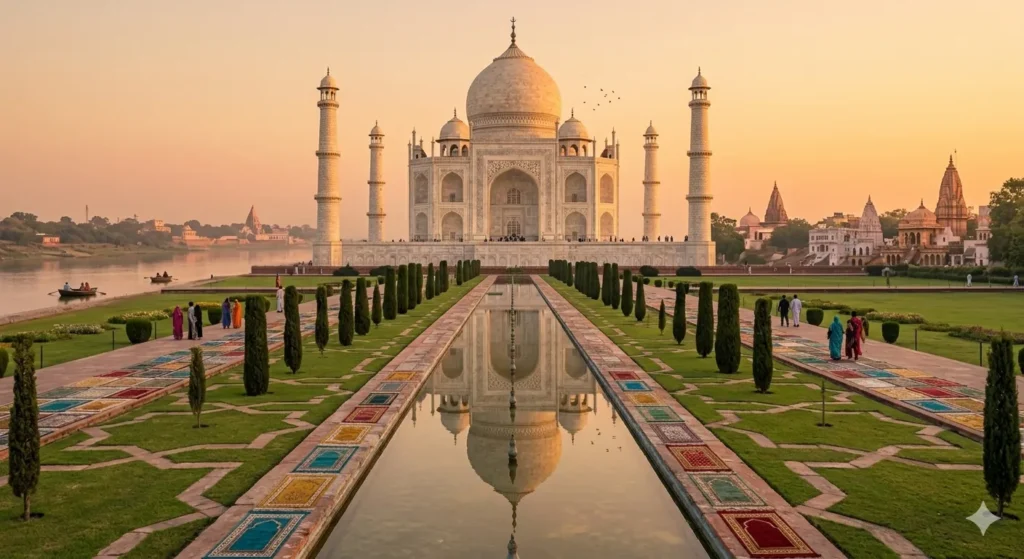
The best 10-day North India tour itinerary covers Delhi, Agra (for a Taj Mahal sunrise), Jaipur, Varanasi, and Rishikesh. This route combines Mughal history, Rajput architecture, spiritual experiences on the Ganges, and Himalayan adventure into one well-paced trip.
Beyond the Golden Triangle
The Golden Triangle, Delhi, Agra, and Jaipur, has been India’s most popular tourist circuit for decades, and it certainly earns its reputation. However, the traveler who extends the journey east to Varanasi and north to Rishikesh discovers something different: not just more India, but more kinds of India.
The Taj Mahal’s Mughal grandeur gives way to Varanasi’s 3,000-year-old spiritual intensity, which then transitions into Rishikesh’s Himalayan-adventure energy. Across five cities and ten days, you experience the full spectrum of what makes North India unlike anywhere else on earth.
A Sustainable Pace
This itinerary is designed for first-time visitors who want to see the essentials without feeling rushed. Two nights per city is the baseline, enough time to settle in, discover a great restaurant, and return a second evening because the first felt too short.
Here is how it works:
The Route for North India Tour 10 Days
| Day | Where | Key Experiences | Night |
| 1 | Delhi (Arrive) | India Gate, Connaught Place dinner | Delhi |
| 2 | Delhi | Red Fort, Chandni Chowk food walk, Qutub Minar, Humayun’s Tomb | Delhi |
| 3 | Agra | Gatimaan Express, Agra Fort, Mehtab Bagh sunset Taj view | Agra |
| 4 | Jaipur | Taj Mahal sunrise, Fatehpur Sikri, drive to Jaipur | Jaipur |
| 5 | Jaipur | Amber Fort, City Palace, Hawa Mahal, bazaars | Jaipur |
| 6 | Varanasi | Fly Jaipur–Varanasi, Ganga Aarti by boat | Varanasi |
| 7 | Varanasi | Dawn boat ride, ghats walk, optional Sarnath | Varanasi |
| 8 | Rishikesh | Fly or train Varanasi→Haridwar, taxi to Rishikesh, Ram Jhula evening | Rishikesh |
| 9 | Rishikesh | White-water rafting, bungee jumping, Beatles Ashram, yoga | Rishikesh |
| 10 | Delhi (Depart) | Morning meditation, drive 5hrs to Delhi, depart or night in Delhi | Delhi/Flight |
Transport Overview
One domestic flight from Jaipur to Varanasi anchors the middle of the route; the rest of the journey is completed by train or private car. The Gatimaan Express (Delhi to Agra, 100 minutes) remains one of India’s fastest and most comfortable trains. For 2026, expect to pay approximately ₹900–₹1,200 for an AC Chair Car (CC) seat and ₹1,700–₹2,100 for Executive Class (EC), depending on booking time.
To travel from Varanasi to Rishikesh, you can either take a domestic flight to Dehradun (via Delhi) or opt for the overnight train to Haridwar. Choosing the overnight train not only saves on a night’s accommodation but also provides the quintessential experience of an Indian sleeper train, a perfect way to transition into the spiritual atmosphere of the Himalayas.
Days 1–2: Delhi

Two days is a comfortable amount of time for Delhi if you use them well.
Day 1: The Mughal Heart (Old Delhi)
Focus on Old Delhi, the Mughal city built by Shah Jahan in 1638. While modern roads surround it, the areas tucked behind them have remained remarkably unchanged.
- The Red Fort: This massive sandstone fortress anchors the city (₹35 for Indian citizens; ₹550 for foreign nationals).
- Jama Masjid: A 5-minute walk away, India’s largest mosque provides a stunning spiritual extension to the fort.
- Chandni Chowk: Complete the day with a food walk through Paranthe Wali Gali and the Old Famous Jalebi Wala. These lanes offer a concentration of flavors you won’t find anywhere else in India.
Day 2: New Delhi & Ancient Monuments
Spend the second day exploring the monuments built by the British and the dynasties that preceded them.
- Qutub Minar: Built in 1193, this 73-meter minaret features an ancient iron pillar that hasn’t rusted in over 1,600 years.
- Humayun’s Tomb: Completed in 1572, this was the architectural precursor to the Taj Mahal. Visiting it before you head to Agra makes the evolution of Mughal design clear.
- Lodhi Garden at Sunset: End your day here, where 15th-century tombs sit nestled within a public park used by Delhi families as a vital green space.
Pro Tip: Don’t underestimate the second half of Day 2. Many first-time visitors spend it exhausted in their hotel, but those who push through to see the Qutub Minar and Humayun’s Tomb will understand Delhi with a much deeper perspective the next morning.
Day 3: Delhi to Agra
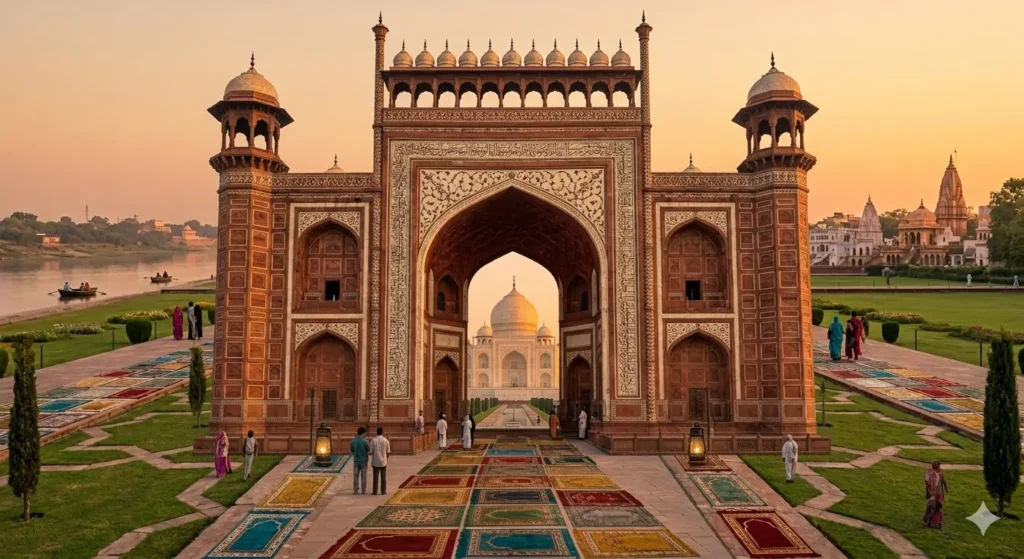
The Journey: Delhi to Agra
The Gatimaan Express departs Delhi’s Hazrat Nizamuddin station at 8:10 AM and pulls into Agra Cantt at 9:50 AM.
- Duration: 100 minutes.
- Speed: 160 km/h.
- Service: Breakfast is served at your seat.
This is one of India’s great short train journeys. While the landscape is mostly flat Yamuna plains and the occasional village, the train itself represents the cleanest and most efficient way to move between two of the world’s most iconic heritage cities.
The Strategy: Building the Anticipation
Do not go to the Taj Mahal today. Save that experience for tomorrow’s sunrise. Instead, follow this path to understand the history first:
The Experience: While the crowds gather inside the Taj Mahal complex, you can enjoy one of the finest views in Agra, the monument catching the golden hour light across the water—without the noise or vendors.
Agra Fort: Visit the fort that served as Shah Jahan’s palace before it became his prison. Stand in the Musamman Burj tower, where he spent his final eight years gazing across the Yamuna at the Taj Mahal he built for his wife. Seeing the monument from his perspective changes how you will view it the next morning.
Late Afternoon at Mehtab Bagh: Head to this “Moonlight Garden” on the north bank of the river, directly opposite the Taj.
Entry: Approximately ₹300 for foreign nationals.
Day 4: Taj Mahal Sunrise, Then Jaipur
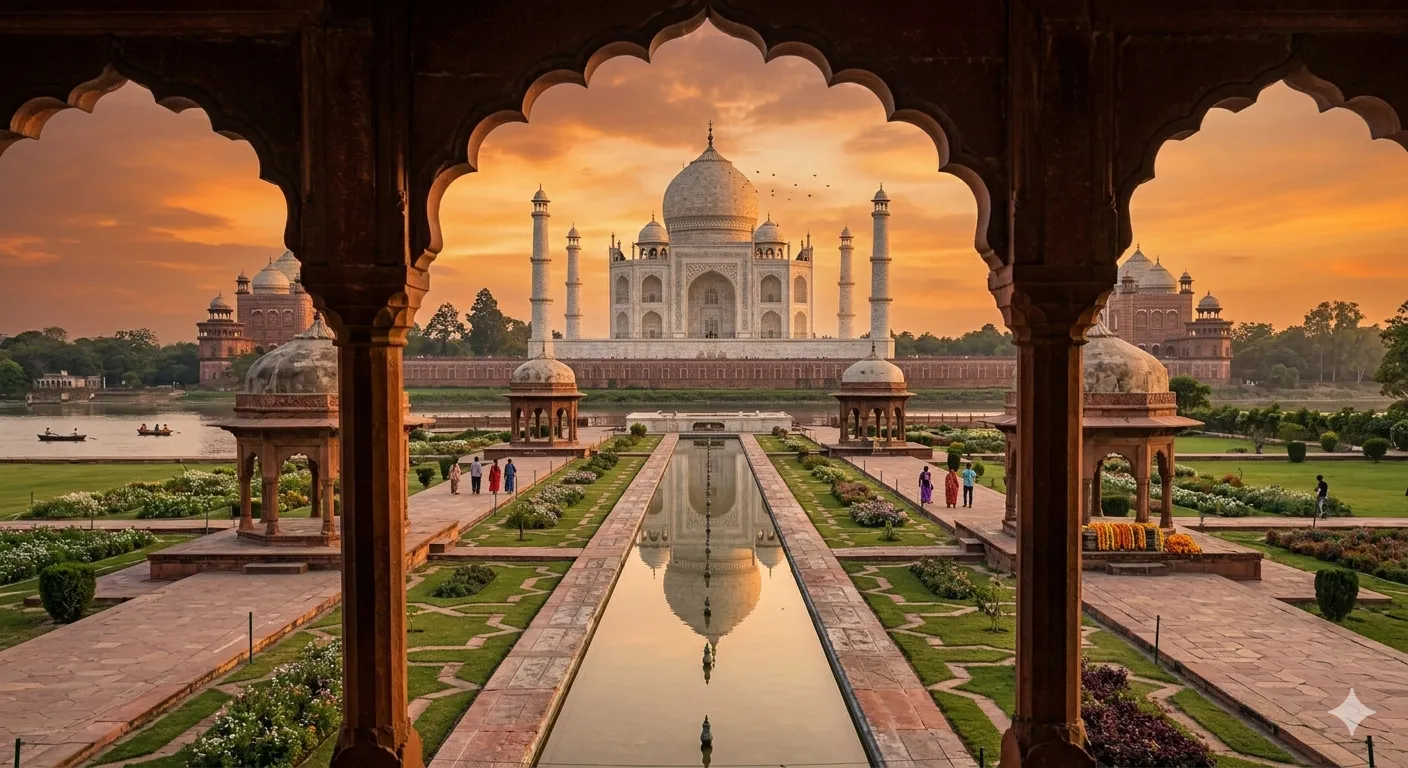
5:00 AM: The Sunrise Experience
A 5:00 AM alarm is worth every second. The Taj Mahal gates open 30 minutes before sunrise; aim to be in position at the central reflecting pool by 6:15 AM.
What happens in those first 90 minutes is the experience most visitors describe as the highlight of their trip: the marble shifting from grey-blue to silver and finally to pink-gold, while the reflecting pool remains undisturbed. In these early hours, you are sharing the complex with only a few hundred people rather than the usual 15,000.
Afternoon: The Ghost Capital
After your sunrise visit, drive southwest to Fatehpur Sikri (approximately 45–60 minutes).
- The History: This was Emperor Akbar’s “ghost capital,” built in 1571 and abandoned in 1585. It remains perfectly preserved in red sandstone exactly as it was left.
- The Landmark: Look for the Buland Darwaza, a massive gateway standing 54 meters tall.
- The Guide: Hire a government-approved guide at the entrance (₹800 is the standard rate). Without one, you are merely looking at impressive ruins; with one, you are understanding a lost civilization.
The Transit
From Fatehpur Sikri, it is a 3.5-hour drive to Jaipur. You will arrive in the “Pink City” by early evening, just in time for dinner.
Day 5: Jaipur
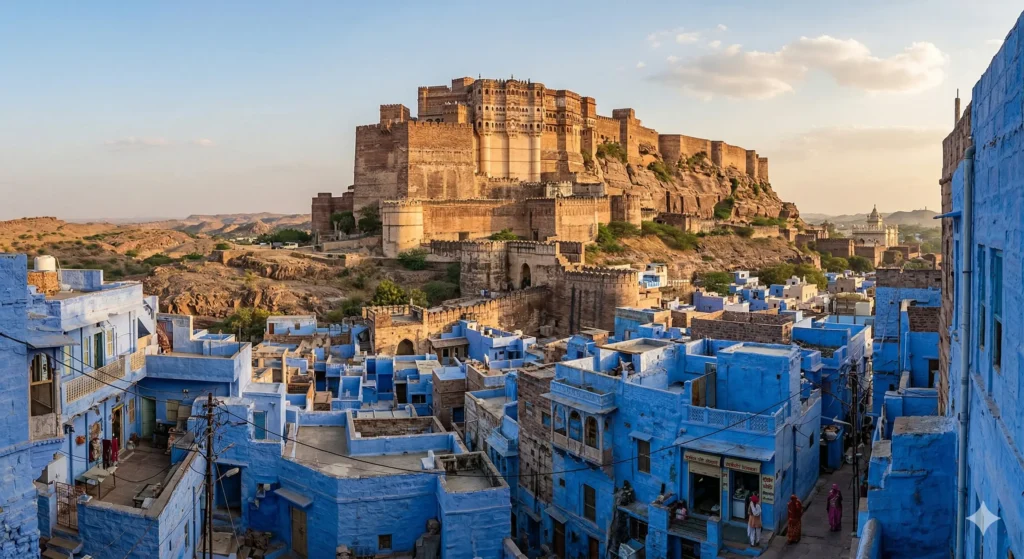
Morning: Fortresses and Mirrors
Start at Amber Fort before 9:00 AM to beat the crowds.
- The Highlight: The Sheesh Mahal (Hall of Mirrors) is the true crown jewel. Its walls and ceilings are inlaid with thousands of mirror fragments, designed to amplify a single flame into a room full of stars.
- The Experience: When your guide switches off the electric lights and holds up a small flame, the chamber transforms into one of the most beautiful interiors you will ever stand in.
Afternoon: Science and Royalty
Return to the city center to explore the heart of Jaipur:
- City Palace: Visit the museums to see the extraordinary silver urns—the world’s largest silver objects. They were commissioned by a Maharaja who refused to drink anything but Ganges water, even while traveling in England.
- Jantar Mantar: An 18th-century observatory featuring stone astronomical instruments that could predict eclipses with stunning accuracy 300 years ago.
- Hawa Mahal: For the best view of the “Palace of Winds,” head to the coffee shop directly across the street for a perfect photo opportunity of the iconic honeycomb facade.
Late Afternoon: The Bazaars
Jaipur’s markets are a sensory feast. Focus on these three:
- Johari Bazaar: Famous for gemstones and jewelry; even the window shopping is extraordinary.
- Anokhi: The gold standard for high-quality, block-printed textiles at fair, fixed prices.
- Bapu Bazaar: The best place to find traditional leather mojris (footwear).
Pro Tip: Jaipur is a city that gives back in proportion to the attention you give it. One full day of focused exploration is far more rewarding than two days of half-hearted engagement.
Also Read: Rajasthan Travel Guide: The Complete Handbook for India’s Royal Desert State
Days 6–7: Varanasi

The flight from Jaipur to Varanasi takes approximately 90 minutes, but you land in an entirely different India. It isn’t just different; it is older. Varanasi has been continuously inhabited for over 3,000 years. The ghats, the temples, the cremation fires of Manikarnika, and the Sanskrit chanting that begins before dawn have remained fundamentally unchanged for millennia.
Evening: The Ritual of Fire
Your first evening should be spent at the Ganga Aarti at Dashashwamedh Ghat.
- The Logistics: Experience this from the water. Hire a rowing boat from Assi Ghat (expect to pay ₹400–₹600 per person for a shared boat).
- The Ceremony: At sunset, seven priests perform a synchronized fire worship ceremony with the precision of those who have dedicated their entire lives to this ritual. Watching from a boat at river level is one of the most powerful spiritual experiences India offers.
Morning: A Dawn Like No Other
The second day begins at 5:15 AM. For most travelers, the dawn boat ride on the Ganges is the memory they recount most vividly years later.
- The Atmosphere: As the light gradually arrives, the ghats emerge from the morning mist and pilgrims immerse themselves in the sacred river with total focus.
- The Witness: As you pass the Manikarnika cremation ghat, where the fires never go cold, please remember that photography is strictly forbidden. The only appropriate response is quiet witnessing, the most honest way to honor the site.
Afternoon: The Buddhist Connection
If you have the energy, take a 10-kilometer trip to Sarnath, where the Buddha gave his first sermon after attaining enlightenment.
The Sites: The Dhamek Stupa (dating to the 5th century CE) and the onsite museum, which houses the Lion Capital of Ashoka (India’s national emblem), provide a peaceful and meaningful complement to the intensity of Hindu Varanasi.
Also Read: Varanasi Travel Guide 2026: Ghats, Ganga Aarti, Dawn Boat Ride & Tips
Days 8–9: Rishikesh

There are two primary ways to reach the Himalayan foothills from Varanasi:
- The Efficient Route: A domestic flight from Varanasi to Dehradun (Jolly Grant Airport) via Delhi. This is the fastest option, placing you just 35 to 45 minutes from Rishikesh by taxi.
- The Atmospheric Route: The overnight train to Haridwar. This not only saves on a night’s accommodation but also provides the quintessential experience of an Indian sleeper train. From Haridwar, it is a 25-kilometer taxi ride (approximately 45 minutes) to Rishikesh.
Rishikesh: Adventure and Spirituality
Rishikesh is the point where the Ganga descends from the Himalayas, making it India’s adventure capital and yoga capital simultaneously. The town is built around two iconic suspension bridges that span the turquoise river:
- The Layout: The town clusters around Ram Jhula and Laxman Jhula. These bridges connect the spiritual quarter, filled with ancient temples, ashrams, and ghats, to the vibrant adventure hubs.
- The Activities: Whether you are looking for a sunrise yoga session in an ashram or the adrenaline of white-water rafting, bungee jumping, or ziplining over the Ganges, Rishikesh offers a perfect balance.
Travel Note for 2026: Please be aware that while Ram Jhula remains a primary pedestrian artery, the original Laxman Jhula is currently replaced by a modern glass-floor bridge nearby. It’s worth a visit just for the view of the river beneath your feet!
Day 9 is the active day.
Morning: The High-Octane Ganges
Rishikesh is the adventure capital of India, offering world-class experiences for every level of thrill-seeker.
- White-Water Rafting: The 16km Shivpuri-to-Rishikesh stretch is the gold standard. It features Grade III rapids and takes about 2 hours on the water. It is exhilarating yet safe for first-timers.
- Cost: Approximately ₹1,200–₹2,000 per person, including transport and equipment.
- Recommended Operators: Red Chilli Adventure and Aquaterra are the most reliable, long-standing operators in the region.
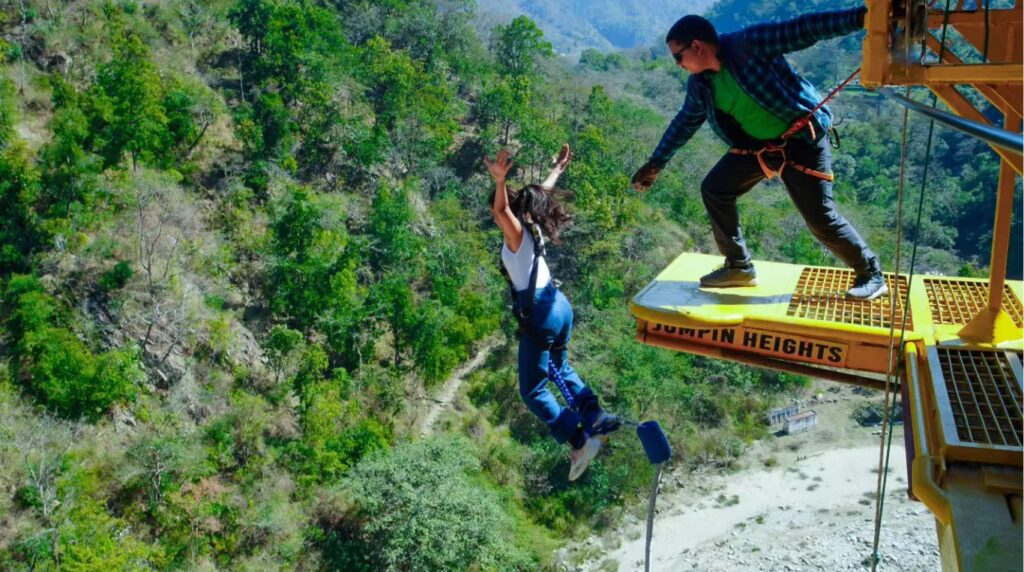
- Bungee Jumping:Jumpin Heights operates India’s highest fixed bungee platform at 83 meters over a dramatic gorge.
- Cost: Approximately ₹3,700 per jump (including a video of your leap).
- Pro Tip: Book at jumpin.in at least 24–48 hours in advance, as slots fill up quickly.
Afternoon: Music and Meditation
- The Beatles Ashram (Chaurasi Kutia): This is where the Beatles stayed in 1968 and wrote most of the White Album. Now a heritage site (Entry: ₹600), the meditation cells and vibrant street-art murals are incredibly atmospheric. You can still feel the specific musical history preserved within the forest.
- Riverside Yoga: Dozens of studios in the Laxman Jhula area offer 90-minute drop-in classes for ₹300–₹500. A sunrise session on a riverside platform, before the rafting boats hit the water, is one of the most peaceful ways to begin a day in India.
Dining: The Vegetarian Tradition
By deep religious convention, Rishikesh is a strictly vegetarian town. The food here is outstanding, particularly the South Indian restaurants that have flourished alongside the yoga community. Embrace the local flavors—the quality of the vegetarian cuisine here is often a highlight for even the most dedicated meat-eaters.
Day 10: Back to Delhi
The Journey Back to Delhi
Most travelers return to Delhi for their international flights. You have two primary options:
- By Road: The drive via NH58 and the Ghaziabad Expressway takes approximately 5 to 5.5 hours.
- Departure Timing: Leave by 9:00 AM or 10:00 AM for afternoon flights, or by noon for late evening departures.
- By Rail: Haridwar Station (25km from Rishikesh) offers Shatabdi Express services to New Delhi. The journey takes about 4 hours and is a comfortable, scenic alternative to the road trip if the schedule aligns with your flight.
Ten Days, One Lifetime of Memories
Ten days in North India. The Taj Mahal at 6:00 AM. The Ganga at 5:15 AM. Perhaps a tiger at Ranthambore if you extended your stay by two nights. White-water rafting and the Himalayan foothills to finish.
Most people who complete this route eventually return. Usually, it is for the lush South. Sometimes, it is for the desert forts of Rajasthan. Frequently, it is to go deeper into the Himalayas, because, as many discover, Rishikesh turns out to be the beginning of a conversation, rather than the end.
Frequently Asked Questions: North India 10-Day Tour
Is 10 days enough for North India?
Yes, for the essential circuit. Covering Delhi, Agra, Jaipur, Varanasi, and Rishikesh in 10 days is comfortable if you follow a structured plan: two nights per city, one domestic flight, and clear priorities at each stop.
However, this timeframe does not easily accommodate Rajasthan’s deeper desert cities (like Jodhpur or Jaisalmer) or extensive wildlife safaris. For those additions, a 14-day minimum is recommended to include the Golden Triangle plus 3–4 days split between Ranthambore and one desert city.
What is the best season for this itinerary?
October to March. North India’s heritage circuit is most enjoyable during the cool, dry winter months.
- Adventure Timing: Rishikesh rafting and trekking run from October to June but close during the monsoon (July to September) due to dangerous water levels.
- The “Sweet Spot”: November and February offer the best balance of pleasant weather, manageable crowd levels, and fair pricing. October is also excellent, as the post-monsoon clarity makes the Taj Mahal particularly photogenic.
What is the first booking I should make?
The Jaipur-to-Varanasi domestic flight. This is the most constrained route on the itinerary with fewer daily flights than the Delhi sectors. Prices fluctuate rapidly. Secure this as soon as your dates are confirmed—even before hotels or trains.
Can I add a tiger safari to this itinerary?
Yes, Ranthambore is a seamless addition. * The Route: After Jaipur on Day 5, drive to Ranthambore (3 hours). Dedicate two days to morning safaris, then drive to Agra (3.5 hours).
- The Result: This turns the trip into a 12-day journey.
- Pro Tip: April and May offer spectacular wildlife photography as tigers frequent the Rajbagh Lake to cool down. Aim to book Safari Zones 3 or 4 the moment the 90-day booking window opens.
Is this route safe for solo travelers?
Absolutely. This is one of the most solo-friendly routes in India. It features well-developed infrastructure, widely spoken English, and reliable app-based transport like Ola and Uber. Solo female travelers consistently rate the Varanasi ghats and Rishikesh as comfortable environments. Standard precautions—such as using verified cabs over unmetered autos and staying in well-reviewed heritage guesthouses—apply here as they do globally.
What should I book before arriving?
In order of urgency:
- Jaipur to Varanasi Flight: Book first (2–4 months ahead).
- Gatimaan Express (Delhi to Agra): Book 3 weeks ahead via IRCTC.
- Hotels (Peak Season): Book 4–6 weeks ahead, especially for Varanasi ghat-area stays.
- Bungee Jumping: Book at jumpin.in 3–7 days in advance.
- Taj Mahal Tickets: Purchase online 24 hours prior to skip the physical ticket window.
How do I get from Varanasi to Rishikesh?
You have two primary options:
Benefit: It saves the cost of a hotel night and offers the classic “Indian Railway” experience.
The Flight Route: Fly from Varanasi to Delhi (1.5 hours), then either drive to Rishikesh (5 hours) or take a connecting 45-minute flight to Dehradun (Jolly Grant Airport) followed by a 1-hour taxi.
The Overnight Train: Take the Kashi Vishwanath Express or Doon Express from Varanasi to Haridwar (12–14 hours).
Estimated Cost (2026): ₹1,100–₹1,400 for 3AC or ₹1,600–₹2,100 for 2AC.
WishToGo’s North India 10-day package starts at ₹55,000 per person for two people traveling together in mid-range accommodation, October through February. It includes all accommodation, private transfers, the domestic flight, licensed guides in each city, and 24-hour on-ground support.
Write to hello@wishtogo.in with your travel dates and we’ll send a detailed proposal within 24 hours.