
A Rajasthan travel guide typically includes Jaipur, Udaipur, Jodhpur, and Jaisalmer, along with desert safaris, forts, and palace stays. The ideal trip duration is 10–12 days, and the best time to visit is from October to March when the weather is comfortable for sightseeing.
You arrive in Jaipur to find a city bathed in pink. The fort towering above the town is crafted from sandstone that turns a deep amber at dusk. At your hotel, the staff greet you in vibrant saffron turbans, and the local cuisine offers a richness unlike anything you have tasted before.
Somewhere between the Sheesh Mahal and the Thar Desert, you stop trying to compare Rajasthan to anywhere else, simply because there is nothing to compare it to.
As India’s largest state by area, larger than Germany, Rajasthan is the land where the Mughal Empire and the Rajput warrior kingdoms erected their grandest monuments. It is a place where the desert environment has forged a culture of remarkable visual intensity, and where the tradition of hospitality runs so deep that it has manifested as a form of architecture. The palace hotels here are not mere museums posing as accommodations; they are the authentic residences of former Maharajas that now happen to accept reservations.
This Rajasthan travel guide covers everything you need to know: the best cities, a comprehensive 12-day itinerary, when to visit, where to stay, what to eat, and the specific nuances that elevate a good Rajasthan trip into a great one.
Table of Contents: Rajasthan Travel Guide
The Cities You Need to Know
| City | Why Go | Days Needed | Don’t Miss |
| Jaipur | India’s finest heritage city, forts, palaces, gemstone bazaars, and a 1727 grid plan that still works | 2–3 days | Amber Fort Sheesh Mahal, Jantar Mantar, Johari Bazaar at dusk |
| Udaipur | The most romantic city in India, lake palaces, Aravalli views, sunsets that don’t stop | 2–3 days | Lake Palace view from Ambrai Ghat, City Palace murals, Monsoon Palace sunset |
| Jodhpur | The Blue City, Mehrangarh Fort rising sheer from the rock, the blue lanes below | 1–2 days | Mehrangarh at dawn before crowds, Clock Tower market, Makhaniya Lassi |
| Jaisalmer | The Golden City, a living 12th-century fort, the Thar Desert, a camel at sunset | 2 days | Fort interior at dawn, Patwon ki Haveli, Sam Dunes overnight camp |
| Pushkar | Sacred lake town, 400 temples, one Brahma temple in the world, Camel Fair in November | 1–2 days | Ghats at sunrise, Brahma Temple, rooftop breakfast with lake view |
| Ranthambore | Tigers in a landscape where an ancient fort rises from the forest | 2–3 days | Morning Zone 3–4 safari, Rajbagh Lake, fort viewpoint from the jeep |
Strategic Planning Tips
- The “Surprise” City: While less visited than Jaipur or Udaipur, Jodhpur is often the highlight for serious travelers due to its compact nature and the unparalleled quality of Mehrangarh Fort.
- Framework: A standard route typically begins in the “Pink City” (Jaipur) and concludes in the “Golden City” (Jaisalmer), with other destinations added based on your schedule.
- Wildlife Integration: For those seeking nature, Ranthambore offers a unique combination of wildlife and historical ruins that contrasts with the urban palace environments.
WishToGo Holidays creates tailored Rajasthan circuits that manage the logistics between these sprawling cities, ensuring you have the right amount of time in each location. For a personalized 12-day itinerary, contact us at hello@wishtogo.in.
We’ll cover each city in detail below.
The 12-Day Rajasthan Itinerary
The 12-Day Rajasthan Itinerary
This comprehensive route follows the state’s essential geographic arc, beginning with Jaipur’s heritage, heading west to the Thar Desert, south to the lakes of Udaipur, and east to Ranthambore before concluding at the Taj Mahal.
| Day | Route | Highlights |
| 1 | Arrive Jaipur | Settle in, Chokhi Dhani evening — Rajasthani food and folk music |
| 2 | Jaipur | Amber Fort at 8am, City Palace, Hawa Mahal, Jantar Mantar, bazaars |
| 3 | Jaipur → Pushkar | Morning free, drive 2hrs, Pushkar Lake ghats, Brahma Temple, rooftop dinner |
| 4 | Pushkar → Jodhpur | Early drive 3.5hrs, Mehrangarh Fort, Clock Tower market, blue lanes walk |
| 5 | Jodhpur → Jaisalmer | Drive 4.5hrs via NH125, Jaisalmer Fort, Patwon ki Haveli afternoon |
| 6 | Jaisalmer | Morning fort walk, afternoon Sam Sand Dunes, camel ride, overnight desert camp |
| 7 | Jaisalmer → Udaipur | Fly or drive, arrive evening, Lake Pichola boat at dusk |
| 8 | Udaipur | City Palace, Jagdish Temple, Ambrai Ghat sunset, Bagore ki Haveli dance |
| 9 | Udaipur → Ranthambore | Drive 5hrs, afternoon wildlife briefing, fort viewpoint |
| 10 | Ranthambore | Morning Zone 3–4 safari (6am), afternoon safari, tracker debrief |
| 11 | Ranthambore → Agra | Drive 3.5hrs, Taj Mahal late afternoon, Mehtab Bagh sunset view |
| 12 | Agra → Delhi | Taj sunrise, Agra Fort, Fatehpur Sikri, drive 3.5hrs to Delhi |
Strategic Transit Tips
Scenic Driving: The Jodhpur–Jaisalmer road on NH125 offers excellent desert driving; it is worth experiencing in one direction, though doing it both ways is unnecessary.
Save Time to Udaipur: For the Jaisalmer to Udaipur leg, flying via Jodhpur (30 minutes plus 1 hour) is recommended to avoid a grueling 6-hour road trip.
Airlines: This route is serviced by IndiGo and SpiceJet.
Jaipur: Where the Trip Usually Starts
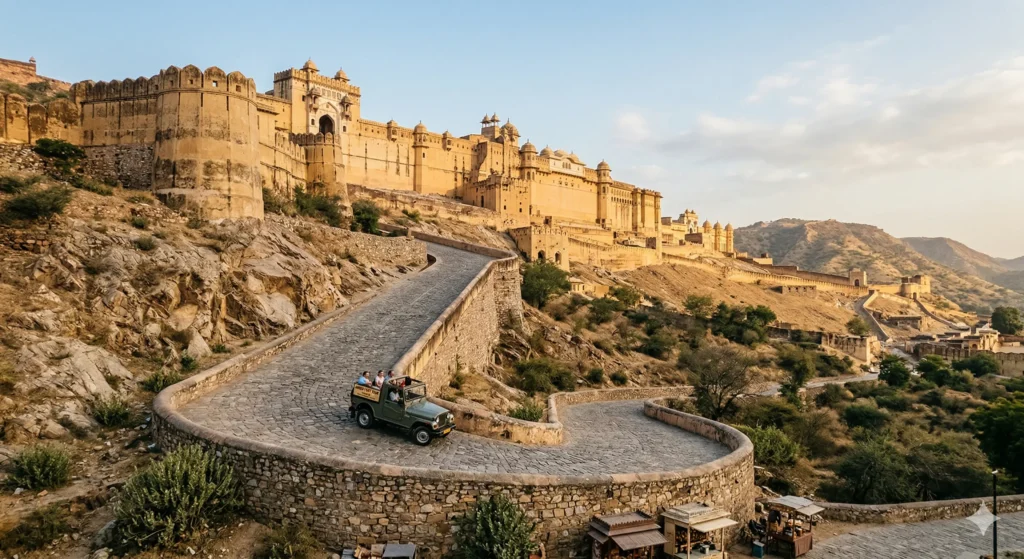
Jaipur, India’s first planned city, was established in 1727 by Maharaja Sawai Jai Singh II. An astronomer-king, Jai Singh II utilized ancient Vedic architectural principles to organize the city into nine rectangular sectors. The layout features streets wide enough for elephant processions and advanced drainage systems that remain functional 300 years later.
The Pink City Legacy
The city earned its “Pink City” moniker in 1876 when the old city was painted terracotta pink to welcome the Prince of Wales. This distinct color is now protected by law.
Top Heritage Sites
- Amber Fort: Located 11 km north of the city, this fort seamlessly blends Rajput military architecture with Mughal decorative refinement.
- Sheesh Mahal (Hall of Mirrors): Located within Amber Fort, its walls and ceiling are adorned with thousands of convex mirror fragments designed to amplify a single flame into a star-like display.
- City Palace: Still partially inhabited by the royal family, this complex houses museums of armor and royal costumes. It also features the world’s largest silver objects: two massive urns once used to transport Ganges water to England.
- Jantar Mantar: Built in 1724, this observatory contains 19 stone instruments, including a sundial accurate to within two seconds.
Shopping and Craftsmanship
- Johari Bazaar: A premier Asian gemstone market; Jaipur processes 80% of the world’s colored gemstones.
- Block Printing: Anokhi on Tilak Marg is renowned for museum-quality block-printed textiles.
- Blue Pottery: Kripal Kumbh on Gopinath Marg is the center for the revival of Jaipur’s traditional blue pottery.
Dining
For an authentic taste of the region, visit Laxmi Mishtan Bhandar (an institution since 1954) for Dal Baati Churma. This signature dish consists of lentil soup, wood-fired wheat balls, and crushed sweet wheat with ghee.
Udaipur: The City That Earns Every Superlative
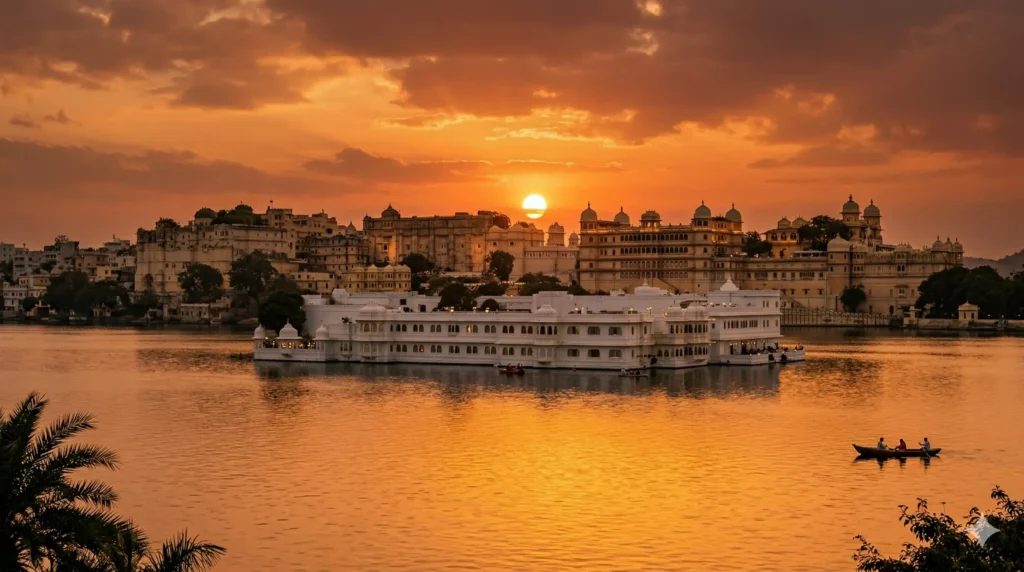
Udaipur, often called “the Venice of the East” and “the most romantic city in India,” is a destination of extraordinary physical beauty. Built in 1559 by the Sisodia Rajput clan on a ridge above Lake Pichola, the old city features layers of white-washed buildings, narrow lanes, and temples.
Key Architectural and Cultural Highlights
- The City Palace: This massive complex towers over the city and was built over 400 years by successive maharanas. The interior is considered the finest palace museum in Rajasthan, showcasing a fusion of Mughal and Rajput architecture.
- Mor Chowk (Peacock Courtyard): Located within the City Palace, it features three glass peacock panels representing different seasons and is the most reproduced image of the city.
- The Lake Palace: This white marble structure, now a Taj hotel, appears to float in the middle of Lake Pichola.
- Bagore ki Haveli: Located on Gangaur Ghat, this 19th-century haveli hosts nightly cultural performances including folk dance, puppet shows, and interactive turban-tying ceremonies.
Essential Views and Experiences
- Ambrai Ghat: This spot offers an essential photograph of the Lake Palace. It is also known for a budget-friendly experience where a beer costs roughly ₹200 while overlooking the City Palace and the Aravalli hills at sunset.
- Sajjangarh (Monsoon Palace): For the best panorama of Udaipur, take an auto-rickshaw (approx. ₹200) to this hilltop palace. It offers a stunning view of the lakes and hills catching the dusk light.
Visitor Logistics
Accommodation Range: Visitors can choose between the luxury of the Lake Palace (starting around ₹40,000 per night) or more affordable vantage points like Ambrai Ghat.
Exploration Time: It is recommended to allow two to three hours to explore the City Palace interior.
Jodhpur: The Fort That Changes What You Think a Fort Can Be
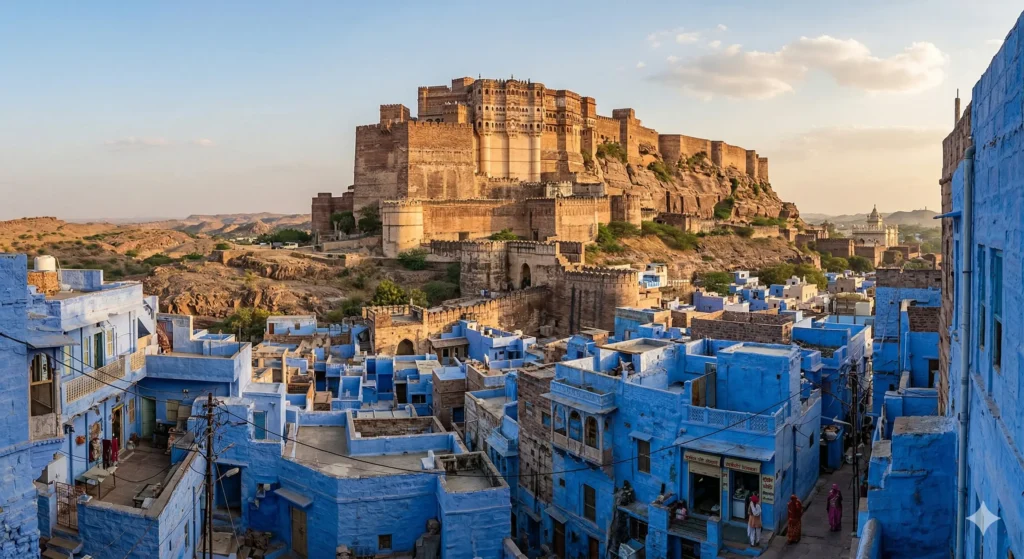
Built in 1459, Mehrangarh Fort is distinguished from other Rajasthani forts by its formidable presence, with sandstone walls rising 36 meters sheer from a rocky outcrop above Jodhpur. The sheer scale of the structure and the cannons remaining on its ramparts illustrate why the fort was never conquered.
Architectural and Cultural Highlights
- Palatial Interiors: The fort houses a sequence of courtyards and palaces, including the Moti Mahal (Pearl Palace), Phool Mahal (Flower Palace), and the Zenana Deodi women’s quarters, which feature intricate sandstone screens.
- The Museum: The onsite museum displays an excellent collection of miniature paintings, royal howdahs, palanquins, and an armory.
- Cinematic Experience: An audio guide narrated by Amitabh Bachchan provides a dramatic narrative for visitors.
- The Blue City: From the ramparts, visitors can view Jodhpur’s blue lanes, a city-wide aesthetic originally used by Brahmin families to mark their homes. These lanes are best explored on foot at dawn to avoid the heat and crowds.
Bazaars and Local Flavors
The Clock Tower market at the base of the fort is considered the city’s best bazaar for spices, silver, and antiques. Essential culinary experiences in this area include:
Makhaniya Lassi: A famous thick, sweet yogurt drink topped with a layer of cream, served at Shri Mishrilal Hotel since 1927.
Pyaaz Kachori: Addictive onion-stuffed pastries typically priced around ₹15.
Jaisalmer: The Desert’s Living City
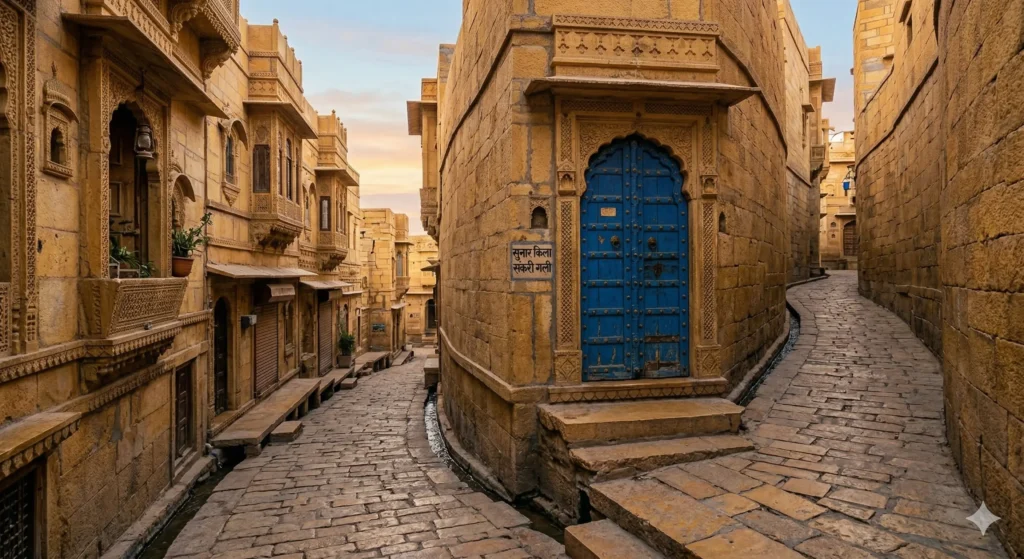
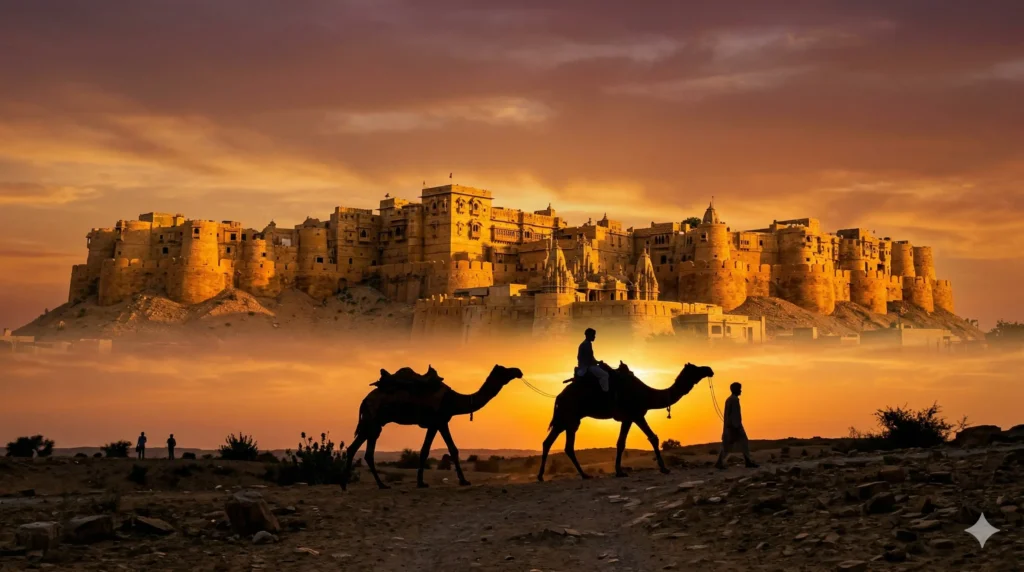
Jaisalmer is home to India’s only remaining living fort, where a community of three thousand people continues to live, work, and worship within its 12th-century sandstone walls. Known as Sonar Quila (Golden Fort), the structure undergoes a dramatic color shift at sunset, turning from gold to deep orange as the light hits the Rajmahal limestone.
Architectural and Cultural Highlights
- Sonar Quila Interior: The fort functions as a vibrant neighborhood where guest houses serve breakfast and narrow lanes are filled with the scents of chai and incense.
- Jain Temples: Located inside the fort, these 12th-to-15th-century temples feature delicate marble carvings and offer a quiet, cool sanctuary.
- Patwon ki Haveli: Situated outside the fort walls, this is Rajasthan’s most elaborate private residence, consisting of five merchant mansions with sandstone facades carved so finely they resemble lace.
- Conservation Note: The fort’s foundations have been damaged over decades by modern plumbing and water runoff, leading to UNESCO concerns. This environmental pressure makes visiting the living city a more urgent experience.
The Desert Experience
The Sam Sand Dunes, located 42 kilometers from the city, serve as the primary hub for experiencing the Thar Desert.
- Sunset Safaris: Visitors can take a standard camel safari over wind-sculpted ridges as the light turns orange.
- Overnight Stays: Desert camps allow travelers to sleep under star-filled skies free from city light pollution and experience the profound silence of the pre-dawn desert.
For travelers seeking a deeper desert encounter, WishToGo Holidays offers a 3-day circuit including the Kuldhara abandoned village and Akal Wood Fossil Park. Contact hello@wishtogo.in to customize your Jaisalmer itinerary.
Pushkar: The Sacred Town That’s Unlike Anywhere Else
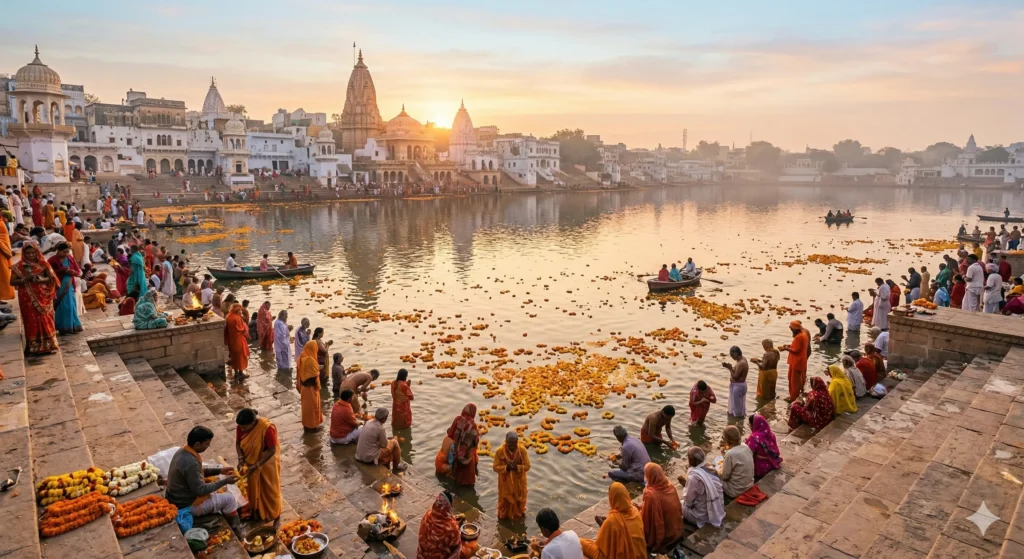
Located 11 kilometers from Ajmer, Pushkar is a sacred lake town that feels like a completely different world. Home to 20,000 residents, the town features 400 temples and 52 ghats that descend to the water’s edge. It is most famous for housing the only Brahma temple in India; although Brahma is one of Hinduism’s three primary deities, he is rarely worshipped elsewhere due to a legendary curse by his wife, Savitri.
A Dual Atmosphere
Pushkar is unique for operating at two speeds simultaneously: deeply spiritual and cheerfully backpacker-friendly.
- Spiritual Peace: At 5:30 AM, the ghats offer a serene experience as temple chanting carries across the water during the first light.
- Backpacker Culture: Rooftop cafes serve a mix of Israeli food, banana pancakes, and traditional Rajasthani thali.
- Bazaar Life: Local shops offer a variety of goods, from hand-embroidered cushion covers to hookah pipes.
The Pushkar Camel Fair
Held annually on the full moon of Kartik (typically late October or November), this event is one of the world’s greatest gatherings.
- Scale of Trade: Approximately 200,000 camels, horses, and cattle are traded on the fairgrounds outside of town.
- Entertainment: The fair features folk performers, camel racing, and wrestling competitions.
- Religious Spectacle: About 50,000 pilgrims arrive during this time for ritual bathing in the sacred lake.
- Travel Tip: It is highly recommended to book accommodation at least six months in advance if you plan to visit during fair week.
The dense mythology of the town truly comes to life when walking the ghats at dawn while priests perform puja at the water’s edge.
Ranthambore: Tigers in a Landscape with a History
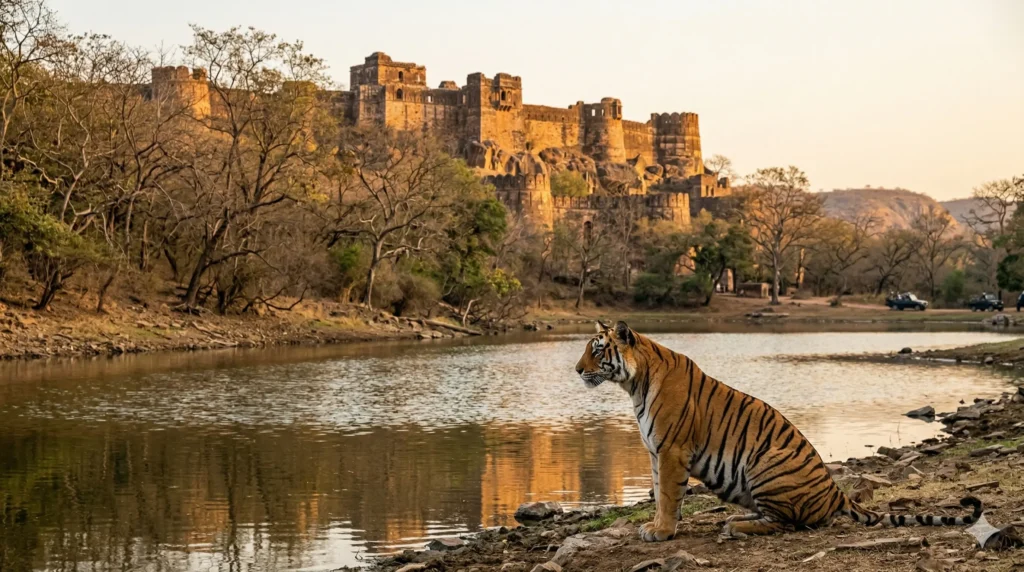
Unlike most national parks that are strictly forests, Ranthambore features a 10th-century fort rising from its center. This unique combination of UNESCO-listed ruins and lake systems creates a visual character unlike any other in Indian wildlife, with tigers often photographed at the fort steps or cooling in shallow waters.
Tiger Population and Sightings
- The park spans 1,334 square kilometers of dry deciduous forest.
- As of a 2024 estimate, the tiger population is over 75.
- The park is divided into 10 zones; Zones 3 and 4, which cover the lake systems around Rajbagh and Malik Talao, offer the most consistent tiger sightings.
Planning Your Safari
Duration: It is recommended to book a minimum of 2–3 safaris. While one safari introduces you to the landscape, multiple trips significantly increase your chances of seeing the animals.
Best Time for Sightings: April and May are peak months because the heat drives tigers to rest visibly in the lake shallows.
Best Time for Comfort: October to March offers a more forgiving climate for visitors while still providing reliable sightings.
Booking: Online reservations open 90 days in advance; the most popular zones often fill within hours.
When to Visit Rajasthan
The ideal time to visit Rajasthan is between October and March, a period that offers the most extraordinary experience of the desert fort cities.
Seasonal Breakdown
Peak Season: October – March
- Weather: This window provides clear skies and comfortable daytime temperatures ranging from 18°C to 28°C.
- Visuals: The unique winter light turns the region’s sandstone a brilliant gold, a contrast to the hazier summer months.
- Packing Tip: In January, nighttime temperatures in Jaisalmer and Jodhpur can drop to 4°C–6°C. It is essential to pack a proper jacket rather than just a light scarf.
Shoulder Season: April – June
- Weather: Temperatures in Jodhpur frequently reach 46°C, making traditional sightseeing difficult.
- Strategy: To handle the heat, schedule all outdoor visits before 10:00 AM and remain in air-conditioned spaces from 11:00 AM to 4:00 PM.
Monsoon: July – September
- Landscape: The rains turn the Aravalli hills behind Jaipur and Udaipur lush and green.
- Limitations: While desert cities remain navigable, camel safaris are restricted, and several desert camp operators close for the season.
Budget Optimization: September – Early October
Clarity: The post-rain air clarity often makes the landscape appear sharper and cleaner than in December.
The Trade-off: This period offers a balance for budget-conscious travelers as the monsoon ends but peak season pricing has not yet taken effect.
Also Read: Best Time to Visit India: Month-by-Month Guide for Every Region 2026
Where to Stay: Palace Hotels and What They Actually Offer
Rajasthan pioneered the heritage hotel concept by converting authentic royal palaces, hunting lodges, and havelis into accommodations that maintain their Rajput and Mughal architectural grandeur while offering modern amenities. These properties represent the actual history of the buildings rather than a mere marketing category.
Landmark Heritage Properties
- Taj Lake Palace, Udaipur: Occupying the entire Jag Niwas island in Lake Pichola, guests arrive at this marble palace by boat. Rates start from ₹40,000 per night for what is considered India’s most romantic hotel.
- Umaid Bhawan Palace, Jodhpur: As the world’s largest private residence converted for hotel use, it remains partially inhabited by the royal family. It features an extraordinary 1940s Art Deco interior with rates starting from ₹45,000.
- Rambagh Palace, Jaipur: Formerly a royal hunting lodge, this property is now the flagship Rajasthan hotel for Taj Hotels. Rates begin at ₹35,000, and the extensive gardens are a primary highlight.
Mid-Range Heritage Options
Nachana Haveli, Jaisalmer: A 450-year-old haveli situated near the fort, offering rooftop views of the ramparts and the Thar Desert. Rates start from ₹5,000 per night.
Raas, Jodhpur: Located directly beside Mehrangarh Fort, the property shares a boundary with the fort wall. It offers the best rooftop views in the city with rates starting from ₹12,000.
Alsisar Haveli, Jaipur: A restored 1892 haveli featuring a courtyard pool and classic architectural proportions. Nightly rates start from ₹8,000.
What to Eat in Rajasthan
The culinary traditions of Rajasthan are deeply influenced by the arid desert environment, which necessitated a reliance on milk and ghee rather than water, alongside a Rajput warrior heritage that prioritized hearty, sustaining meals.
Signature Rajasthani Dishes
- Dal Baati Churma: The region’s defining meal consists of lentil soup, wheat balls baked over an open fire, and crushed sweetened wheat mixed with generous amounts of ghee. It is known for being extremely filling and unique within Indian cuisine.
- Laal Maas: This signature non-vegetarian dish is a fiery mutton curry prepared with Mathania red chillies from the Jodhpur region. It is celebrated for its extreme richness and heat; top locations to experience it include Spice Court in Jaipur or On the Rocks in Jodhpur.
- Ker Sangri: A distinctive “pickle-curry” made from native desert plants—ker berries and sangri beans. It offers a sour, spiced flavor profile that is entirely unique to the Rajasthan ecosystem.
Essential Street Food Moments
To experience the best of local flavors, seek out these specific regional specialties:
Malpua: Sweet pancakes soaked in saffron syrup, a specialty of Pushkar.
Pyaaz Kachori: Savory onion-stuffed pastries found throughout Jodhpur.
Makhaniya Lassi: A legendary, thick yogurt drink served near the Jodhpur clock tower.
Frequently Asked Questions about Rajasthan travel guide
How many days are needed for a trip to Rajasthan?
- 7 Days: This covers Jaipur, Jodhpur, and Jaisalmer in a way that feels complete, though slightly rushed.
- 10–12 Days: This is the comfortable minimum needed to include Udaipur, Pushkar, and Ranthambore.
- 14–21 Days: This duration is required for the full circuit, including minor cities and the UNESCO fort trail.
- Pro Tip: Avoid rushing. Jaisalmer and Udaipur both deserve at least two nights each to truly experience the fort, desert, and lake atmosphere.
Is Rajasthan safe for solo female travelers?
- Yes: Major tourist hubs like Jaipur, Udaipur, Jodhpur, and Jaisalmer have excellent infrastructure and a high volume of international visitors.
- Udaipur: This city is consistently rated as one of the most comfortable for solo female travelers in India.
- Security: Jaipur maintains an active tourist police presence.
- Best Practices: Use pre-booked transport or apps like Ola/Uber, choose well-reviewed heritage hotels, and remain vigilant in crowded bazaars.
What is the best way to travel between cities?
- Train: The Shatabdi Express is a reliable 4.5-hour connection from Delhi to Jaipur. Overnight trains between Jaipur, Jodhpur, and Jaisalmer are atmospheric and save on accommodation costs.
- Flight: Flying is the most efficient way to manage the Jaisalmer–Udaipur jump or to return to Delhi at the end of your trip.
- Private Car: Hiring a driver (approx. ₹3,500–5,000 per day) offers maximum flexibility, especially for the scenic Jaipur–Pushkar–Jodhpur route.
What is the Rajasthan Fort Circuit?
The circuit features six UNESCO-listed hill forts: Chittorgarh, Kumbhalgarh, Ranthambore, Gagron, Amber, and Jaisalmer.
- Chittorgarh: The largest fort in India and a site of significant historical sacrifice (Jauhar).
- Kumbhalgarh: Features the world’s second-longest continuous wall.
What is the most underrated destination in the state?
- Bundi: Located 36 km from Kota, this medieval town features a spectacular fort with fine Rajput frescoes and the Raniji ki Baori step-well.
- Literary Connection: Rudyard Kipling wrote parts of Kim here, describing it as a city built in “uneasy dreams”.
How should I experience the Thar Desert?
- Sam Sand Dunes: The most accessible location for a sunset camel safari near Jaisalmer.
- Khuri Dunes: Located 45 km from Jaisalmer, these offer a quieter experience with fewer tourists.
- WishToGo Circuit: A 3-day immersive experience covering the Sam dunes, the “haunted” Kuldhara village, and 180-million-year-old tree fossils at Akal Wood Fossil Park.
Can I combine Rajasthan with the Taj Mahal?
Recommended Sequence: Visit Agra Fort and Mehtab Bagh in the afternoon, followed by a Taj Mahal sunrise the next morning before returning to Delhi.
Yes: Most itineraries include this by driving from Ranthambore to Agra (3.5 hours).
Planning Your Rajasthan Trip
WishToGo offers Rajasthan packages from 7 to 21 days, covering every combination of cities, forts, wildlife, and desert experiences. Our team has personally vetted every hotel, guide, and activity across the state, from the right safari zones at Ranthambore to the specific guesthouses inside Jaisalmer Fort that offer genuine heritage without structural risk.
Write to hello@wishtogo.in or visit wishtogo.in with your travel dates and we’ll send a detailed proposal within 24 hours.