
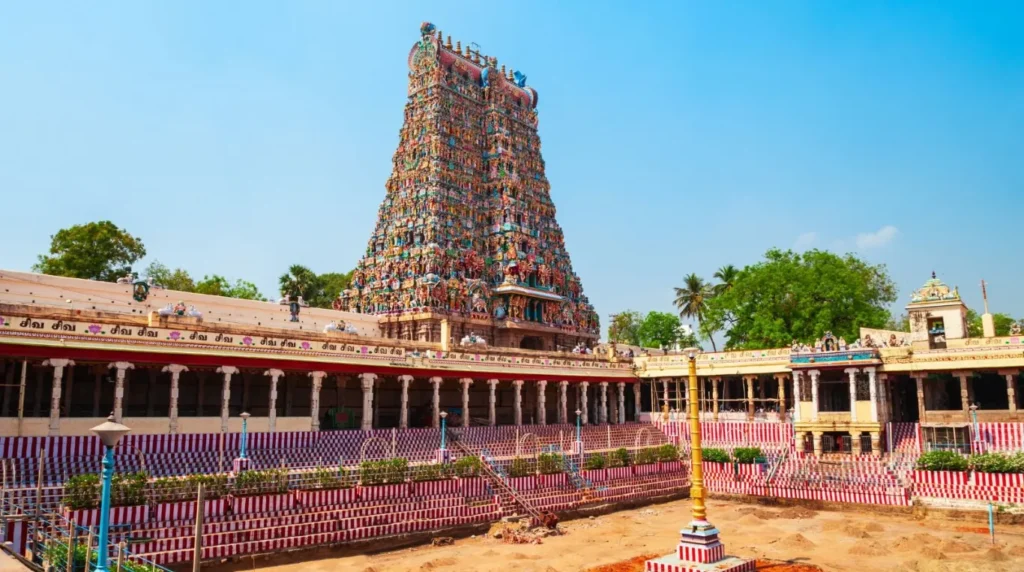
The South India temple circuit connects some of India’s most important heritage sites, including Meenakshi Temple in Madurai, Brihadeeswarar Temple in Thanjavur, Mahabalipuram’s Shore Temple, Hampi’s ruins, and Karnataka’s Hoysala temples. A 12 to 15-day itinerary is ideal for experiencing this cultural and architectural journey.
The temples of South India are unique in the world, standing as monumental achievements of architecture and devotion. Beyond their staggering scale, the Ranganathaswamy Temple in Srirangam spans 155 acres, making it the largest functioning Hindu temple complex on Earth, they possess a remarkable historical depth. The Shore Temple at Mahabalipuram was carved in the 7th century, the Brihadeeswarar at Thanjavur was completed in 1010 CE, and the Meenakshi Temple in Madurai has been a site of continuous worship for over 2,000 years.
What truly distinguishes these temples, however, is that they are alive. Far from being static ruins or museums, these are vibrant, active spiritual centers where priests perform centuries-old rituals every morning and evening. The air is perpetually filled with the scent of incense, the glow of oil lamps, and the sound of sacred chanting as pilgrims gather from around the globe. Their towering stone gopurams, adorned with thousands of intricately painted figures, are not mere relics of the past but a living visual language for a religious tradition that has never ceased.
This guide explores the premier temple sites across Tamil Nadu, Kerala, and Karnataka, offering a comprehensive 15-day itinerary that connects these sacred landmarks into one transformative journey.
Table of Contents: South India Temple Circuit
The Temples at a Glance
| Temple | Location | Why Visit | Best Time to Go |
| Meenakshi Amman Temple | Madurai, Tamil Nadu | One of India’s largest and most active temple complexes, stunning coloured gopurams, daily rituals | Oct–Mar (avoid Apr–May heat) |
| Brihadeeswarar Temple | Thanjavur, Tamil Nadu | UNESCO World Heritage, 1,000-year-old Chola masterpiece, remarkable architecture | Oct–Mar |
| Shore Temple | Mahabalipuram, Tamil Nadu | UNESCO site by the sea, carved from a single rock, beautiful at sunrise and sunset | Oct–Mar |
| Ranganathaswamy Temple | Srirangam, Tamil Nadu | Largest functioning Hindu temple in the world by area, a complete temple town | Nov–Feb |
| Kapaleeswarar Temple | Chennai, Tamil Nadu | Active Shaivite temple in the heart of Mylapore, one of Chennai’s most important | Year-round |
| Rameshwaram Temple | Rameshwaram, Tamil Nadu | One of India’s most sacred pilgrimage sites, 22 temple tanks, island location | Nov–Feb |
| Padmanabhaswamy Temple | Thiruvananthapuram, Kerala | One of the wealthiest temples in the world, only Hindus permitted inside the sanctum | Oct–Mar |
| Guruvayur Temple | Guruvayur, Kerala | Kerala’s most important Krishna temple, famous temple elephants, very active pilgrimage site | Oct–Mar |
| Belur and Halebidu Temples | Hassan district, Karnataka | Hoysala architecture, intricate stone carvings covering every surface, 12th century | Oct–Mar |
| Hampi Virupaksha Temple | Hampi, Karnataka | Active temple inside UNESCO ruins, monkeys, priests, pilgrims, extraordinary setting | Oct–Mar |
The 15-Day South India Temple Circuit
This logical geographic route begins in Chennai and moves south and west through the Chola and Pandya temple heartlands, crosses into Kerala, and concludes with the Hoysala masterpieces and the bouldered ruins of Hampi.
| Day | Location | Main Experiences |
| 1 | Arrive Chennai | Visit Kapaleeswarar Temple, walk through the Mylapore neighborhood, and see Marina Beach at sunset. |
| 2 | Chennai → Mahabalipuram | A 1.5-hour drive to visit the Shore Temple, Five Rathas rock sculptures, and various cave temples. |
| 3 | Mahabalipuram → Pondicherry | A 1-hour drive followed by a French Quarter walk, a visit to Auroville, and the seafront promenade. |
| 4 | Pondicherry → Thanjavur | A 4-hour drive to explore the Brihadeeswarar Temple and the local palace museum. |
| 5 | Thanjavur → Madurai | A 4-hour drive including a stop at the massive Ranganathaswamy Temple in Srirangam. |
| 6 | Madurai | Experience the Meenakshi Temple’s morning and evening aarti, and visit Thirumalai Nayakkar Palace. |
| 7 | Madurai → Rameshwaram | A 3-hour drive to visit Rameshwaram Temple and its 22 sacred tanks, plus a view of Pamban Bridge. |
| 8 | Rameshwaram → Kochi | Morning temple visit, drive back to Madurai, and fly to Kochi. |
| 9 | Kochi | Explore Fort Kochi, see the Mattancherry Dutch Palace murals, and watch a Kathakali performance. |
| 10 | Kochi → Thrissur | Drive north to visit the Guruvayur Temple and explore Thrissur city. |
| 11 | Thrissur → Bengaluru | Free morning followed by a flight to Bengaluru. |
| 12 | Bengaluru → Hassan | A 3-hour drive to visit the intricately carved Hoysala temples of Belur and Halebidu. |
| 13 | Hassan → Hampi | A 5-hour drive via Hospet to arrive in Hampi and visit Virupaksha Temple in the evening. |
| 14 | Hampi | A full day exploring the Vittala Temple, the stone chariot, Matanga Hill at sunrise, and Hampi bazaar. |
| 15 | Hampi → Bengaluru | Free morning followed by a 6-hour drive or a flight back to Bengaluru for departure. |
Planning and Logistics
- Transport Strategy: This is a driving-heavy itinerary; hiring a private car with a driver for the Tamil Nadu and Karnataka portions is strongly recommended for the flexibility to see smaller roadside temples.
- Budgeting: You should budget between ₹3,500 and ₹5,000 per day for a comfortable, air-conditioned car with a driver.
- Shortening the Trip: If you have less time, a 10-day version covering only the Tamil Nadu heritage sites is possible.
Also Read: India Itinerary 15 Days: A Complete 2-Week Trip Plan for First-Time Visitors
Meenakshi Amman Temple, Madurai – The Most Spectacular Temple in India
The Meenakshi Amman Temple in Madurai is considered the single most essential temple visit in South India due to its immense scale and active spiritual atmosphere. It is a visually staggering complex that covers 45 acres in the heart of the old city.
Architectural Highlights
- The Gopurams: The temple features four massive entrance towers; the tallest reaches 52 meters and is adorned with more than 33,000 brightly painted figures representing gods, demons, and mythological scenes.
- The “Glowing” Effect: At dusk, the western light hits these towers, making the entire complex appear to glow.
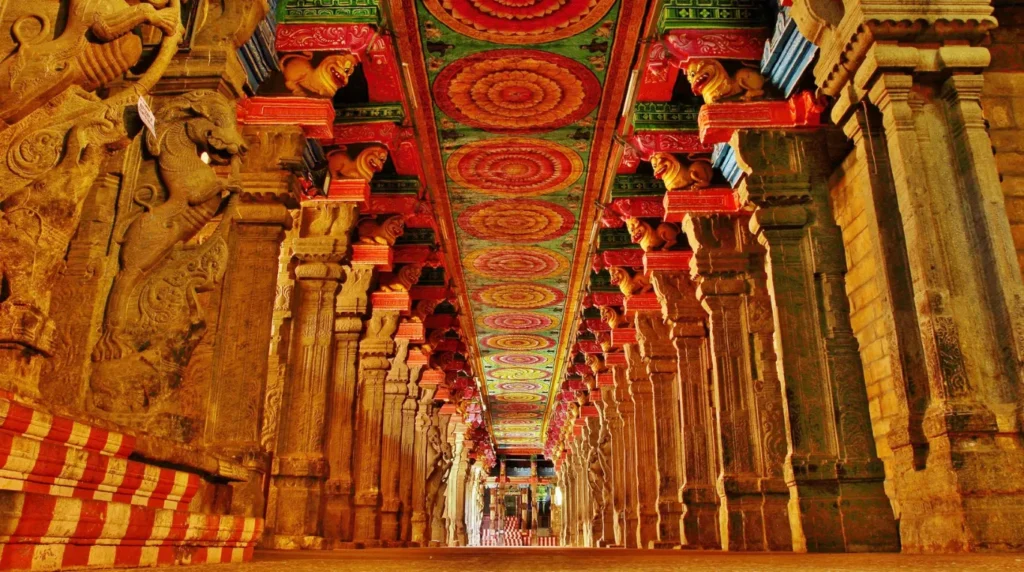
- Hall of a Thousand Pillars: This hall contains 985 uniquely carved pillars that produce musical notes when tapped.
- Golden Lotus Tank: Known as Potramarai Kulam, this spectacular tank is located in the center of the complex and is accessible to all visitors.
Rituals and Access
- The Evening Aarti: Occurring around 9:00 PM, this is the temple’s most significant daily ritual, featuring a musical procession of the deities through the corridors.
- Experience Tip: It is recommended to arrive at least 45 minutes early to find a good vantage point for the procession.
- Visitor Restrictions: While the outer halls and courtyards are open to everyone, the golden innermost sanctum of Meenakshi is restricted to Hindus.
Visitor Etiquette
Footwear: Shoes must be removed before entry, with shoe-minding services available for ₹10 to ₹20.
Dress Code: Both shoulders and knees must be covered.
Clothing Assistance: Men wearing shorts are typically provided with a dhoti wrap at the entrance.
Brihadeeswarar Temple, Thanjavur – The Chola Masterpiece
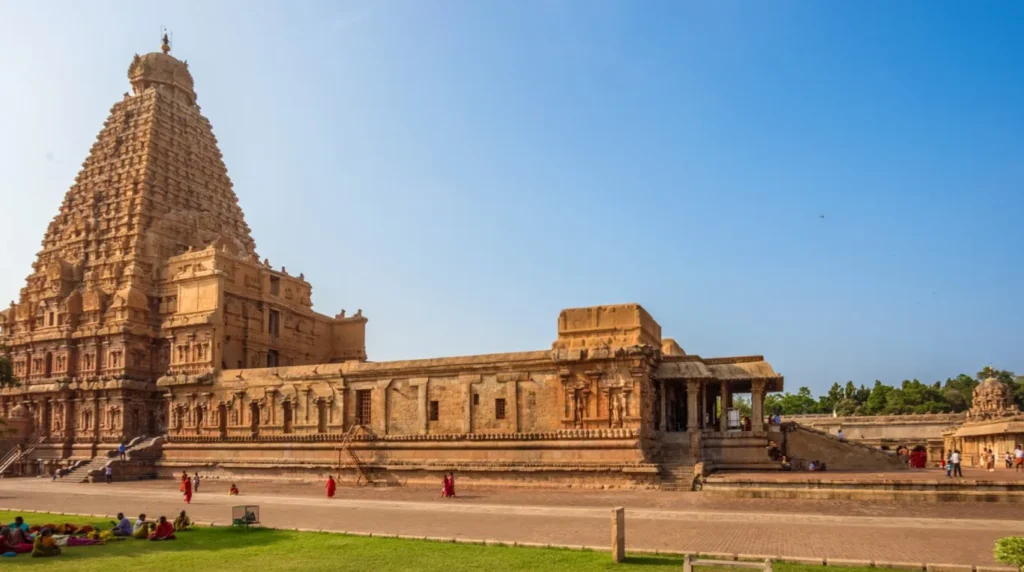
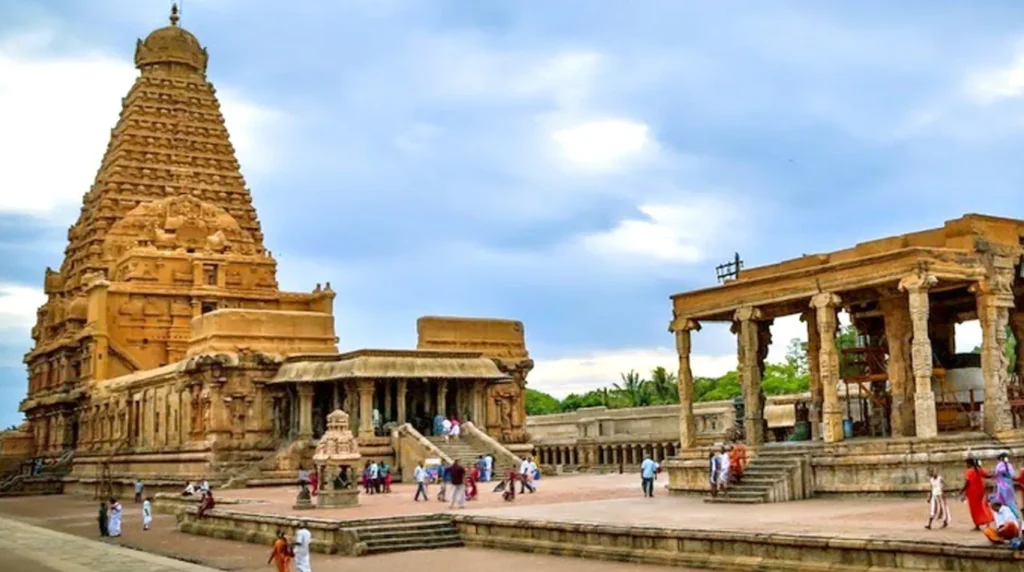
The Brihadeeswarar Temple stands as a testament to medieval engineering, commissioned by King Raja Raja Chola I and completed in 1010 CE. It was constructed using only materials available in Tamil Nadu at the time, without the aid of modern cranes or technology.
Architectural Marvels
- The Main Tower (Vimana): This central structure rises 66 metres into the sky, making it taller than most contemporary buildings of its era.
- The Kumbam: At the very top sits a single stone sphere weighing approximately 80 tonnes.
- Construction Theories: While a seven-kilometre earth ramp is the prevailing theory for how the heavy capstone was raised, it remains a subject of engineering debate.
- Nandi Statue: The outer courtyard houses one of India’s largest monolithic Nandi (sacred bull) statues.
Historical Significance
- UNESCO Heritage: It is designated as a UNESCO World Heritage Site under the “Great Living Chola Temples”.
- Structural Integrity: Unlike many other ancient temples that evolved over centuries, Brihadeeswarar remains largely the same structure as it was in 1010 CE.
- Precision: The temple is noted for its perfect geometry, clean lines, and precise proportions.
- Chola Murals: The lower passages contain some of India’s finest medieval paintings, which were rediscovered in the 20th century beneath layers of later plaster.
Visitor Tips
Guides: Professional guides are available at the entrance for a government-fixed rate of approximately ₹500 to explain the architectural stories.
Time Required: Plan to spend two to three hours exploring the complex.
Mahabalipuram – Temples by the Sea
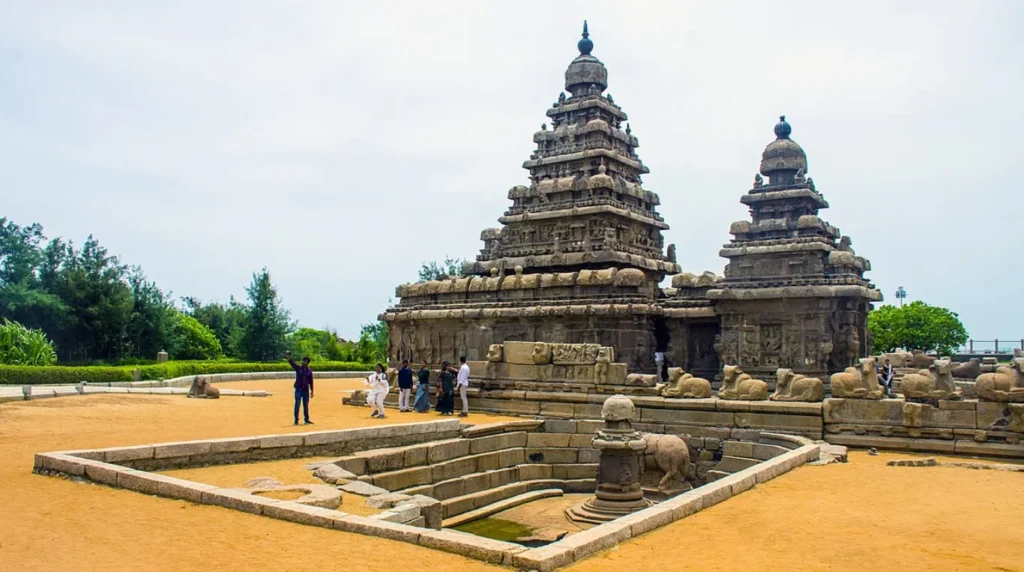
Located 60 kilometers south of Chennai on the Coromandel Coast, Mahabalipuram (also known as Mamallapuram) is considered the most unusual temple site in South India. The site is characterized by extraordinary structures carved entirely from living rock.
Key Architectural Highlights
- The Shore Temple: Built in the 7th century CE, this is the oldest structural stone temple in South India. It stands directly on the beach, silhouetted against the Bay of Bengal, and is a premier location for sunrise photography.
- The Five Rathas (Stone Chariots): These five structures were each carved from a single large granite boulder. They were designed as architectural experiments—a “catalogue” of different temple styles—but were never completed or used for worship.
- Arjuna’s Penance (Descent of the Ganges): This massive bas-relief is 27 meters wide and 9 meters tall, carved directly into a natural rock face. It features hundreds of detailed figures, including gods and animals, converging on a cleft that represents the Ganges descending from heaven. It is one of the largest open-air rock carvings in the world.
Travel Planning
Best Time for Photography: Sunrise is the most iconic time to capture the Shore Temple against the ocean.
Duration: The site works well as a full day trip from Chennai or as a one-night stop for those traveling toward Pondicherry.
Heritage Status: Both the Shore Temple and the Five Rathas are designated UNESCO World Heritage Sites.
The Ranganathaswamy Temple, Srirangam – The Largest Temple in the World
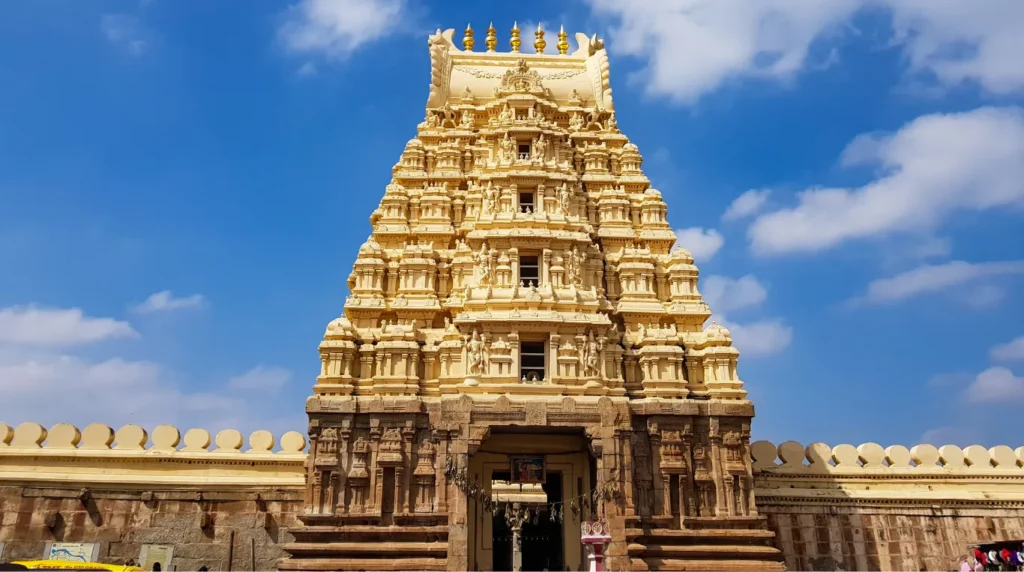
The Ranganathaswamy Temple in Srirangam is more than a place of worship; it is an expansive “temple town”. As the world’s largest functioning Hindu temple complex by area, it serves as a self-contained ecosystem where daily life and ancient rituals exist in total harmony.
A Massive Island Complex
- Geographic Setting: The temple covers 155 acres on an island formed between two branches of the Kaveri River.
- Concentric Design: The complex is organized into seven concentric enclosures.
- The Outer Layers: The outer enclosures function as a civic space, containing residences, shops, and a small street market.
- The Sacred Core: As you move inward, the enclosures become increasingly sacred, with the innermost sanctum being restricted to Hindus.
A Living Community
The temple is unique because it is a fully functioning society with over 24,000 permanent residents who have historical rights to live and work within its walls. This community includes:
- Priests and Musicians: Maintaining traditional rituals and sacred music.
- Artisans and Vendors: Flower sellers stringing jasmine and merchants serving the needs of the town.
- Generational Legacy: Many families have been part of the temple’s operation for centuries.
Visitor Experience and Logistics
Location: Srirangam is conveniently located just 5 kilometers from Thanjavur, making it a perfect stop for those traveling to or from Madurai.
Best Time to Arrive: Visit in the morning to witness the peak of activity, from pilgrims bathing in temple tanks to priests heading to their posts.
Navigation: Given the sheer scale of the 155-acre site, hiring a guide at the entrance (approximately ₹400 for 1.5 hours) is highly recommended to understand the complex layout and history.
Hampi – The Ruins That Rival Angkor
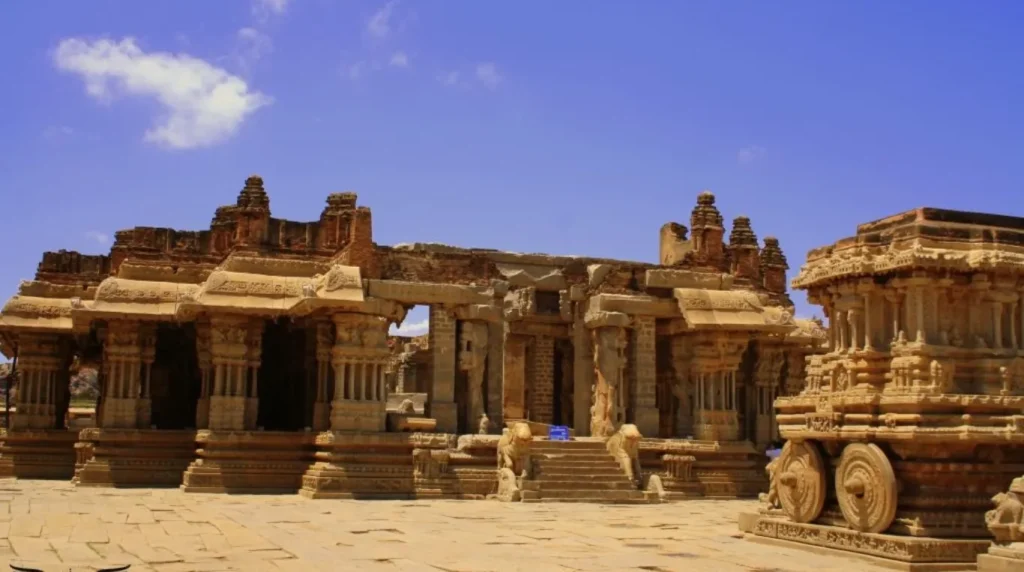
Hampi is much more than a collection of temples; it is a sprawling ruined city that once served as the capital of the Vijayanagara Empire between 1336 and 1565 CE. At its zenith, it was one of the world’s largest cities, with a population of 500,000 and a reputation for magnificence that European and Arab travelers compared to Rome. After a catastrophic defeat at the Battle of Talikota in 1565, the city was sacked and has remained in ruins ever since.
A Landscape of Stone and Spirit
The ruins encompass 41 square kilometers of dramatic terrain, characterized by massive granite boulders and the Tungabhadra River.
- Virupaksha Temple: This is the only structure that remains fully active, with continuous worship dating back to the 7th century. It features a 50-meter entrance tower visible across the site and hosts daily rituals for pilgrims.
- Vittala Temple: Considered the pinnacle of Vijayanagara architecture, it is famous for its stone chariot, the most iconic image of Hampi, and its musical pillars, which produce different notes when tapped.
- Royal Enclosure: This area includes the king’s palace complex, elephant stables, a step-well, and the decorative Lotus Pavilion.
Planning Your Visit
The Journey: Hampi is roughly 350 kilometers (six hours) from Bengaluru by road. Travelers frequently describe it as the most extraordinary place in India after the Taj Mahal.
Duration: Budget at least two full days. Spend the first day at the main bazaar and Royal Enclosure, and the second at the Vittala and Achyutaraya Temples.
Where to Stay: You can stay in the Hampi Bazaar area or across the river in Virupapur Gadde. The latter is accessible via coracle boat and is preferred by many for its quiet setting among banana plantations and boulders.
Belur and Halebidu – The Most Detailed Stone Carvings in India
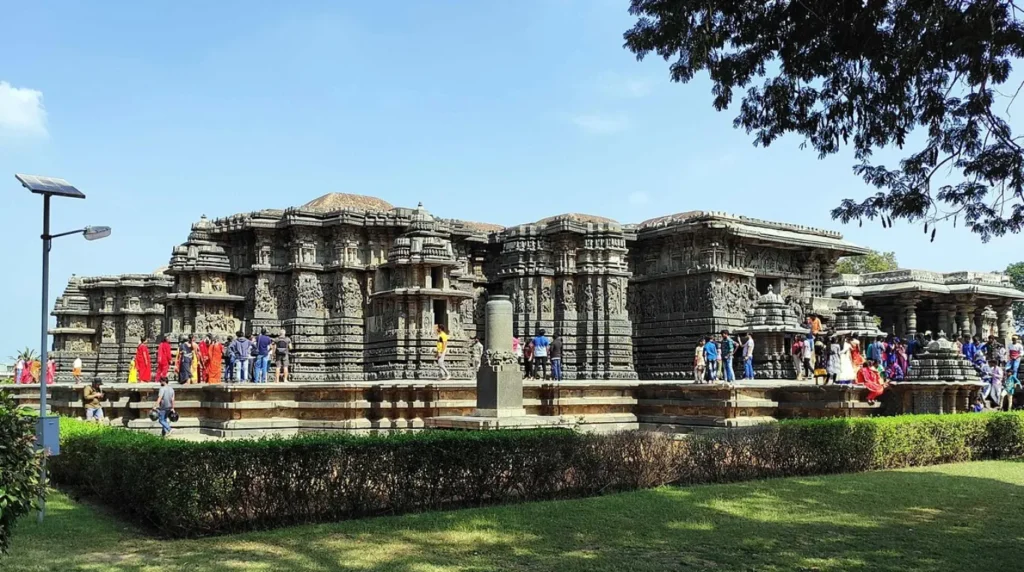
The Hoysala temples in Karnataka’s Hassan district are widely considered the most intricately carved stone structures in India, and potentially the world. Built during the 12th century, these temples are famous for their soapstone construction, which allowed artisans to achieve a level of detail comparable to ivory or sandalwood carving.
Chennakesava Temple, Belur
Commissioned by King Vishnuvardhana in 1117 CE to commemorate a military victory, this temple took 103 years to complete.
- The Exterior Walls: The facade is organized into stacked horizontal bands.
- Layered Detail: Starting from the base, the layers feature charging elephants (symbolizing strength), followed by horses (speed), scrolling foliage, and elaborate scenes from Hindu epics and mythology.
- Unique Artistry: Every figure among the hundreds of carvings is unique; no two are exactly alike, and the detail is so fine it often requires a magnifying glass to fully appreciate.
Hoysaleswara Temple, Halebidu
Located just 16 kilometers from Belur, this temple is an even more ambitious twin-temple complex dedicated to Shiva and his consort.
- The Continuous Frieze: The walls feature an almost unbroken chain of carvings that run for hundreds of meters.
- Historical Context: Although the temple was never fully completed due to the fall of the Hoysala Empire to the Delhi Sultanate, the surviving structure is considered extraordinary.
Planning Your Visit
- Time Allocation: Budget half a day for Belur and half a day for Halebidu to properly explore both sites.
- The Value of a Guide: Because the iconography is highly complex and the mythological stories are layered, a guide is particularly valuable here.
- Hiring: Licensed guides are available at the entrance of both temples at a government-fixed rate of approximately ₹400 for 1.5 hours.
Temple Etiquette – What You Need to Know Before You Visit
To ensure a respectful and smooth visit to South Indian temples, it is essential to understand the traditional protocols regarding attire, access, and photography.
Dress Code
All major temples in South India enforce a modest dress code for all visitors.
- Coverage: Both men and women must ensure that their shoulders and knees are fully covered.
- Temple Provisions: Many entrances provide shawls or wrap-around cloths for a small fee or for free if you need to cover up.
- Men’s Attire: Men wearing shorts are typically required to wrap a dhoti (a long cloth) around their waist.
- Women’s Attire: Women in sleeveless tops will be asked to cover their shoulders; carrying a light scarf or shawl is recommended to avoid inconvenience.
Footwear Protocols
- Removal: Shoes must be removed before entering any temple premises.
- Storage: Larger temples offer paid shoe-minding services (₹10 to 20), while smaller ones have designated areas to leave them.
- Practical Choice: Choose footwear that is easy to slip on and off, such as sandals or loafers, rather than boots with laces. Socks are generally permitted to stay on.
Access for Non-Hindus
Most temples are welcoming to all visitors, allowing access to outer courtyards and mandapams (pillared halls).
- Innermost Sanctum (Garbhagriha): This is the most common area where restrictions may apply. While many temples allow everyone inside, some restrict the sanctum to Hindus only.
- Clear Signage: Any restrictions are usually clearly indicated at the entrance or on signs within the complex.
- Specific Restrictions: The Padmanabhaswamy Temple in Thiruvananthapuram is entirely restricted to Hindus, as are certain inner shrines at Meenakshi and Ranganathaswamy.
- Open Sites: Archaeological sites like Mahabalipuram, Hampi, and the Hoysala temples generally have no such restrictions.
Photography Guidelines
Respectful Conduct: When permitted, ensure you do not use flash, block rituals, or photograph people in the middle of prayer. Always check for local signage or ask staff if you are unsure.
Outer vs. Inner Areas: Photography is often permitted in outer courtyards but strictly prohibited inside the main sanctums.
Flash: The use of flash is almost universally banned.
Archaeological Sites: At Hampi and Mahabalipuram, photography is generally permitted throughout the site.
When to Visit
Selecting the right time to visit is crucial for experiencing the South India temple circuit comfortably, as weather and local festivals significantly impact the atmosphere and logistics.
The Best Window: October to March
This period is widely considered the ideal time for a heritage tour.
- Manageable Weather: Daytime temperatures typically range between 25°C and 32°C.
- Vibrant Atmosphere: Temple towns are fully active with a high presence of pilgrims, which adds to the spiritual energy of the sites.
- Frequent Festivals: Many major religious and cultural events occur during these months.
The Summer Months: April to June
Traveling during the summer presents significant challenges due to the extreme heat, particularly in inland cities like Madurai and Thanjavur.
- Extreme Temperatures: Daytime highs often reach between 38°C and 42°C.
- Physical Discomfort: Walking across the expansive stone-paved courtyards of temple complexes at midday can be genuinely uncomfortable.
- Scheduling Strategy: If you must travel in summer, visits should be restricted to very early mornings (before 10:00 AM) and late afternoons.
Major Temple Festivals
Planning your trip around these cultural milestones can offer a deeper look into living traditions:
| Festival | Month | Significance |
| Pongal | January | A major harvest festival celebrated with rituals in and around many temples. |
| Float Festival | Jan / Feb | Held in Madurai, featuring temple deities floating on illuminated boats in the temple tank. |
| Chithirai Festival | April / May | The biggest event in Madurai’s calendar, featuring elaborate processions at the Meenakshi Temple. |
Also Read: Best Time to Visit India: Month-by-Month Guide for Every Region 2026
Frequently Asked Questions: South India Temple Circuit
How many days are needed for a South India temple tour?
- Comprehensive Circuit: A 15-day itinerary is recommended to cover the major temples across Tamil Nadu, Kerala, and Karnataka.
- Tamil Nadu Focused: A shorter 10-day version can cover key Tamil Nadu sites, including Chennai, Mahabalipuram, Pondicherry, Thanjavur, Madurai, and Rameshwaram.
- Specific Site Requirements:
- Madurai: At least two days are needed to experience both the morning and evening aarti at Meenakshi Temple.
- Hampi: A minimum of two days is required, while three days allow for a deeper exploration of outer ruins and river crossings.
- Mahabalipuram: One full day is sufficient.
- Belur & Halebidu: These two sites can be covered together in one day.
- Others: Most other temples can be visited as half-day stops during driving days.
Is a guide necessary at every temple?
- Complex Sites: Guides are highly beneficial at architecturally and historically complex sites like Meenakshi Temple, Brihadeeswarar, Ranganathaswamy, and the Hoysala temples.
- Self-Guided Options: At Hampi and Mahabalipuram, a quality guidebook or audio guide is often sufficient.
- Small Temples: Roadside temples generally do not require a guide.
- Hiring Advice: Only hire licensed guides from official booths at temple entrances, where government-fixed rates are displayed; avoid touts outside.
Is Hampi worth the trip from Bengaluru?
- Distance and Travel: Yes, it is located about 350 km from Bengaluru, roughly a six-hour drive or an overnight train journey.
- Atmosphere: It is frequently described as the most extraordinary site in India after the Taj Mahal, unique for its combination of ruins, massive boulders, and the Tungabhadra River.
Which temple is best for first-time visitors?
- Meenakshi Amman Temple (Madurai): This is the premier introduction to South Indian temple culture due to its awe-inspiring scale and vibrant, active atmosphere.
- Shore Temple (Mahabalipuram): For those not visiting Madurai, this is an accessible starting point known for its beautiful seaside setting and ancient carvings.
Plan Your Journey with WishToGo
We offer heritage circuits ranging from 10-day Tamil Nadu tours to 21-day comprehensive journeys across South India. Packages include licensed guides, private vehicles with experienced drivers, and handpicked accommodations.
Contact: hello@wishtogo.in