
Northeast India offers some of the most unique travel experiences in the country, from Meghalaya’s living root bridges and Dawki’s crystal-clear river to Kaziranga’s rhinos, Nagaland’s Hornbill Festival, and the monasteries of Tawang and Sikkim. The best time to visit is October to April, and 8 to 10 days is ideal for a first trip. Explore Meghalaya’s root bridges, Kaziranga’s rhinos, Nagaland’s Hornbill Festival, Tawang, and Sikkim with this Northeast India Travel guide.
Northeast India is a world apart, a vibrant mosaic of eight states tucked into a narrow strip of land between Bangladesh and Bhutan. Often called the “Seven Sisters plus Sikkim,” this region is home to over 220 distinct tribes and dozens of languages, offering a cultural depth that is unmatched.
The landscape is a study in extremes, ranging from the world’s wettest place (Mawsynram in Meghalaya) to the world’s largest river island (Majuli in Assam) and the soaring Himalayan peaks of Sikkim and Arunachal Pradesh. Despite its beauty, it remains the road less traveled, which is exactly what makes it so rewarding for those who seek the extraordinary.
The Destinations at a Glance
| State / Place | Why Visit | Best Season | Days Needed |
| Meghalaya (Shillong + Cherrapunji) | Living root bridges, Dawki river, Asia’s cleanest village, waterfalls | Oct-Apr | 4-5 days |
| Assam (Guwahati + Kaziranga) | One-horned rhinos, elephant safaris, Brahmaputra river, Kamakhya Temple | Nov-Apr | 3-4 days |
| Nagaland (Kohima + Hornbill Festival) | 16 Naga tribes, Hornbill Festival (Dec 1–10), war memorials, village culture | Oct-Apr (Festival: Dec 1-10) | 3-4 days |
| Arunachal Pradesh (Tawang) | Buddhist monastery at 3,000m, mountain roads, peaceful and remote | Apr-Jun, Sep-Nov | 4-5 days |
| Sikkim (Gangtok + North Sikkim) | Snow peaks, monasteries, rhododendrons, Nathula Pass near China border | Mar-May, Sep-Nov | 4-5 days |
| Majuli Island, Assam | World’s largest river island, mask-making tradition, peaceful rural Assam | Oct-Mar | 2 days |
| Ziro Valley, Arunachal Pradesh | Apatani tribe culture, rice paddy valleys, Ziro Music Festival (September) | Apr–Jun, Sep-Oct | 3 days |
Meghalaya – Waterfalls, Root Bridges, and the Cleanest Village in Asia
In Sanskrit, Meghalaya translates to “abode of clouds,” a fitting name for the wettest place on Earth. The regions of Mawsynram and Cherrapunji hold the record for the highest annual rainfall on the planet. This immense precipitation fuels a landscape of endless waterfalls and vibrant green and blue rivers.
The Living Root Bridges
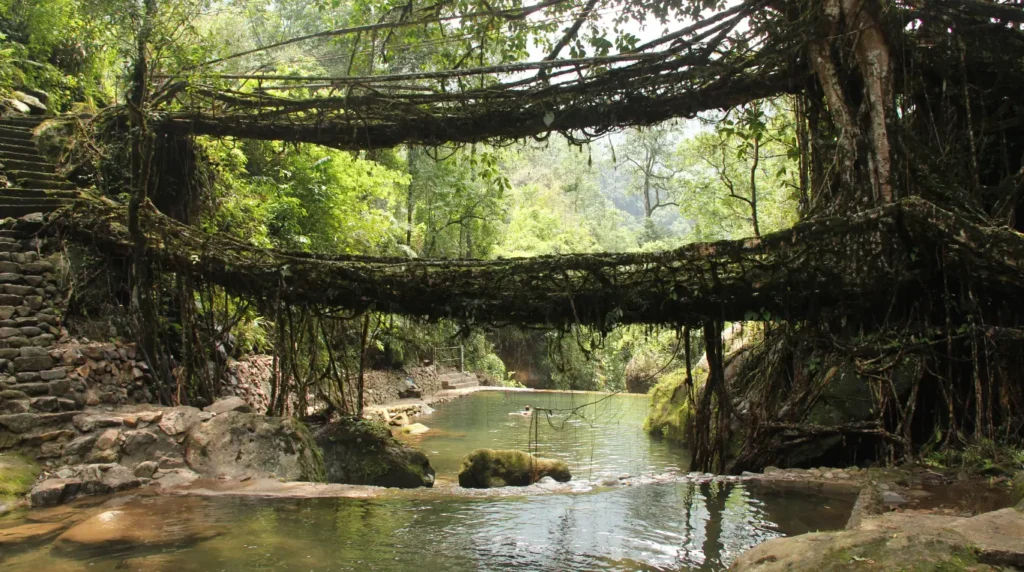
One of the most extraordinary results of this rain is the living root bridges. These natural structures are crafted by guiding the aerial roots of rubber fig trees across rivers over several generations.
- Ancient Engineering: Some of these bridges are over 500 years old.
- The Double-Decker: The most famous is the double-decker bridge near Nongriat village, which requires a challenging 3,500-step trek to reach.
- Best Time to Visit: These bridges are accessible between October and May. Visiting during the monsoon is dangerous due to slippery paths and submerged structures.
Dawki & The Transparent River
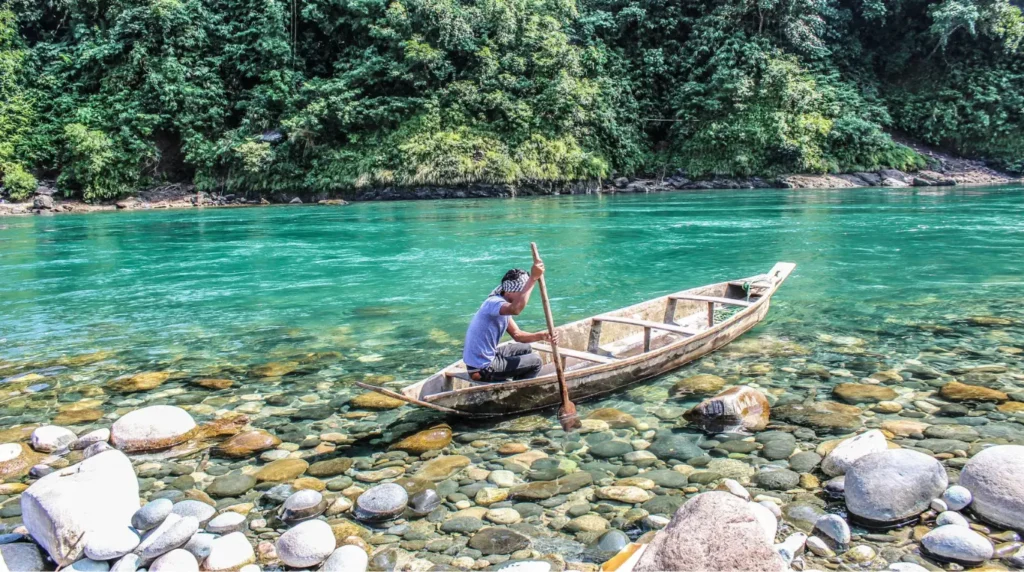
Located on the border with Bangladesh, Dawki is home to the Umngot River. The water here is so transparent that boats appear to be floating in mid-air above the riverbed.
- Visual Clarity: This stunning phenomenon is most visible from November to March, before the monsoon rains muddy the water.
- Experience: A boat ride on the Dawki is considered one of the most visually striking experiences in Northeast India.
Mawlynnong & Shillong
- Asia’s Cleanest Village: Mawlynnong, located 90km from Shillong, earned this title in 2003 and maintains it through daily sweeping, a plastic ban, and bamboo dustbins at every home. It features a “sky walk” platform with views into Bangladesh.
- The Capital: Shillong sits at 1,500 meters and is known for its pleasant climate, colonial-era golf club, and vibrant music culture, having produced some of India’s top rock musicians.
Travel Logistics
Getting There: You can fly into Guwahati and drive two hours to Shillong, or fly directly to Shillong’s Umroi Airport.
Permits: Meghalaya does not require any special permits for either Indian or foreign visitors.
Assam — Rhinos, Rivers, and the Brahmaputra
Assam serves as the primary entry point to Northeast India. Its main city, Guwahati, is the largest in the region and a major transportation hub. It is also home to the Kamakhya Temple, a significant Shakti shrine in Hinduism.
Kaziranga National Park
The highlight of any trip to Assam is Kaziranga National Park, a UNESCO World Heritage site known for its incredible biodiversity.
- Wildlife: The park hosts the world’s largest population of Indian one-horned rhinoceros, with approximately 2,900 animals across 1,000 square kilometers.
- Other Species: It is also home to tigers, Asian elephants, wild water buffalo, swamp deer, and over 480 species of birds.
- Best Time to Visit: Due to extensive flooding during the monsoon, the park is only open from November to April.
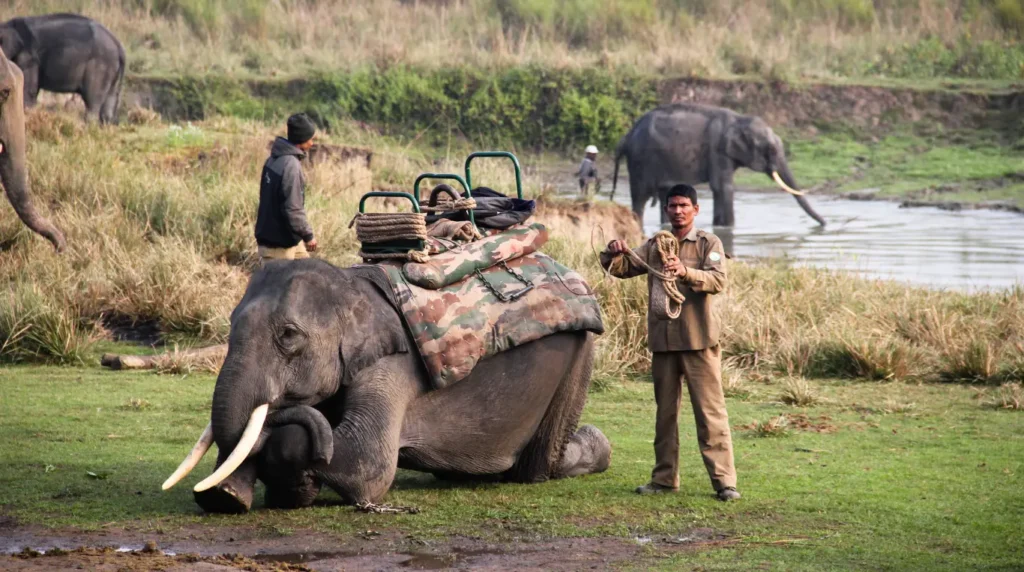
- Elephant Safaris: A dawn elephant-back safari offers a unique experience, allowing travelers to move quietly through tall grass and approach rhinos at a much closer range than a Jeep safari. These should be booked through the park office well in advance during peak season.
Majuli Island
Located 310 kilometers from Guwahati, Majuli is the world’s largest river island, situated in the middle of the Brahmaputra River.
- Access: Reaching the island requires a ferry ride from Jorhat.
- Culture: Majuli is famous for its Vaishnavite monasteries (satras), which preserve traditional Assamese music, dance, and the art of mask-making.
- Experience: It offers a peaceful, rural environment far from typical tourist circuits. A two-night stay is recommended for a truly immersive experience.
Travel Logistics
Connectivity: Guwahati is well-connected by direct flights from major cities like Delhi, Kolkata, and Mumbai.
Permits: Assam does not require any special permits for Indian or foreign visitors.
Also Read: India Wildlife Safari: The 10-Day Circuit That Covers Three of the Best Tiger Reserves
Nagaland and the Hornbill Festival – One of India’s Great Cultural Events
Nagaland is a small state situated in the far east of India along the Myanmar border. It serves as the home to 16 distinct Naga tribes, each possessing its own unique language, music, traditional attire, and ceremonial customs.
The Hornbill Festival
While many of these traditions are usually tucked away in remote hill villages, they converge annually for 10 days in December.
- Dates & Location: The festival takes place from December 1 to 10 at the Kisama Heritage Village, located 12 kilometers from the capital, Kohima.
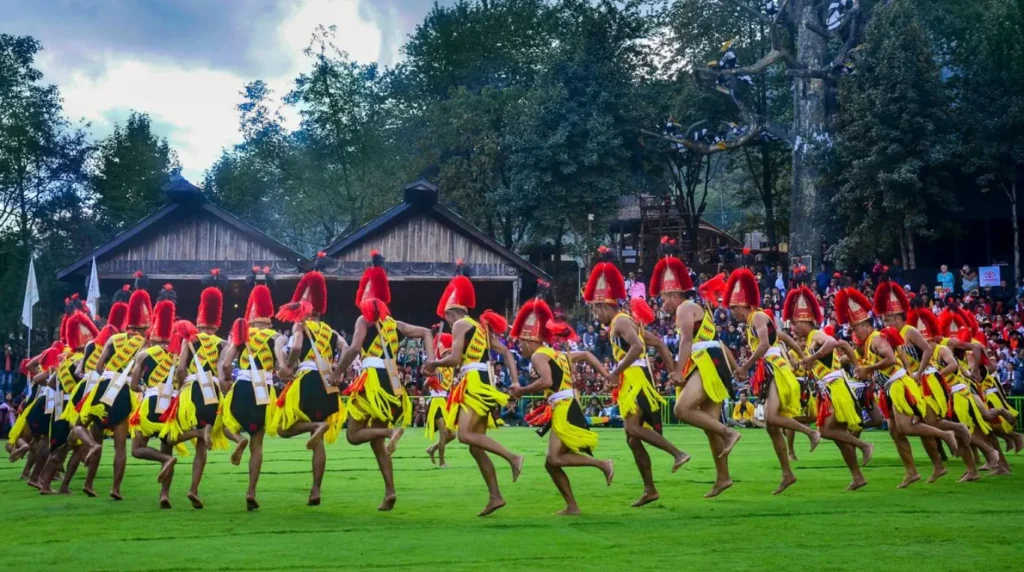
- The Experience: All 16 tribes establish their own morung (traditional meeting house) within a central festival ground.
- Cultural Displays: Visitors can witness warriors in full ceremonial dress, featuring hornbill feather headdresses and animal skulls, performing traditional dances.
- Crafts & Cuisine: The event features demonstrations by weavers, potters, and woodcarvers, alongside food stalls serving authentic Naga cuisine rarely found elsewhere.
- Authenticity: Unlike many commercial events, these performances are genuine expressions of a living culture that the Naga people celebrate for themselves as much as for visitors.
Historical Significance: Kohima
Beyond the festivities, Kohima holds deep historical importance as the site of a major World War II turning point.
- Battle of Kohima: The 1944 battle halted the Japanese advance into India.
- War Cemetery: The Commonwealth War Cemetery on Garrison Hill, featuring the famous “tennis court memorial,” is considered one of the most moving memorials in Asia.
Travel Logistics
Accommodation: For those attending the Hornbill Festival, it is essential to book lodging in Kohima at least four months in advance, as the town reaches full capacity during this period.
Permits: Foreign visitors are required to obtain an Inner Line Permit (ILP), which is available at Nagaland House offices in Delhi, Kolkata, or Guwahati.
Arunachal Pradesh – Tawang and the High Himalayas
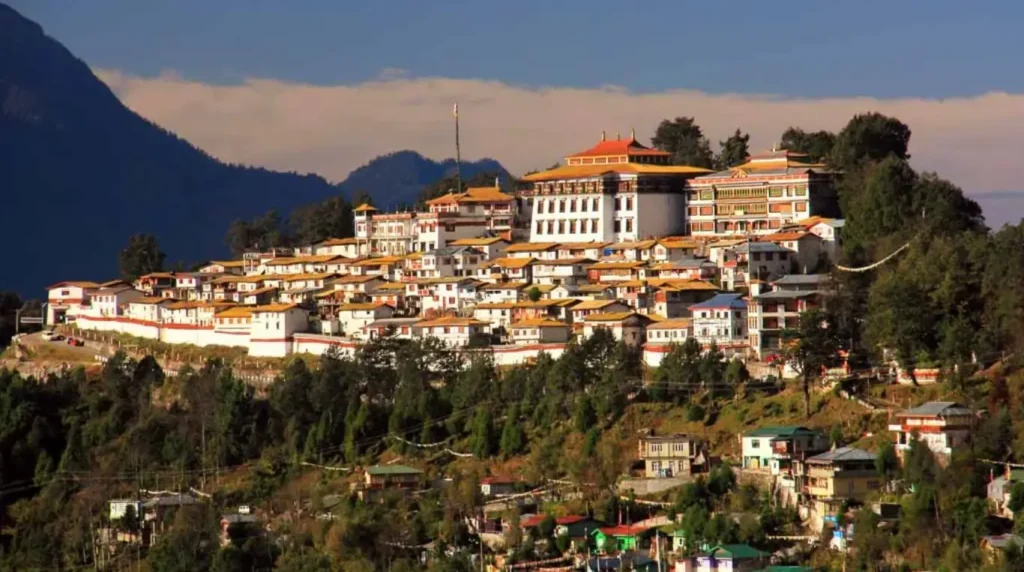
Arunachal Pradesh is the least visited large state in India and is considered one of the most beautiful regions in the country. It shares extensive borders with China, Bhutan, and Myanmar. The state’s geography is incredibly diverse, ranging from southern tropical rainforests to high Himalayan peaks in the north, with dozens of tribal communities residing in the valleys between.
Tawang: A Spiritual Sanctuary
Tawang is the primary destination for travelers in the state.
- Tawang Monastery: Located at an elevation of 3,048 meters, it is the largest Buddhist monastery in India and the second largest in Asia.
- History & Heritage: Founded in the 17th century, the monastery currently houses over 450 monks and contains a museum with ancient scriptures and priceless thangka paintings.
- Visual Appeal: The sight of white monastery buildings set against snow-capped peaks and draped in prayer flags is extraordinary.
The Journey to the Highlands
Reaching Tawang is an adventure in itself, as the road journey is a significant part of the experience.
- Route Options: Travelers can fly to Guwahati and drive for two days, or fly to Tezpur and drive for one day.
- Sela Pass: The route passes through the Sela Pass at 4,170 meters, which offers dramatic views but can be blocked by snow from December to March.
- Landscape Transition: The 300-kilometer drive showcases a unique transition from tropical to alpine landscapes that is unlike any other road in India.
Travel Logistics & Permits
All visitors to Arunachal Pradesh must obtain specific permits before traveling.
Foreign Visitors: Require a Protected Area Permit (PAP), which must be arranged through a registered travel agent.
Indian Nationals: Must obtain an Inner Line Permit (ILP), available online at arunachalilp.com or at Arunachal Pradesh House offices in Delhi.
Sikkim – Monasteries, Mountains, and Rhododendrons
Sikkim: A Himalayan Gem
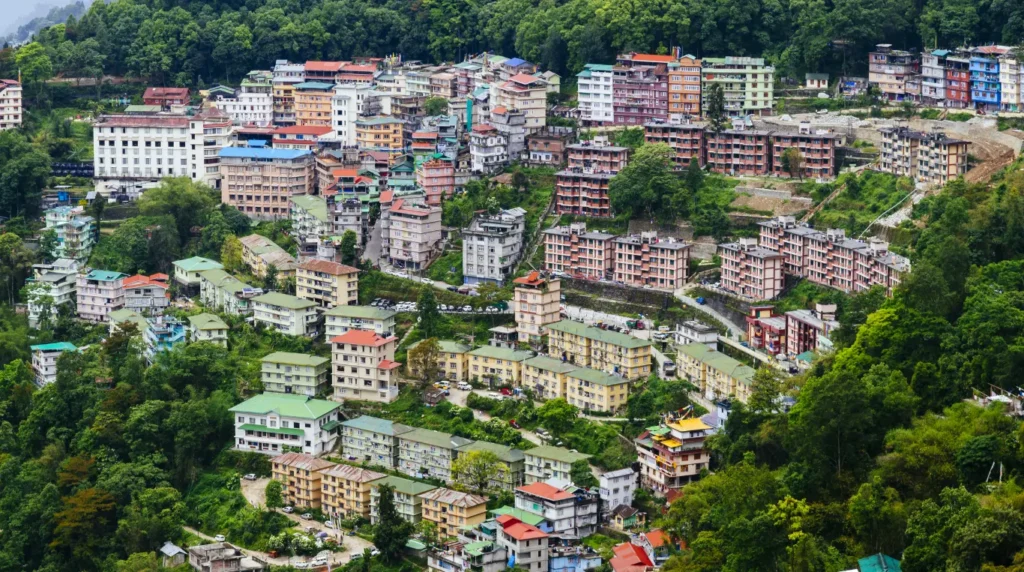
Sikkim is the smallest state in India by area and is renowned for its immense beauty. It is geographically situated between Nepal to the west, Tibet to the north, and Bhutan to the east, with the cultural, culinary, and architectural influences of all three regions clearly visible.
Gangtok and the Kanchenjunga Range
The capital city, Gangtok, is perched at 1,650 meters on a ridge overlooking the Teesta River valley.
- MG Marg: This central pedestrian street is a hub for dining and craft shopping.
- Mountain Views: On clear mornings, the street offers views of the Kanchenjunga range, which includes the world’s third-highest mountain at 8,586 meters.
Spiritual Heritage
The monasteries of Sikkim are a primary attraction for many travelers.
- Rumtek Monastery: Located 24 kilometers from the capital, it serves as the seat of the Karma Kagyu school of Tibetan Buddhism.
- Pemayangtse Monastery: Established in the 17th century in West Sikkim, it is one of the state’s most significant religious sites.
- Tashiding Monastery: Situated in the Rangit Valley, it is regarded by local Buddhists as the most sacred monastery in Sikkim.
Nature’s Display: Rhododendron Season
The best time to experience Sikkim’s vibrant natural colors is during the rhododendron season from March to May.
- Bloom Progression: The forested hillsides start blooming as early as February at lower altitudes and move progressively higher as temperatures rise through April.
- Yumthang Valley: Located at 3,564 meters in North Sikkim, this valley boasts one of the most spectacular rhododendron displays in the entire Himalayan region.
Travel Logistics & Permits
Accessing different parts of Sikkim involves specific administrative procedures.
Inner Areas: Traveling to the inner areas of North Sikkim requires additional permits arranged via local agents.
North Sikkim Access: Reaching Lachen, Lachung, and the Yumthang Valley requires a government-organized permit circuit starting from Gangtok.
Arranging Permits: These permits must be organized through a registered local travel agent in Gangtok; the process typically takes one day.
Entry Requirements:
Indian Nationals: No special permit is required to enter the state.
Foreign Visitors: Must register at the Rangpo or Melli checkposts upon entry.
How to Plan a Northeast India Trip
Planning a trip to Northeast India requires careful consideration of time, permits, and seasonal weather patterns.
How Many Days Do You Need?
- Focused Circuit (Two States): A trip covering two states thoroughly typically takes 8 to 10 days.
- Recommended First-Time Route: Many travelers choose a combination of Meghalaya (4-5 days for Shillong, Cherrapunji, Dawki, and living root bridges) and Assam (3-4 days for Guwahati and Kaziranga).
- Extended Circuit (Three+ States): Exploring a broader range of states requires 14 to 18 days. Typical routes include loops from Guwahati through Nagaland or up to Tawang in Arunachal Pradesh.+1
Permit Requirements
Entry regulations vary by state and nationality:
- No Permit Needed: Indian nationals do not require permits for Assam, Meghalaya, Tripura, or Mizoram.
- Inner Line Permit (ILP) Required: All visitors (Indian and foreign) must obtain an ILP for Arunachal Pradesh, Nagaland, and Manipur.
- Mizoram: Foreign visitors specifically require an ILP.
- How to Apply: Permits can be obtained from state government offices in major cities like Delhi or Kolkata. Arunachal Pradesh offers online applications at arunachalilp.com, with processing usually taking one working day.+1
- Pro Tip: Using a registered local tour operator is the simplest way to manage all necessary paperwork.
Best Time to Visit
- Ideal Weather: October to April is the prime season for most of the region.
- Avoid Monsoon: From June to September, extreme rainfall can make trails in Meghalaya impassable, and Kaziranga National Park closes due to flooding.
- Festival Timing: If you wish to see the Hornbill Festival in Nagaland, plan your visit for December 1 to 10.
- Spring Blooms: March to May is the best time for rhododendrons in Sikkim and higher-altitude Arunachal Pradesh.
Getting There
Alternative Entry Points: You can also fly into Dibrugarh (for Upper Assam), Imphal (Manipur), Jorhat (for Majuli), or Bagdogra (the main gateway for Sikkim).
Primary Gateway: Guwahati (Assam) is the main entry point, with direct flights from Delhi, Kolkata, and Mumbai.
Regional Connectivity: From Guwahati, road networks connect to all major destinations.
Frequently Asked Questions: Northeast India Travel Guide
Is Northeast India safe for tourists?
Yes, the security situation across Northeast India has improved significantly over the last decade. States such as Meghalaya, Assam, Sikkim, and Arunachal Pradesh are peaceful and very welcoming to travelers. While Nagaland and Manipur have historically had security concerns in remote interior regions, major hubs like Kohima and Imphal are generally safe when taking normal precautions. It is always a sensible precaution to check current travel advisories and register with your consulate if venturing into more remote areas.
How many states are in Northeast India?
There are eight states, commonly referred to as the “Seven Sisters plus Sikkim“.
- The Seven Sisters: Assam, Meghalaya, Nagaland, Arunachal Pradesh, Manipur, Mizoram, and Tripura.
- Sikkim: Joined India in 1975 and is grouped with the Northeast due to its shared geography and culture.
What makes this region different from the rest of India?
Northeast India offers a distinct experience due to several factors:
- Unrivaled Diversity: It is home to more than 220 distinct tribes, each with unique languages and traditions.
- Geographical Contrasts: Within a relatively small area, you can find tropical forests in Meghalaya, flat river plains in Assam, and high Himalayan peaks in Sikkim and Arunachal.
- Unique Cuisine: The food is entirely different from the mainland. Rice is the staple, pork is widely consumed, and signature ingredients include bamboo shoots and fermented soybean pastes.
Is the Hornbill Festival worth planning a trip around?
Strongly yes. Held from December 1 to 10, it is one of India’s most extraordinary cultural events, featuring all 16 Naga tribes in full traditional dress.
- Pro Tip: You must book accommodation in Kohima 4 to 5 months in advance, as the town fills up quickly.
What is the living root bridge trek like?
The trek to the famous double-decker root bridge near Nongriat is a memorable highlight:
- The Challenge: It involves a descent and ascent of 3,500 steps, taking about 5 to 6 hours for a round trip.
- Difficulty: It is physically tiring due to the steps but not technically difficult; anyone with reasonable fitness can complete it.
- The Reward: The bridges are grown from living rubber tree roots over generations and feel like something out of a fairy tale.
Plan Your Journey with WishToGo
We offer curated circuits ranging from 8-day Meghalaya and Assam combinations to 18-day grand circuits including the Hornbill Festival. All our packages include permit processing, local guides, and recommended accommodations.
Contact us: hello@wishtogo.in