
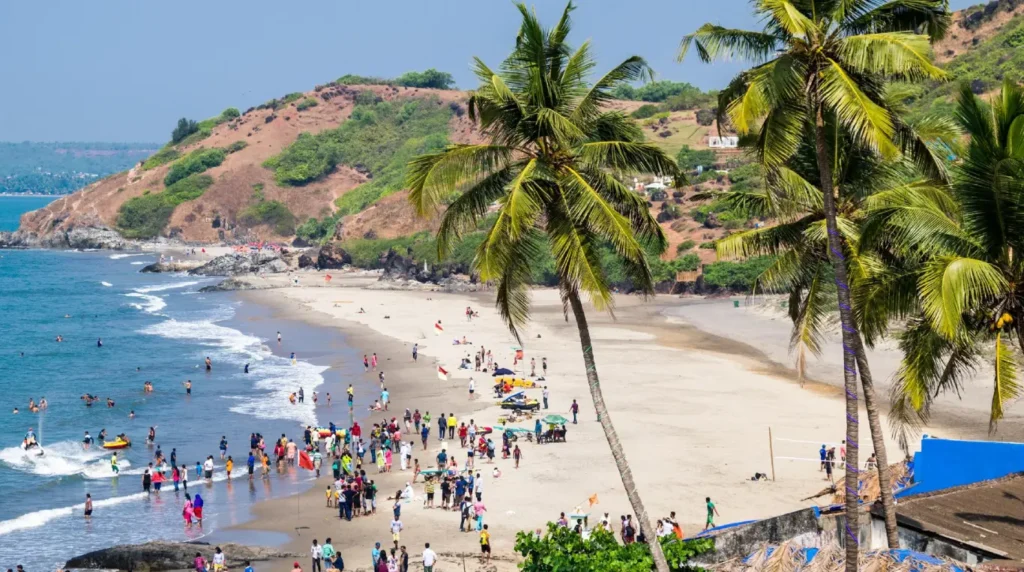
Goa offers a mix of beaches, nightlife, and heritage, with North Goa known for lively beaches and markets, and South Goa for peaceful, scenic coastlines. The best time to visit is November to February, and 4 to 5 days is ideal for a well-balanced trip. If you are planning a trip to Goa, then this Goa Travel Guide will help you explore Goa more better.
Goa is India’s smallest state, yet it remains one of its most popular destinations. In a fast-paced world, Goa offers a natural slowdown defined by sun-drenched beaches, fresh seafood, and a relaxed atmosphere. Its unique character is deeply rooted in 450 years of Portuguese rule, which ended in 1961, leaving behind a legacy of iconic white-washed churches, colonial bungalows, and a one-of-a-kind fusion of Indian and European culinary traditions.
This versatile destination caters to every traveler:
- Families can enjoy stress-free, laid-back beach holidays.
- Couples will find romantic scenic coastlines and world-class dining.
- Backpackers can take advantage of budget-friendly stays and energetic nightlife.
- Leisure seekers can simply master the art of doing nothing at all.
Our guide provides a comprehensive roadmap for your trip, from choosing between the high energy of the North and the serenity of the South to exploring the heritage of Old Goa and mastering the local food and water sports scenes.
When to Visit Goa
Choosing the right time for your Goa trip is essential to getting the experience you want. Here is the breakdown of the seasons:
The Best Time: November to February
This is widely considered the ideal window to visit.
- Weather and Sea: Daytime temperatures stay between 25 and 32 degrees. The sea remains calm, clean, and safe for swimming.
- Activities: All beach shacks and water sports operators are fully open, and you can enjoy clear, spectacular sunsets.
- November: This month is quieter than December but offers nearly the same quality. Shacks have just opened, prices are lower, and sunbeds are easier to find.
- December: This is the most popular and crowded month. Prices are at their highest, and resorts often book out months in advance for Christmas and New Year.
- February: An excellent choice as the holiday rush ends and prices drop while the weather remains lovely.
The Transition: October
October marks the end of the monsoon.
- Condition: The landscape is fresh and green.
- Availability: Beach shacks begin opening toward the end of the month, and you can often find the beaches at their emptiest.
The Middle Ground: March to May
This period falls between the peak season and the monsoon.
- Climate: Temperatures and humidity rise during these months, though the sea remains warm.
- Crowds: While international visitor numbers drop, this is a popular time for Indian families during school holidays.
The Off-Season: June to September
It is generally recommended to avoid these months if you are looking for a beach holiday.
Character: Goa becomes much quieter and more local, which may not be the experience most tourists seek.
Safety: The monsoon brings heavy rain and rough seas, making swimming dangerous.
Closures: Most beach restaurants and shacks close during this time.
Also Read: Best Time to Visit India: Month-by-Month Guide for Every Region 2026
North Goa vs South Goa – Which One Is Right for You?
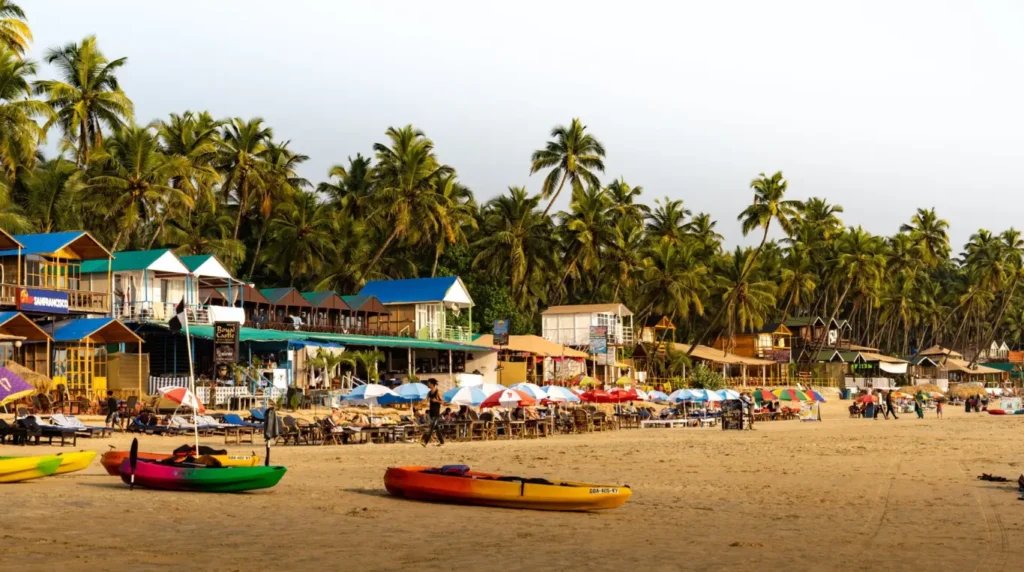
Every traveler to Goa eventually asks whether they should stay in the North or the South, and the truth is that the two regions offer completely different vibes. Choosing between them depends entirely on the kind of energy you want for your trip.
North Goa: The Energetic Hub
If you are looking for action, variety, and constant energy, North Goa is the place to be.
- Vibe: It is louder, busier, and more developed than the South.
- Beaches: The coastline from Candolim to Arambol is packed with beach shacks, water sports, and souvenir shops.
- Nightlife: The state’s party scene is centered here, specifically around Baga, Anjuna, and Vagator.
- Shopping: Don’t miss the famous Wednesday flea market at Anjuna or the Saturday Night Market at Arpora.
South Goa: The Peaceful Escape
South Goa is for travelers who prioritize natural beauty, cleanliness, and a slower pace.
- Vibe: The area is much quieter and feels more “untouched” by major development.
- Beaches: Stretching from Colva down to Palolem, these beaches are longer, less crowded, and backed by lush vegetation.
- Palolem: This perfect crescent bay with calm waters and palm trees is widely considered one of India’s most beautiful beaches.
- Agonda: This is the top recommendation for anyone who wants absolute peace and quiet.
How to Plan Your Stay
A common strategy is to base yourself in North Goa and take a day trip to explore the beauty of the South. However, if you are on a honeymoon or just want a relaxing beach holiday, it is better to stay in South Goa and travel north specifically for the markets and forts when you feel like exploring.
The Best Beaches in Goa – A Practical Goa Travel Guide
To help you choose the perfect spot for your trip, here is a detailed breakdown of Goa’s main beaches:
Goa Beach Comparison
| Beach | Character | Best For | Crowd Level |
| Calangute | Largest beach in Goa; busy and full of shops and water sports stalls. | First-time visitors wanting everything in one place. | Very High |
| Baga | Lively and commercial; full of beach shacks, nightlife, and water sports. | Nightlife, water sports, and backpackers. | Very High |
| Anjuna | Famous flea market and rocky shoreline with iconic nightlife history. | Flea market shopping, sunset bars, and culture. | High |
| Vagator | Two coves featuring red cliffs with Chapora Fort situated above. | Couples, photography, and cliffside sunsets. | Medium |
| Morjim | Long, clean beach; nesting site for Olive Ridley turtles (Oct–Mar). | Nature lovers and those seeking a quiet escape. | Low |
| Arambol | Northernmost popular beach; bohemian and relaxed with sunset drumming. | Long stays, yoga, and hippie culture. | Medium |
| Palolem | Located in South Goa; beautiful crescent bay with calm water. | Swimming, families, and peaceful honeymoons. | Medium |
| Agonda | Quieter than Palolem; a long open beach with very few shacks. | Complete peace, couples, and nature lovers. | Low |
| Colva | Long flat beach in South Goa. | Family trips and affordable accommodation. | Medium |
Important Local Insights
Palolem’s Beauty: Often cited as Goa’s most beautiful beach, Palolem’s crescent shape and lack of concrete construction make it feel significantly different from the developed hubs in the north.
Crowd Realities: Calangute and Baga become extremely crowded during December and January. Visit these areas for the high-energy water sports and beach shack vibes rather than for solitude.
The Vagator Surprise: Vagator offers a unique drama due to its red laterite cliffs and twin coves. Watching the sunset from the Chapora Fort viewpoint is considered one of the best free experiences in the state.
Old Goa – The Most Important Heritage Site in the State
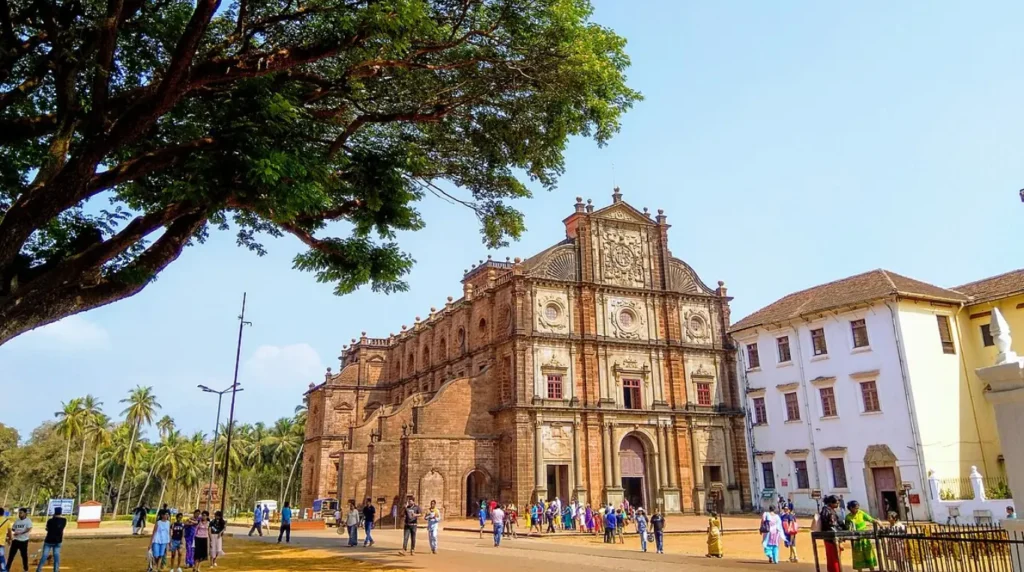
While most travelers prioritize the beaches, Old Goa is a must-visit heritage destination located 10 kilometers from Panaji along the Mandovi River. Once a 16th-century Portuguese capital with a population exceeding that of London or Lisbon, it now houses some of the world’s finest UNESCO World Heritage colonial architecture.
The Iconic Churches of Old Goa
- Basilica of Bom Jesus (1605): This is the most famous church in the region. It contains the preserved, incorruptible body of St. Francis Xavier, the Jesuit missionary who brought Christianity to Asia, which lies in a silver casket within a side chapel. The interior is renowned for its detailed woodwork and ornate altarpieces.
- Se Cathedral (1619): Located across from the Basilica, this is the largest church in Asia. Its bell tower houses the famous Golden Bell, which was once the largest in the world.
- Church of St. Francis of Assisi: Situated next door, this church is known for its remarkable painted tiles (azulejos) and a carved granite facade.
Planning Your Visit
Cost: Entry to all the churches is free.
Time Needed: It takes about two hours to tour these three major buildings.
Local Guides: Hiring a guide for a two-hour tour (approximately ₹500) is recommended to understand the deep historical context of the architecture.
Logistics: From Calangute, the trip is about 30 kilometers and takes 30 to 40 minutes via auto-rickshaw, Ola, or Uber.
Panaji – The Capital City Worth an Afternoon
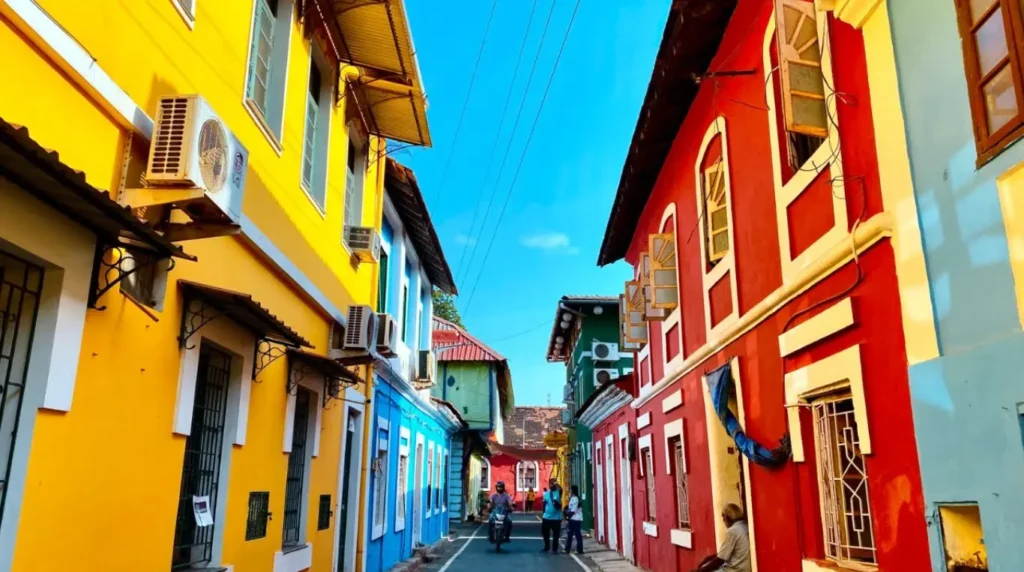
Panaji (or Panjim), the capital of Goa, offers a refreshing change of pace from the state’s coastal stretches. It is best experienced as a half-day excursion, ideally paired with a visit to Old Goa to see the state’s heritage beyond the sand.
The Latin Quarter: Fontainhas
The neighborhood of Fontainhas is the city’s primary highlight.
- Architecture: Known as the Latin Quarter, this area features narrow lanes lined with 18th and 19th-century Portuguese-style houses.
- Colors: The buildings are famously painted in vibrant shades of ochre, blue, yellow, and green.
- Details: Streetscapes are characterized by wrought-iron balconies draped in bougainvillea.
- Landmarks: The Chapel of St. Sebastian is situated in the heart of this district, which resembles a piece of old Lisbon.
Waterfront and Landmarks
Mahalaxmi Temple: Located near the Panaji bus stand, this is considered the most significant Hindu temple in the city.
Mandovi River: The Dayanand Bandodkar Marg along the river features a pleasant promenade.
Attractions: This area houses the Goa State Museum and the old Portuguese church.
Casinos: The waterfront is also the departure point for evening ferries heading to Goa’s casino boats.
Also Read: India Itinerary 15 Days: A Complete 2-Week Trip Plan for First-Time Visitors
Water Sports in Goa
Goa’s water sports scene is well-established and primarily concentrated on the beaches of North Goa. Most major beaches in the north offer a variety of high-energy activities.
Popular Water Sports & Pricing
- Parasailing: Costs between ₹700 and ₹1,200 per person. You are towed by a speedboat and rise 60 to 80 metres above the water for about 10 minutes, offering excellent coastal views.
- Jet Ski: Priced at ₹700 to ₹1,200 for 15 minutes. This is a very popular and straightforward activity on busier beaches.
- Banana Boat: Costs ₹400 to ₹600 per person. This inflatable tube ride is a favorite for families and groups.
- Snorkelling: Half-day trips generally cost ₹1,000 to ₹1,500. The best spots are Grande Island (90 minutes from South Goa) and Bat Island near Sinquerim.
- Scuba Diving: Day dives range from ₹3,500 to ₹5,000. While good for beginners, the water clarity does not match the Andaman Islands.
Booking Tips
Compare Rates: Check with two or three different operators to ensure you are getting a fair market rate for the day.
Negotiate First: Always agree on a price before starting any activity. While beaches like Calangute have government-approved rate cards, operators at quieter spots set their own prices.
Goa Food – What to Eat and Where
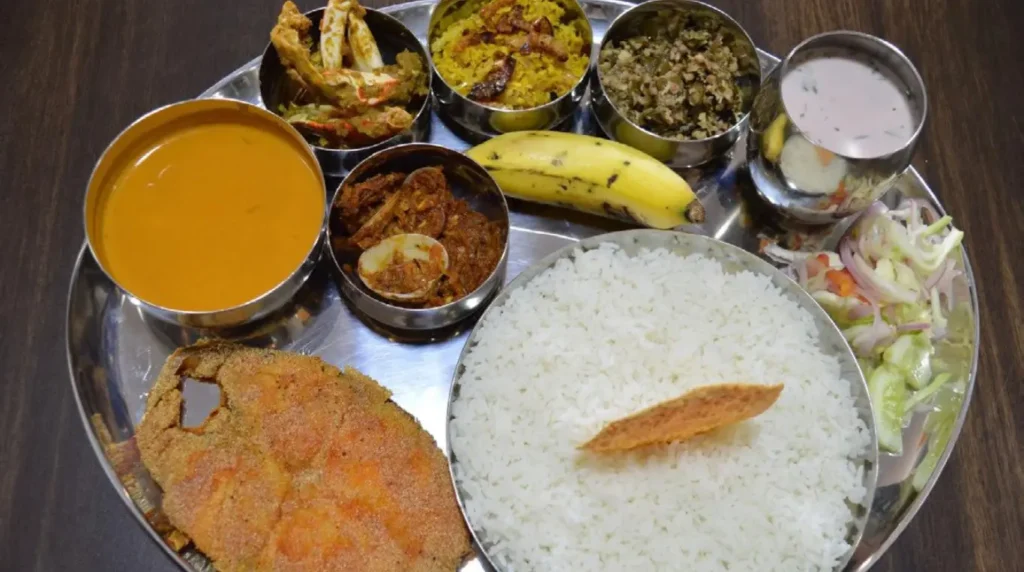
Goa cuisine is a highly distinctive blend of local Konkani traditions—which historically utilized coconut, kokum, and vinegar—and 450 years of Portuguese influence. This fusion, combined with fresh seafood from the Arabian Sea, makes it one of India’s most underrated regional culinary experiences.
Essential Goa Dishes
- Fish Curry Rice: The staple daily meal for most locals, featuring fresh kingfish or mackerel in a spicy, sour coconut curry served with red Goan rice. It is affordable, typically costing between ₹120 and ₹200 at local eateries.
- Prawn Balchão: A Portuguese-influenced fiery prawn pickle cooked with red chilies and vinegar. It has been a Goan favorite for over 400 years and is eaten as an intense side dish with rice.
- Vindaloo: Unlike the versions often found on standard restaurant menus, the original Goan dish is a hot and sour pork preparation marinated in garlic, spices, and wine vinegar. It is a direct descendant of the Portuguese vinha d’alhos.
- Bebinca: The most famous dessert in the state, this rich, sweet pudding is made with coconut milk, ghee, sugar, and egg yolks. It is baked layer by layer, resulting in a unique treat containing anywhere from seven to sixteen layers.
- Feni: Goa’s signature local spirit. It is distilled from either coconut palm sap (lighter) or cashew apples (stronger and more complex). For a classic experience, try it at a beach shack with a squeeze of lime.
Where to Eat
Whether you are looking for a casual meal by the ocean or a historic dining experience, Goa offers exceptional culinary options:
Gunpowder in Assagao (North Goa) is famous for its expertly prepared Indian regional cuisine.
Fresh Seafood: You can find fresh seafood at almost any beach shack stretching from Morjim in the north to Palolem in the south. While the quality of preparation can vary, the freshness is reliable because most shacks purchase their catch directly from local fish markets every morning. It is a good practice to ask what the “catch of the day” is before ordering.
Traditional Goan Thali: For an authentic local meal, visit Venite Restaurant in Panaji, which has been serving traditional dishes in a historic building since 1933. Ritz Classic, also in Panaji, is another top choice for consistent local flavors at local prices.
Upmarket Dining: * Fisherman’s Wharf in Cavelossim (South Goa) is highly recommended for high-quality fish served in a beautiful river setting.
Goa Nightlife – What It Is Actually Like

Goa’s nightlife reputation is iconic, though the experience varies depending on whether you seek high-energy clubs or a relaxed evening by the shore.
The Famous Club Scene
The internationally recognized nightlife hub is centered in North Goa, specifically around Anjuna, Vagator, and Arpora.
- Anjuna: Home to legendary spots like Curlies and Shiva Valley, which have hosted famous full-moon parties since the 1980s.
- Arpora: Features Club Cubana, a rooftop venue offering sweeping views over the valley.
- Timing: Due to strict noise regulations, most outdoor music must stop by 10 PM, though the party often continues at indoor venues.
The Beach Shack Experience
For many travelers, the best part of Goan nightlife is simpler and more tranquil than the club circuit.
Vibe: These evenings wind down naturally at a reasonable hour, offering a peaceful alternative that suits most travelers perfectly.
The Setting: Most visitors enjoy sitting at a beach shack table with fresh grilled fish and a cold beer, listening to the sound of the waves under a starry sky.
Availability: This experience is available at almost every beach in the state from 7 PM to 11 PM.
Cost: A typical evening of food and drinks costs between ₹600 and ₹1,000 per person.
Also Read: Best Honeymoon Destinations in India: A Complete Guide for Couples
Getting Around Goa
Navigating Goa requires some planning, as the state lacks a robust public transport system connecting its beaches and towns. While the state is only about 100 kilometres from north to south, you will need to rely on rentals or private hire to get around effectively.
Transportation Options in Goa
Best Use: This is an ideal option if you plan to visit multiple distinct areas in one day, such as hitting the North Goa beaches in the morning and exploring Old Goa and Panaji in the afternoon.
Scooter and Motorcycle Rentals: This is the most popular choice for independent travelers.
Availability: In North Goa hubs like Candolim, Calangute, and Anjuna, rental shops are found on nearly every street.
Cost: Expect to pay between ₹300 and ₹500 per day for a scooter.
Requirements: While an international driving license is technically required, it is not always checked by rental shops.
Driving Conditions: Roads between the northern beaches are generally straightforward and involve slower speeds.
App-Based Services and Rickshaws: If you prefer not to drive yourself, both Ola and Uber operate within the state. Auto-rickshaws are also readily available at all major beaches. Because meters are rarely used, it is essential to negotiate the price before starting your journey.+1
Private Taxis: For a more comfortable experience, you can rent a taxi with a driver for a full day.
Cost: This typically ranges from ₹2,000 to ₹3,000.
Goa Highlights Beyond the Beaches
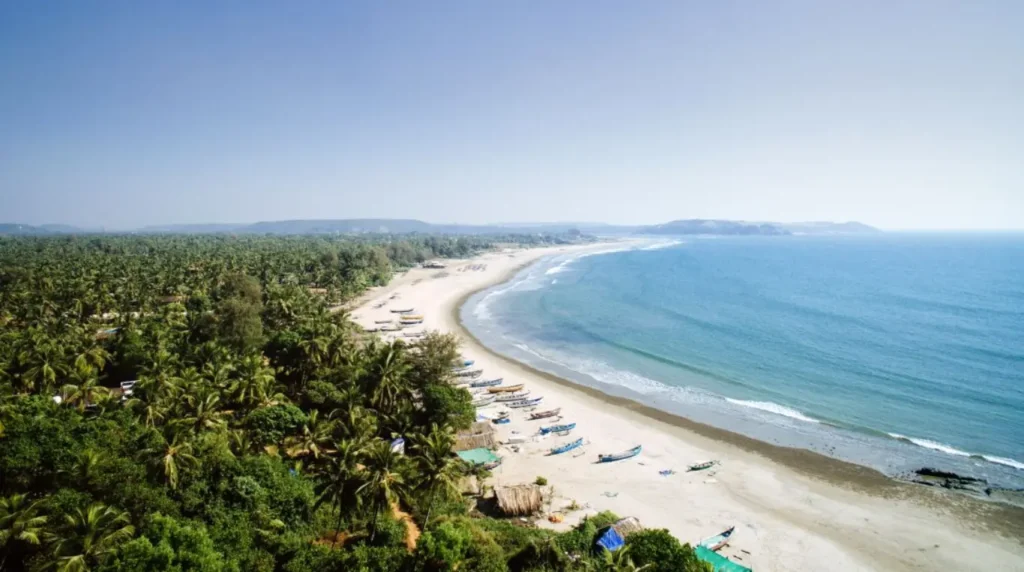
While Goa is famous for its coastlines, there are several cultural and natural landmarks beyond the sand that are worth exploring.
North Goa Highlights
- Chapora Fort: Perched on a cliff above Vagator Beach, this fort was originally constructed by the Portuguese and later taken by the Maratha Empire. Although its walls are mostly in ruins, it offers some of the best views in the state, overlooking the Chapora River, the Arabian Sea, and Vagator Beach. Entry is free, and it is accessible via a short drive or a 20-minute walk from Vagator.
- Anjuna Flea Market: This famous weekly event began in the 1970s as a place for travelers to sell their belongings. Today, it is an expansive market featuring Rajasthani handicrafts, spices, jewelry, and local art. It is open every Wednesday from 8:00 AM until sunset; the silver jewelry and block-printed textile stalls are particularly notable.
- Saturday Night Market, Arpora: An evening variation of the flea market, this event starts at 6:00 PM every Saturday. It features a festive atmosphere with live music, diverse food stalls from across India, and craft vendors. Entry is free, and it is a popular choice for families.
South Goa Highlights
Cabo de Rama Fort: This ruined Portuguese fort sits on a headland and remains one of the state’s least-visited heritage sites. It offers outstanding views of the Arabian Sea and the coastline stretching toward Agonda and Palolem. Entry is free, and the fort is located about 30 kilometers from Margao.
Dudhsagar Falls: Translating to “Sea of Milk,” this is one of India’s tallest waterfalls at 310 meters. Located inside the Bhagwan Mahavir Wildlife Sanctuary on the Goa-Karnataka border, the falls are most impressive during and immediately after the monsoon (July to October).
Access: Visitors must take a Jeep from the Mollem checkpoint, located approximately 60 kilometers from Panaji.
Tours: Organized full-day tours cost between ₹1,500 and ₹2,000 and run from November to May. Independent visitors are not permitted; the Jeep tour is the only access method during the dry season.
Practical Information: Goa Travel Guide
Whether you are arriving by air, rail, or road, Goa is well-connected to major domestic and international hubs. Here is the practical breakdown for your travel and stay:
Getting to Goa
- By Air: Goa is served by two airports: Dabolim (GOI) and the newer Mopa (Manohar International Airport) in North Goa. Direct flights are available from major Indian cities like Delhi, Mumbai, and Bengaluru, as well as international hubs like London and Dubai. Major domestic carriers include IndiGo, Air India, and SpiceJet.
- By Train: The state has two primary stations: Madgaon (Margao) in the south and Thivim in the north. The Rajdhani Express from Mumbai takes roughly 9 hours, while trains from Delhi typically take 24 to 28 hours.
- By Road: Mumbai is approximately 590 kilometers away via the scenic NH66, a drive of about 10 to 12 hours. Alternatively, luxury Volvo buses from Mumbai or Bengaluru cost between ₹1,000 and ₹2,000 and take 9 to 14 hours.
Accommodation Options
- North Goa: Most beach resorts, hostels, and budget guesthouses are concentrated around Calangute, Baga, and Anjuna.
- South Goa: Stays in areas like Palolem and Agonda are generally quieter and can be slightly more expensive for the same quality level compared to the north.
- Pricing Tiers:
- Budget: ₹800 to ₹2,500 for a clean private room near the beach.
- Mid-range: ₹3,000 to ₹8,000 for a resort or heritage property.
- Luxury: ₹10,000+ for major brands like Taj, Marriott, or Alila.
Money and Payments
ATMs: You can find multiple ATMs in major towns such as Panaji, Calangute, Anjuna, and Margao.
Cash is King: Most beach shacks, smaller shops, and local restaurants operate strictly on cash. It is recommended to carry ₹2,000 to ₹3,000 in cash for daily beach expenses.
Digital and Cards: Major hotels and supermarkets accept credit cards, while UPI (PhonePe, Google Pay) is widely used in mid-sized establishments.
Frequently Asked Questions: Goa Travel Guide
Is Goa safe for tourists?
Yes, it is one of India’s safest states and attracts a high volume of international travelers annually. Standard precautions apply, such as using app-based taxis and monitoring your belongings in crowded areas. Be aware that drug laws are strictly enforced, particularly in the Anjuna and Vagator areas. Water safety is a major priority; always swim between lifeguard flags and be cautious of strong rip tides.
How many days do I need?
5 Days: Ideal for a first visit to balance beach time, heritage trips to Old Goa and Panaji, and visiting markets.
3 Days: Best if your primary goal is just to relax on the beach.
7+ Days: Recommended if you want to explore the entire coastline, visit Dudhsagar Falls, and travel at a slower pace.
Is Goa expensive?
It can be adapted to any budget. A backpacker can manage on ₹2,000 to ₹3,000 per day, while a mid-range experience for a couple typically costs ₹8,000 to ₹15,000 per day. Note that prices spike by 30% to 50% in December and January. Visiting in November or February often provides a better overall experience at a lower cost.
Where is the best place to stay for a first-timer?
Calangute or Candolim in North Goa are the most practical bases due to their central location and easy road access to heritage sites. For those seeking a quieter, higher-quality beach experience, Palolem or Agonda in South Goa are better alternatives.
Can I visit Old Goa from the beaches?
Yes, it is roughly 30 kilometers from North Goa beach towns. An Ola or Uber from Calangute costs about ₹300 to ₹400 one way and takes roughly 45 minutes. It is highly recommended to combine this with a visit to the Fontainhas neighborhood in Panaji.
What is the Goa Carnival?
Held every February before Lent, it is a colorful festival featuring elaborate parades, live music, and dancers. The main events happen in Panaji. If you plan to attend, book your hotel at least two months in advance.
What should I pack?
Pack lightweight summer clothes, swimwear, and strong SPF 50+ sunscreen. Bring comfortable sandals and a small waterproof bag for your valuables. Crucially, bring a scarf or cover-up for visiting religious sites, as shoulders and knees must be covered inside churches and temples.
For a customized itinerary, contact WishToGo at hello@wishtogo.in.