
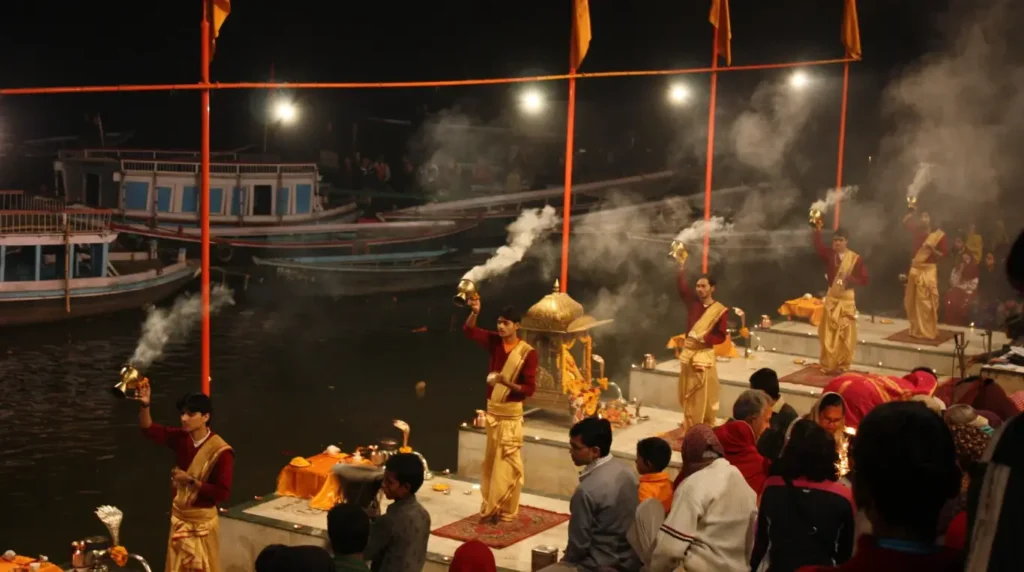
The best way to experience Varanasi is through three moments – the Ganga Aarti at sunset, a dawn boat ride on the Ganga, and walking the ghats. Two nights is the minimum stay, but three nights allows a deeper, more meaningful experience of India’s oldest living city. Discover the ghats, Ganga Aarti, dawn boat ride, where to stay, what to eat, best time to visit, and essential travel tips in this Varanasi travel guide.
Varanasi doesn’t ease you in.
You arrive from the airport through traffic that operates on its own logic. You pass temples, flower sellers, and chai stalls crammed into narrow lanes. Then you reach the ghats, and suddenly, the city opens up in front of you.
And that’s when it starts to land.
This is one of the oldest continuously inhabited cities in the world. Over three thousand years of recorded history. Eighty-four stone ghats descending to the Ganga — a river believed to flow directly from Shiva’s hair. Cremation fires that have never gone cold. Sanskrit chants that begin before sunrise.
Varanasi is the most intensely itself place you’ll visit in India.
It doesn’t perform for visitors. It doesn’t adjust its pace. What you see on the ghats and in the narrow lanes is what has been happening here every day, for centuries.
This guide will help you experience it the right way.
How Many Days Do You Actually Need?
Two nights and two full days is the minimum.
That gives you one evening for the Ganga Aarti, one dawn for the boat ride, and enough time to walk the ghats, explore the gali behind them, and try the food that only exists here.
Three nights is better. It allows a half-day trip to Sarnath, a second morning on the river, and a slower pace — which Varanasi rewards.
Four nights is where the city begins to feel familiar. You start recognizing faces, returning to the same chai stall, and finding small places you missed on your first day.
The Ganga Aarti: How to See It Right
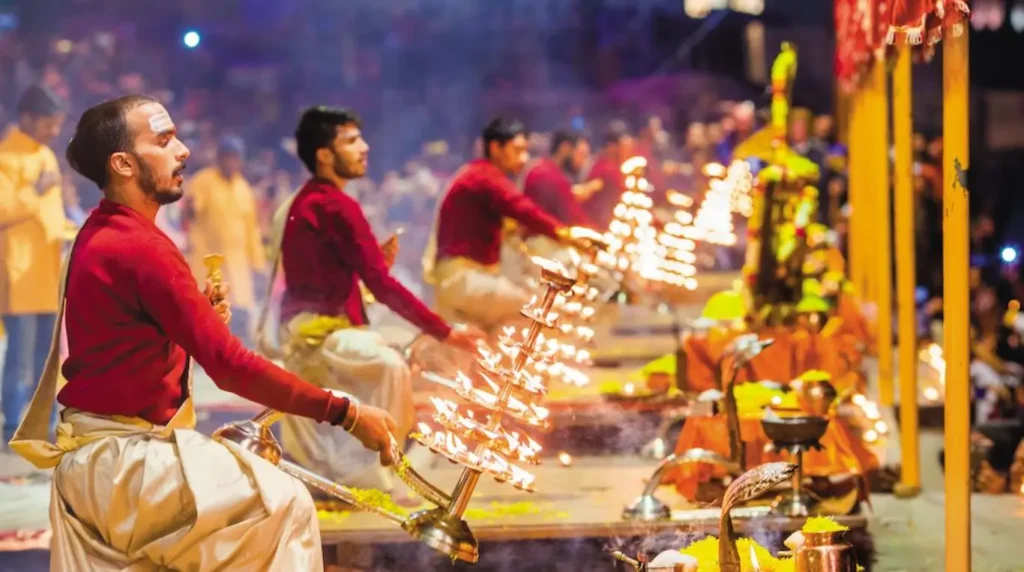
Every evening at sunset, seven priests perform the Ganga Aarti at Dashashwamedh Ghat.
The movements are synchronized — lamps rising, bells ringing, conch shells echoing across the river. This happens every single evening, without fail.
The real question is: where should you watch it from?
From the ghat steps, you’re part of the crowd, sometimes thousands of people, tightly packed. The energy is powerful, but your view can be limited.
From a boat, the experience changes completely.
You’re on the water, facing the entire ceremony. The lamps reflect on the river, the smoke rises into the evening sky, and the sound carries across the Ganga.
This is the version most people remember.
Hire a rowing boat from Assi Ghat for ₹400–600 per person. Arrive at least 45 minutes before sunset and ask to be positioned directly in front of Dashashwamedh Ghat.
The ceremony lasts about 45 minutes.
At the end, release a small diya into the river. the cost of diya and flower ₹20 to 50. It’s simple, quiet, and one of the most meaningful moments of the evening.
The Aarti happens every evening regardless of weather. November and December, when the mist sits on the river and the cold air makes the lamp smoke more visible, are especially atmospheric. But it’s worth seeing in any season.
The Dawn Boat Ride: The Experience Nobody Forgets
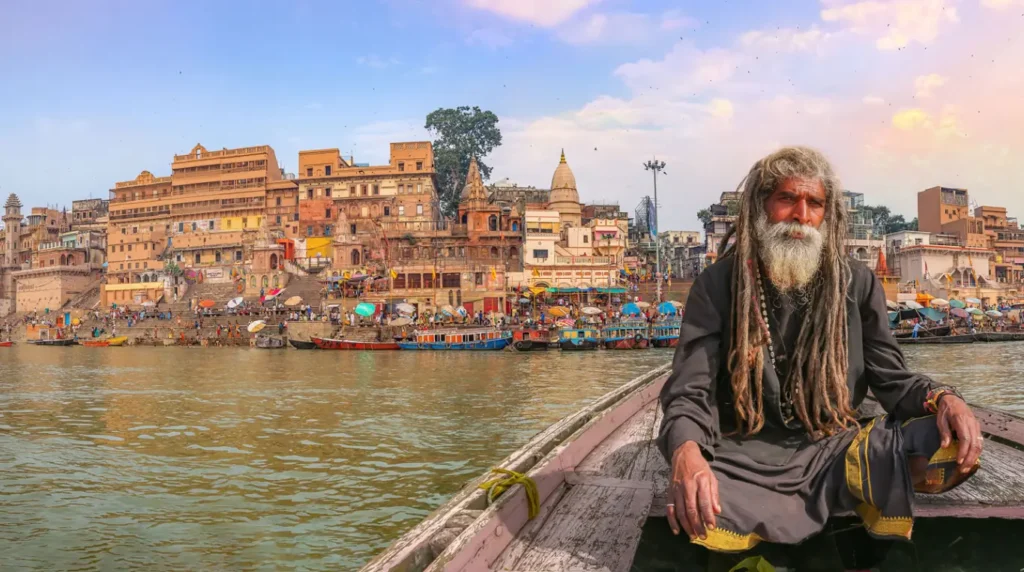
Wake up early, around 5am.
If there’s one experience that defines Varanasi, this is it.
The dawn boat ride on the Ganga isn’t just beautiful, it’s something deeper.
The light builds slowly. Darkness fades into blue, then grey, then a soft golden glow. In winter, mist hangs over the water, and the ghats appear gradually, almost like a reveal.
The sounds come first, a conch shell, temple bells, distant chanting.
Then the city wakes.
People bathe in the river. Priests perform rituals. Life begins again, just as it has for centuries.
And then you pass Manikarnika Ghat.
The cremation fires burn here 24 hours a day. Bodies wrapped in cloth are carried down through narrow lanes and placed on the pyres.
There is no performance here. No attempt to soften what you’re seeing.
Just reality.
There is no photography. And that’s important.
The right response is quiet witnessing.
The boat continues. The sun rises. The river turns gold.
And something about the experience stays with you.
The Ghats: A Guide to What You’re Looking At
The ghats stretch for about 7 kilometers along the river, each with its own purpose and character.
You don’t need to see all 84, but understanding a few makes everything clearer.
| Ghat | What Makes It Worth Visiting |
| Dashashwamedh | The main Ganga Aarti ghat — seven priests, fire ceremony every evening at sunset. The most visited, the most powerful. |
| Manikarnika | The great cremation ghat — fires burning 24 hours a day, every day, for centuries. No photography. Quiet witnessing only. |
| Assi | The southernmost ghat, quieter and more contemplative. Popular with yoga practitioners and long-term visitors. Good base for hotels. |
| Harishchandra | The older cremation ghat, smaller and more intimate than Manikarnika. Named after the king who sold himself into slavery to keep a promise. |
| Kedar | A Shiva ghat with a distinctive red-and-white striped temple. Strong South Indian devotee presence. |
| Scindia | Partially submerged — a temple collapsed into the river in the 19th century and has been slowly sinking ever since. Photogenic and haunting. |
| Tulsi | Named after the 16th-century poet-saint Tulsidas, who wrote the Ramcharitmanas here. Quieter than the northern ghats. |
| Man Mandir | Has a beautiful astronomical observatory built by the same Maharaja Jai Singh II who built Jaipur’s Jantar Mantar. Rarely visited. |
Walking from Assi to Manikarnika and back takes about 2–3 hours at a relaxed pace.
But the real city is behind the ghats, in the narrow lanes.
That’s where daily life happens.
Kashi Vishwanath Temple
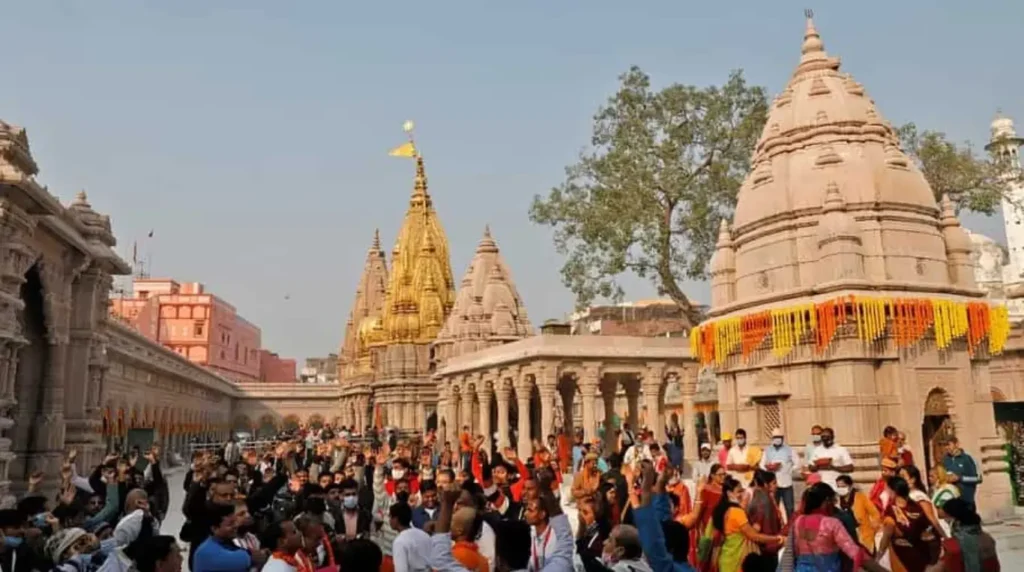
The Kashi Vishwanath Temple is Hinduism’s most sacred Shiva shrine, one of the 12 Jyotirlinga temples where Shiva is believed to be present as a pillar of light. The current temple was built in 1780 by Maharani Ahilyabai Holkar after the original was destroyed by Aurangzeb. The gold-plated spires above the inner sanctum, donated by Maharaja Ranjit Singh of Punjab, are visible from the river and from several points in the old city.
In 2021, a new temple corridor (Kashi Vishwanath Dham) was inaugurated, creating a more orderly approach from the riverside and expanding the complex significantly. Security is strict, bags, phones, and cameras are deposited at the entrance (cloakrooms available).
Non-Hindus are not permitted inside the inner sanctum, the innermost chamber where the Jyotirlinga is. They can access the outer courtyard and the corridor.
The temple is most intense during the morning and evening aarti, Visit early morning for a smoother experience. The line moves faster than it appears from the entrance.
Sarnath: The Other Story
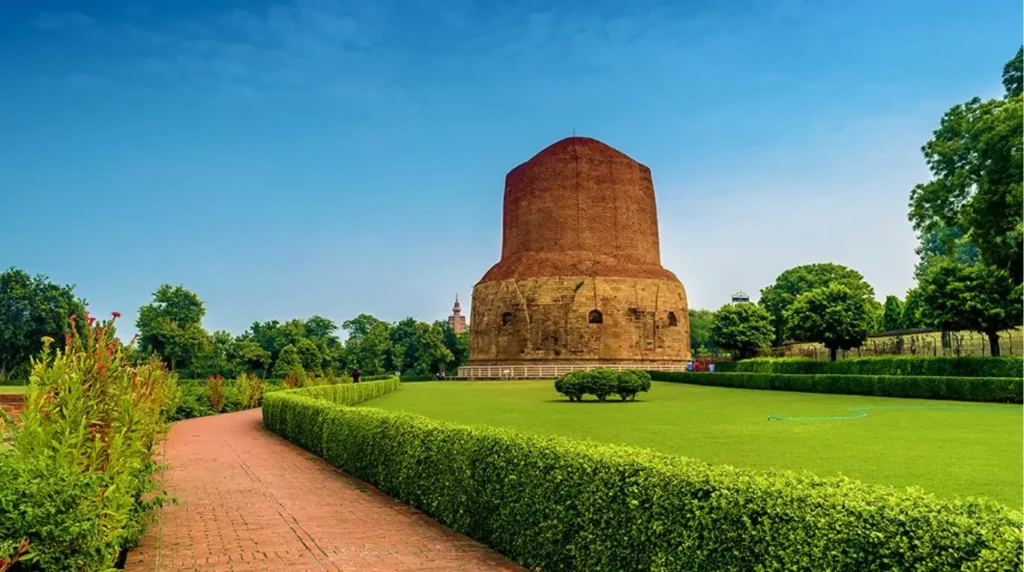
Just 10 km from Varanasi, Sarnath feels like a different world. This is where the Buddha gave his first sermon after attaining enlightenment at Bodh Gaya.
This occurred in the 5th century BCE. The deer park where he taught his first five disciples is now an archaeological site containing the ruins of monasteries and the Dhamek Stupa, a 43-meter brick structure built in the 5th century CE on the spot where the first sermon was delivered.
The Sarnath Archaeological Museum is one of India’s most important small museums. It houses the Lion Capital of Ashoka, which features four lions standing back-to-back on an abacus and a wheel. This sculpture became India’s national emblem in 1950. Seeing it in person and understanding the scale and quality of the carving makes the emblem on every rupee note look different afterward.
A visit to Sarnath takes about 2.5 to 3 hours. It is best as an afternoon trip from Varanasi; it is quieter than the ghats, cooler in the shade of the deer park, and offers a genuinely different atmosphere from the intensity of the river city.
Transportation:
Ride-sharing: Use Ola or Uber if you prefer a metered price.
Auto-rickshaw from Varanasi old city: ₹200 to ₹300 return (negotiate the return fare before leaving).
Where to Stay in Varanasi
The single most important accommodation decision in Varanasi is which side of the ghats you stay on.
Ghat-side means your window overlooks the river, you are a five-minute walk from Assi or Dashashwamedh, and the sounds of the city, temple bells, boat engines, and the call to prayer, arrive with the morning light. This is the experience most visitors come for.
City-side (the Cantonment area near the railway station) is more convenient for transport but completely misses the character of Varanasi. Unless you are staying for only one night and need proximity to the station, stay ghat-side.
Options at Different Price Points
Heritage Guesthouses in the Gali (₹800 to ₹2,000): There are hundreds of small guesthouses tucked into the narrow lanes (galis) behind the ghats, many in buildings that are over 200 years old. Quality varies wildly, so read recent reviews carefully. The good ones offer excellent value; the bad ones suffer from persistent noise and unreliable plumbing.
Brijrama Palace (from ₹12,000 per night): An 18th-century riverside palace converted into a heritage hotel. It sits right on the Ganga and offers the best river views in Varanasi. It is not cheap, but the location and architecture are genuinely extraordinary.
Rashmi Guest House (from ₹2,500): A long-established guesthouse in the Assi Ghat area with clean rooms, helpful staff, and a rooftop overlooking the river. This is the reliable mid-range choice recommended by seasoned travelers.
Stops Hostel (from ₹700 per dorm bed): Often cited as the best hostel in Varanasi. It features a good location between Assi and Dashashwamedh, clean facilities, and a social kitchen. The daily boat rides organized for guests are an excellent option if you haven’t arranged one independently.
What to Eat in Varanasi
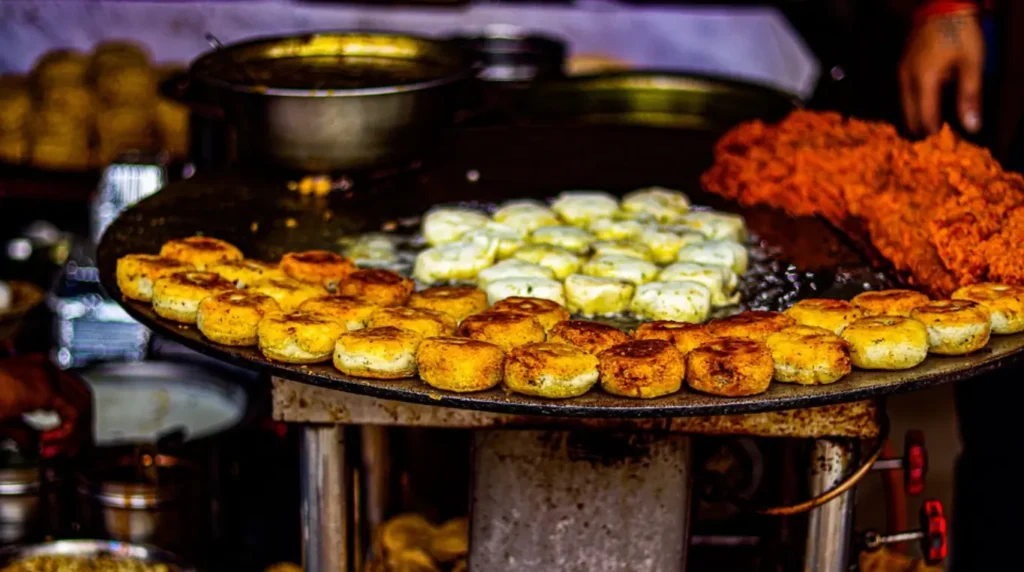
The Flavors of Varanasi
Varanasi has a specific food culture that is worth understanding. The city’s cooking tradition is predominantly Hindu and Brahmin, meaning the finest food is vegetarian, and the street food is some of the most distinctive in North India.
- Kachori Sabzi: This is the quintessential breakfast. It consists of crispy puffed pastries stuffed with spiced lentils and served with a potato curry. Every morning in every major ghat lane, vendors who have been working since before sunrise serve this for ₹30 to ₹50. It is genuinely one of the best breakfasts in India.
- Banarasi Paan: This is not just a snack but an experience. A betel leaf is packed with areca nut, lime paste, gulkand (rose petal preserve), and various spices. Paan from the famous stall near the Godowlia intersection is a Varanasi institution. Ask for a “sweet paan” (meetha paan) if you want the non-tobacco version. Chew it slowly and let the flavors unfold.
- Blue Lassi: Located near Vishwanath Gali, this shop has been making thick yogurt drinks in over 70 flavors since 1925. The queue is often long, but the lassi is extraordinary, thick enough to stand a spoon in and topped with fresh fruit and nuts.
- Chaat: Visit the evening stalls near Dashashwamedh for tamatar chaat (a tomato-based, Varanasi-specific specialty), aloo tikki, and golgappa. Participating in these late-afternoon eating rituals at a stall crowded with locals is an essential part of the Varanasi experience.
- Malaiyyo: This is a seasonal winter dessert, a cloud-like milk foam sweetened with saffron and cardamom. It is only available during the cool mornings from November through January, as the temperature allows the foam to maintain its structure. It dissolves almost immediately on the tongue and is found nowhere else in India in quite this form.
Logistics: Getting There and Around
Arrival
- By Air: Varanasi Lal Bahadur Shastri Airport (VNS) receives direct flights from Delhi, Mumbai, Kolkata, and Bengaluru via IndiGo, Air India, and SpiceJet. The airport is 26 kilometers from the city; allow 45 to 60 minutes for a taxi.
- By Train: Varanasi Junction is a major hub. The Vande Bharat Express from Delhi takes about 8 hours, while the overnight Rajdhani or Shiv Ganga Express takes 11 to 13 hours.
- Important: The railway station is in the Cantonment area, 8 kilometers from the ghats. Factor in a 20 to 30-minute ride by auto or Ola to reach your riverside hotel.
Best Time to Visit
- Winter (October–March): The most comfortable window. The mist on the river during a December dawn boat ride creates a hauntingly beautiful atmosphere.
- November (Dev Deepawali): If you have flexibility, plan for the full moon of Kartik (15 days after Diwali). The entire ghat system is lit with hundreds of thousands of earthen lamps. It is one of the most visually extraordinary sights in the world.
- Summer (April–June): It is intensely hot, but the city is less crowded, offering a more “local” feel.
- Monsoon (July–September): The Ganga rises significantly, sometimes submerging the lower steps. The city takes on a dramatic, rain-soaked character.
Practical Etiquette & Safety
- Navigating the Gali: The ghat district is navigable only on foot. For longer trips to Sarnath or the station, use Ola or Uber to avoid the “commission-trap” shops that some auto-rickshaw drivers may insist on visiting.
- Dress Code: Modest dress is required. Keep shoulders and knees covered. Remove shoes before entering temples; a small tip (₹20–30) for the shoe-minder is standard.
- Photography: This is strictly prohibited at the cremation ghats (Manikarnika and Harishchandra). This rule is firmly enforced by locals and must be respected. Always ask before photographing people directly elsewhere.
- Health: Do not let Ganga water touch your face or mouth. Despite its sacred status, it is heavily polluted. Drink only sealed bottled water, even for brushing your teeth.
Also Read: North India Tour 10 Days: Delhi, Taj Mahal, Jaipur, Varanasi & Rishikesh Itinerary
Frequently Asked Questions about Varanasi Travel Guide
Is Varanasi safe?
Yes. It has a well-developed tourist infrastructure. Standard city precautions apply, but the constant activity of pilgrims and priests makes the ghats feel safe even in the early hours.
Is it worth visiting?
Unreservedly, yes. Varanasi operates on a different frequency than the rest of the 21st century. It is not “comfortable” in a traditional sense, but the sight of the golden spires of Kashi Vishwanath at dawn is an experience that stays with you forever.
Do I need a guide?
For the labyrinthine galis and historical context of the temples, a licensed guide is a great investment (approx. ₹1,000–1,500 for a half-day). For the boat ride and the Aarti, you can easily manage on your own.
Where should I buy Banarasi Silk?
Avoid “factory tours” offered by touts. Visit the Handloom House on Maidagin Road or Cottage Industries Exposition for certified, fixed-price silk. A genuine saree typically starts at ₹3,000; anything significantly cheaper is likely a machine-made imitation.
Varanasi isn’t “beautiful” in a conventional way, it is intense and real. It shows you things other cities keep hidden. When you sit on a boat at dawn, you aren’t just a tourist; you are witnessing a ritual that has remained unchanged for longer than recorded history.
WishToGo includes Varanasi in our North India and Heritage circuits. Contact us at hello@wishtogo.in to build your perfect itinerary.