
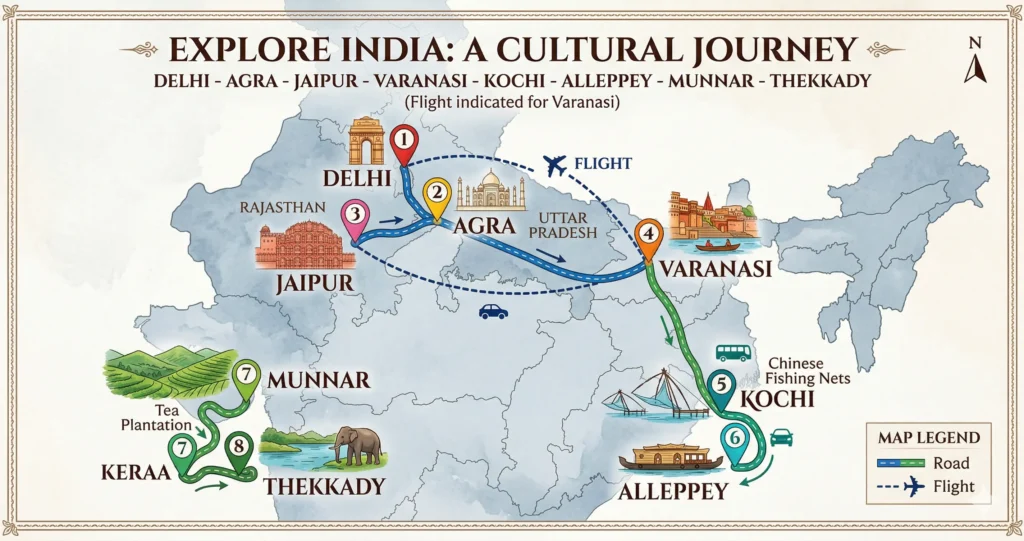
A India Itinerary 15 Days is enough for first-time visitors if you focus on a few key regions instead of trying to see the whole country. A well-balanced 2-week India trip can include Delhi, Agra, Jaipur, Varanasi, and Kerala, giving you a mix of history, culture, spirituality, backwaters, tea hills, and wildlife.
Fifteen days feels like a lot.
Until you realize how big India actually is.
Delhi to Kochi alone is 2,800 kilometers. The food, language, architecture, and even the way people greet each other, all of it changes completely between North and South India. Trying to see too much of the country in two weeks is a mistake almost everyone makes on their first trip.
This itinerary doesn’t try to do everything.
Instead, it goes deep into the places that matter most, the ones that give you a genuine sense of India rather than just a checklist of monuments visited.
The route: Delhi and its Mughal heritage, the Taj Mahal and Jaipur’s forts, the ancient city of Varanasi, and then a flight south to Kerala for houseboats, tea gardens, and wildlife. Two distinct worlds, one connected journey.
Here’s exactly how to do it.
The Route at a Glance
| Day | Location | Highlights | Night |
| 1 | Delhi | Arrive, India Gate, Connaught Place dinner | Delhi |
| 2 | Delhi | Red Fort, Chandni Chowk food walk, Qutub Minar, Humayun’s Tomb | Delhi |
| 3 | Agra | Train from Delhi, Agra Fort, Mehtab Bagh sunset view of the Taj | Agra |
| 4 | Jaipur | Taj Mahal sunrise, Fatehpur Sikri, drive to Jaipur via NH21 | Jaipur |
| 5 | Jaipur | Amber Fort, City Palace, Hawa Mahal, evening bazaars | Jaipur |
| 6 | Varanasi | Fly Jaipur–Varanasi, Ganga Aarti by boat at sunset | Varanasi |
| 7 | Varanasi | Dawn boat ride on the Ganga, ghats walk, optional Sarnath | Varanasi |
| 8 | Kochi | Fly to Kochi, Fort Kochi heritage walk, Kathakali performance | Kochi |
| 9 | Alleppey | Fort Kochi morning, drive to Alleppey, houseboat noon check-in | Houseboat |
| 10 | Munnar | Backwater morning, houseboat checkout, 4hr drive to Munnar | Munnar |
| 11 | Munnar | Sunrise tea garden trek, Eravikulam wildlife, waterfalls | Munnar |
| 12 | Thekkady | Spice farm drive, Periyar wildlife boat safari | Thekkady |
| 13 | Kochi | Morning drive back, Fort Kochi afternoon, pre-departure | Kochi |
| 14 | Flex | Cherai Beach day OR fly to Goa | Kochi / Goa |
| 15 | Depart | Morning at leisure, airport transfer, fly home | Flight |
A note on the three domestic flights: book them as early as possible. Jaipur to Varanasi, Varanasi to Kochi, and optionally Kochi to Goa. Book together on IndiGo or SpiceJet, eight to ten weeks ahead, and you’ll pay ₹3,000 to 5,000 per sector. Wait until two weeks before and you’ll pay three times that. Book the flights first, everything else can be arranged closer to your dates.
Days 1–2: Delhi – Two Days Well Spent
A lot of travelers treat Delhi as just a gateway city, something to pass through on the way to Agra.
That’s a mistake.
Delhi has more layers of history than almost any city on earth. Eight different civilizations built their capitals here, one on top of the other, over four thousand years. What you see today is all of them existing simultaneously, Mughal monuments, British colonial architecture, medieval temples, and one of Asia’s most dynamic modern cities.
On your first full day, start with Old Delhi.
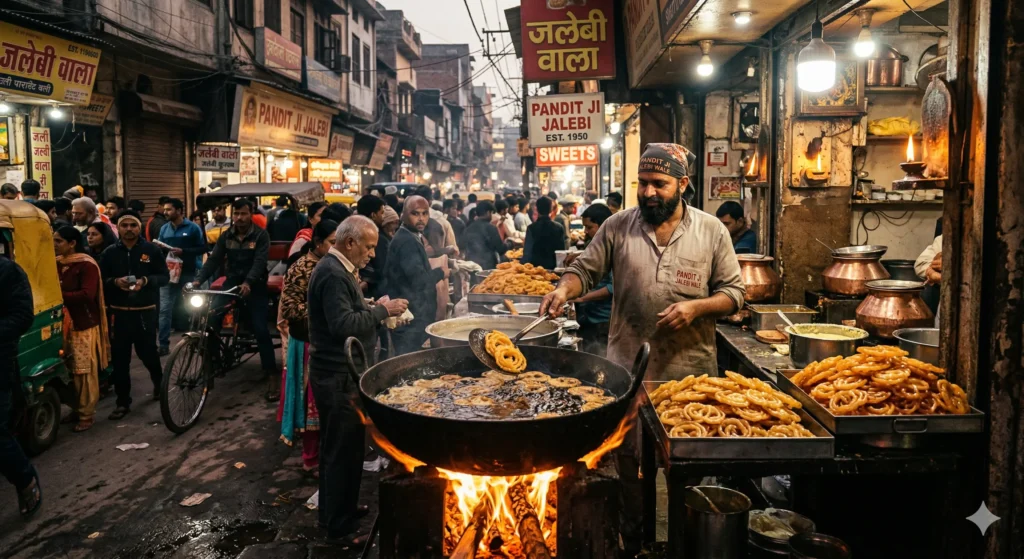
The Red Fort (built 1638, entry ₹650 for foreign visitors) is the starting point, Shah Jahan’s vast palace-fortress on the banks of the Yamuna. But the real experience of Old Delhi isn’t inside the fort. It’s in the lanes outside. Chandni Chowk is one of the great street food corridors in Asia. The Paranthe Wali Gali serves butter-stuffed flatbreads in twenty varieties. Old Famous Jalebi Wala has been frying the same sweet spirals since 1884. Al Jawahar near Jama Masjid has been serving mutton nihari since before Indian independence, and the recipe hasn’t changed.
The Jama Masjid, a five-minute walk from the Red Fort, is India’s largest mosque, built to hold 25,000 worshippers. Climb the southern minaret if the queue allows. The view over Old Delhi’s roofscape of domes, satellite dishes, and 400 years of improvised construction tells you everything about what this city is.
Spend day two in New Delhi. Qutub Minar is the 73-metre minaret that changed Delhi’s identity in 1193, surrounded by the ruins of India’s first mosque and an iron pillar cast in the 4th century that hasn’t rusted in 1,600 years. Humayun’s Tomb, built in 1572, is the architectural prototype for the Taj Mahal, and it’s often nearly empty, which makes it a beautiful place to understand what’s coming next.
Don’t rush Delhi. The instinct on day one is to treat it as a gateway to the ‘real’ India. Two days here, done properly, is the beginning of understanding the country rather than just arriving in it.
Day 3: Agra – Setting Up the Sunrise
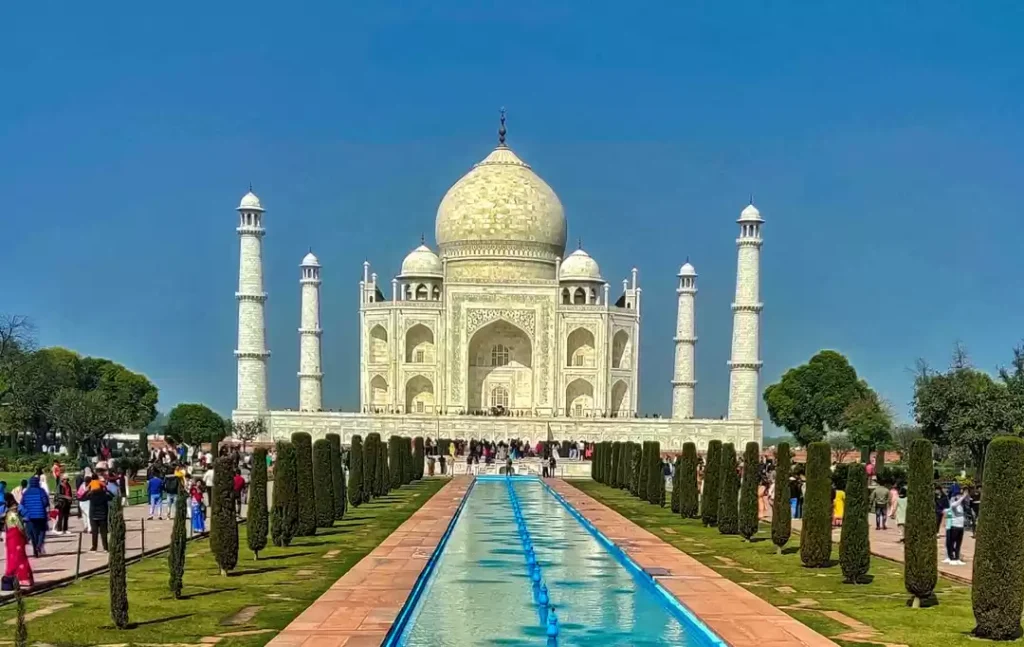
The Gatimaan Express leaves Delhi Hazrat Nizamuddin at 8:10am and arrives in Agra in 90 minutes, at 160 km/h. It’s India’s fastest train, and the journey through the Yamuna plains, flat, vast, the occasional vulture on a roadside tree, is its own small pleasure. Book it on the IRCTC app at least two weeks ahead (you’ll need a local SIM to register, worth getting at the Delhi airport on arrival).
Here’s a counterintuitive tip: don’t go to the Taj Mahal today.
Save it for the sunrise tomorrow.
Instead, start with Agra Fort. Most people visit it as an afterthought after the Taj, but it deserves better than that. The fort was Shah Jahan’s palace before it became his prison. His son Aurangzeb imprisoned him here in 1658, and Shah Jahan spent his last eight years in the Musamman Burj tower, looking across the Yamuna at the Taj Mahal he had built for his wife.
That view changes everything. Stand where he stood, look at the monument across the river, and the Taj Mahal becomes something more than a beautiful building.
In the late afternoon, cross the river to Mehtab Bagh, a garden on the Yamuna’s north bank, directly opposite the Taj. Entry is ₹300, and almost no one knows about it. From the garden’s edge, the Taj Mahal catches the setting sun on its north face, the marble moving through gold and amber as the light drops. No crowds. No vendors. Just you and the monument across the water.
Stay in Tajganj tonight — the neighbourhood within walking distance of the South Gate. It means a 5-minute walk to the Taj at 5:30am tomorrow, and no logistics stress before sunrise.
Day 4: The Taj at Sunrise, Then Jaipur
Set an alarm.
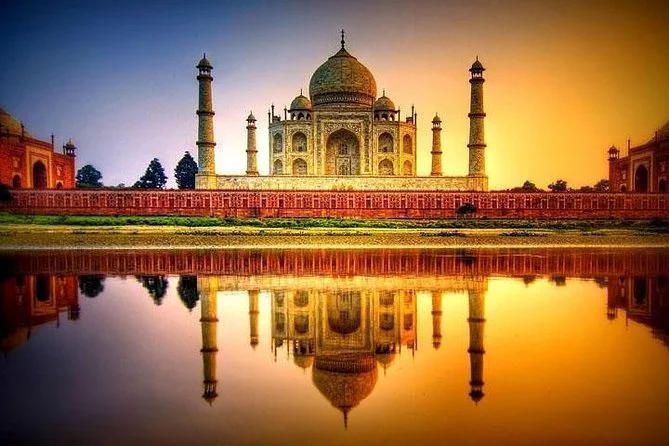
The Taj Mahal gates open 30 minutes before sunrise. Being in position at the central reflecting pool by 6:15am is the goal.
Here’s what actually happens at that hour.
The marble shifts from grey-blue to silver to gold to a pink that photographers spend careers trying to capture and mostly can’t. The reflecting pool is completely still, the fountains don’t run until later. There are maybe a hundred people in the entire complex. The only sounds are pigeons and the distant call of the morning azan.
The Taj Mahal is larger than photographs suggest. Its proportions are more perfect. The gemstone inlay work visible at close range, 28 types of semi-precious stone set in marble by craftsmen who had no equivalent anywhere in the 17th century world, is more astonishing. None of the photographs fully prepare you. Most people who visit describe it the same way: the actual experience exceeded what they expected, even when they expected it to be extraordinary.
After the sunrise visit, drive to Fatehpur Sikri, 45 minutes southwest of Agra.
This is Akbar’s ghost capital, built in 1571 and abandoned 15 years later when the wells dried up. The entire Mughal court complex is intact in red sandstone: the audience halls, the emperor’s private quarters, the Jodha Bai Palace, the Panch Mahal. The Buland Darwaza gateway is 54 metres tall, the largest entrance gate in the world — built to commemorate Akbar’s Gujarat victory. Hire a guide here (₹800, fixed government rate). Without one, you see extraordinary ruins. With one, you understand a civilisation.
From Fatehpur Sikri, it’s 3.5 hours to Jaipur. Arrive by evening.
Day 5: Jaipur – The City That Earns Its Reputation
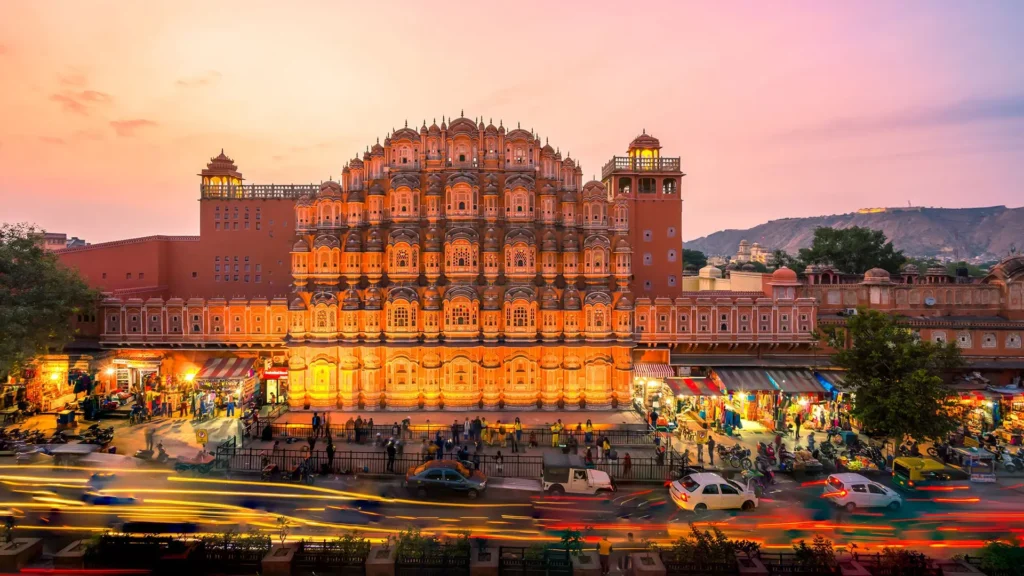
Jaipur has a postcard problem.
The photographs, pink walls, ornate windows, caparisoned elephants, make it look like a stage set. What you actually find is a real, working city of four million people built on a 1727 grid plan that still functions, surrounding one of the finest intact medieval urban environments in Asia.
Start at Amber Fort, before 9am.
The fort was built over more than a century by successive Jaipur maharajas, a combination of Rajput military architecture and Mughal decorative tradition that produces something that doesn’t quite exist anywhere else. The Sheesh Mahal (Hall of Mirrors) alone justifies the trip. The ceiling and walls are covered in thousands of convex mirror fragments, set in patterns that amplify a single candle into a room full of stars. When the guide switches off the electric lights and holds up a flame, the Sheesh Mahal becomes one of the most beautiful interiors you’ve ever stood in.
The jeep ride up the stone ramp (shared, ₹600–800 return) gives a better view of the fort’s exterior than arriving on foot. Go as early as you can, the fort’s quiet in the first hour, and the light on the Aravalli hills from the upper ramparts is excellent.
In the city: City Palace (still partially inhabited by the Jaipur royal family, excellent museums), Jantar Mantar (18 stone astronomical instruments built in 1724 that predicted eclipses with extraordinary accuracy, genuinely fascinating with a guide), and the Hawa Mahal photographed from the coffee shop across the street.
Then the bazaars. Johari Bazaar for silver and gemstones, Jaipur handles 80% of the world’s coloured gemstones, and even window shopping is remarkable. Bapu Bazaar for block-printed textiles and leather mojris. Anokhi on Tilak Marg for quality block-printed fabrics at fixed prices.
Dinner at Laxmi Mishtan Bhandar in the old city (local institution since 1954, outstanding vegetarian thali) or Suvarna Mahal at the Rambagh Palace if you’re treating yourself.
Days 6–7: Varanasi – The City That Changes Things
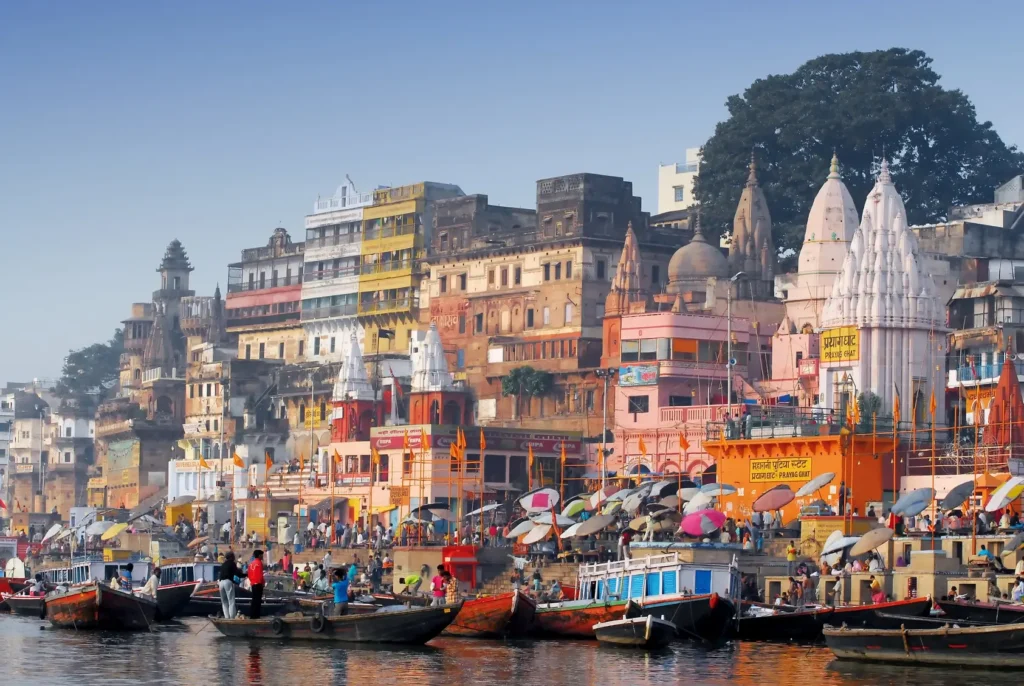
The flight from Jaipur to Varanasi takes about 90 minutes. When you land, you know immediately that you’re somewhere different.
It’s not just the traffic from the airport.
It’s the density. The sound. The feeling of a city that has been continuously inhabited for 3,000 years and has no particular interest in what the 21st century thinks about it.
Varanasi is the spiritual centre of Hinduism, the city where Hindus come to die, where the sacred Ganga flows northward (the only point in its course where it does), and where the ghats (stone steps descending to the river) have witnessed an unbroken cycle of prayer, cremation, and devotion since before recorded history.
Your first evening here is the Ganga Aarti at Dashashwamedh Ghat.
Go by boat.
Hire a wooden rowing boat from Assi Ghat for ₹400 to 500 per person. Seven priests perform the fire worship ceremony simultaneously at sunset, precise choreography, conch shells, bells, camphor smoke, fire lamps, and you’re watching from the river, at the level of the ceremony, not pressed into the crowd on the steps. The combination of the lamps, the river, the chanting, and the complete seriousness of everyone involved creates something that’s hard to describe and harder to forget.
The second morning – Day 7 begins at 5:15am.
This is the experience that most people describe as the most atmospheric morning of their lives. The dawn boat ride on the Ganga drifts north along all 84 ghats as the city wakes. The light accumulates gradually. Pilgrims immerse in the river with complete focus. Sadhus sit in meditation on the stone steps. The Manikarnika burning ghat comes into view, where bodies wrapped in white cloth are brought for cremation, and the fires have not gone cold for centuries.
There is no photography at Manikarnika. The right response is quiet witnessing.
After breakfast, walk the ghats on foot, 3.5 kilometres from Assi to Manikarnika, slowly. Behind the ghats, in the narrow lanes called gali, is the old city: silk weavers, tea stalls, temples you turn sideways to enter, chai in clay cups that you throw on the ground when finished. If you have time in the afternoon, drive to Sarnath — where the Buddha gave his first sermon after enlightenment, and where India’s national emblem (the Lion Capital of Ashoka) is displayed in a small museum.
Days 8–9: Kochi and the Backwaters
The flight from Varanasi to Kochi is the itinerary’s turning point.
You land in a completely different country.
The air is green and humid. The language changes completely. The food changes. The pace changes. South India has a character that’s entirely its own, and Kerala, the southernmost state before the tip of the peninsula, is its most distinctive expression.
Check into Fort Kochi, the historic Portuguese and Dutch colonial quarter on the western peninsula. Not the mainland city of Ernakulam, Fort Kochi itself, where 16th-century buildings house galleries, boutique hotels, and the best filter coffee in Kerala.
The Chinese fishing nets on the seafront, enormous cantilevered structures probably introduced by Chinese traders in the 14th century, are still operated by local fishermen on tidal schedules. St Francis Church (1503) is the oldest European church in India. The Dutch Palace at Mattancherry houses some of the finest Kerala mural paintings in existence.
In the evening, go to a Kathakali performance. Arrive 45 minutes before it starts, the makeup application is part of the show. The face paint for a single character takes 2 to 3 hours in full, and watching it applied (the base colour, the rice-paste relief, the mirror under the eyelid) is its own kind of performance. The dance-drama uses a vocabulary of hand gestures and facial expressions precise enough to convey entire narratives without words.
The next morning, drive to Alleppey, 90 minutes south.
Check into your houseboat by noon.
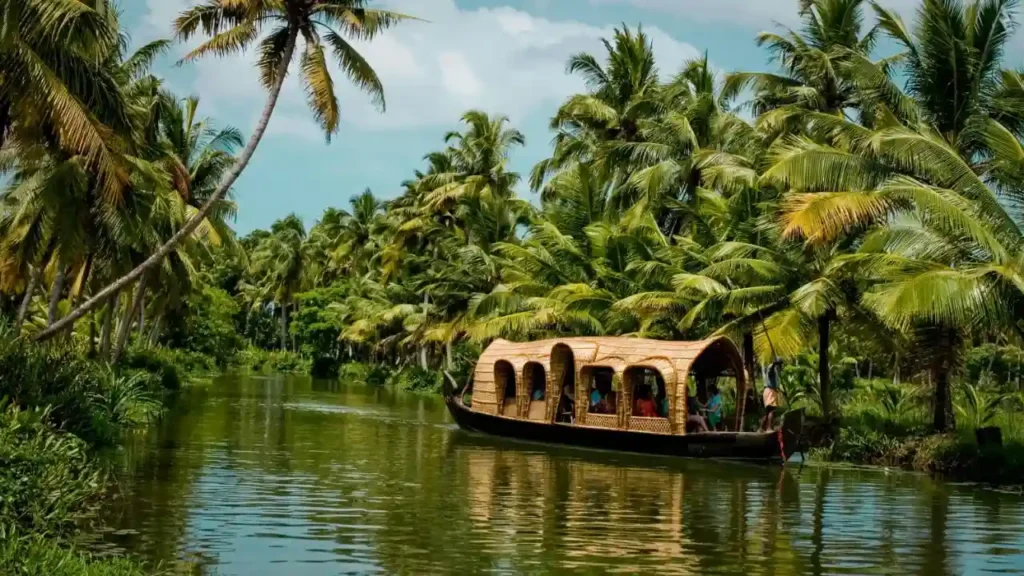
The Kerala houseboat is a direct descendant of the traditional cargo vessels that moved rice and spices through these waterways for centuries, bamboo frame, coir matting, a crew of three, all meals included. The afternoon moves through canals so narrow that the palm trees meet overhead. The cook prepares the karimeen pollichathu, pearl spot fish wrapped in banana leaf and grilled which is the dish of the backwater ecosystem and genuinely cannot be replicated anywhere outside Kerala.
Sunset on Vembanad Lake: the boat reaches open water, the lake stretches 96 kilometres in every direction, and the sky does things to the water that no photograph captures fully. The boat anchors for the night. The sounds stop.
Ask one question when booking any houseboat: where does it anchor overnight? You want open lake, not a crowded jetty with 30 other boats and generators running all night. This single question separates a great houseboat experience from a disappointing one.
Days 10–11: Munnar – Tea Country
The drive from Alleppey to Munnar takes about four hours.
It also gains 1,600 metres of altitude, which changes everything.
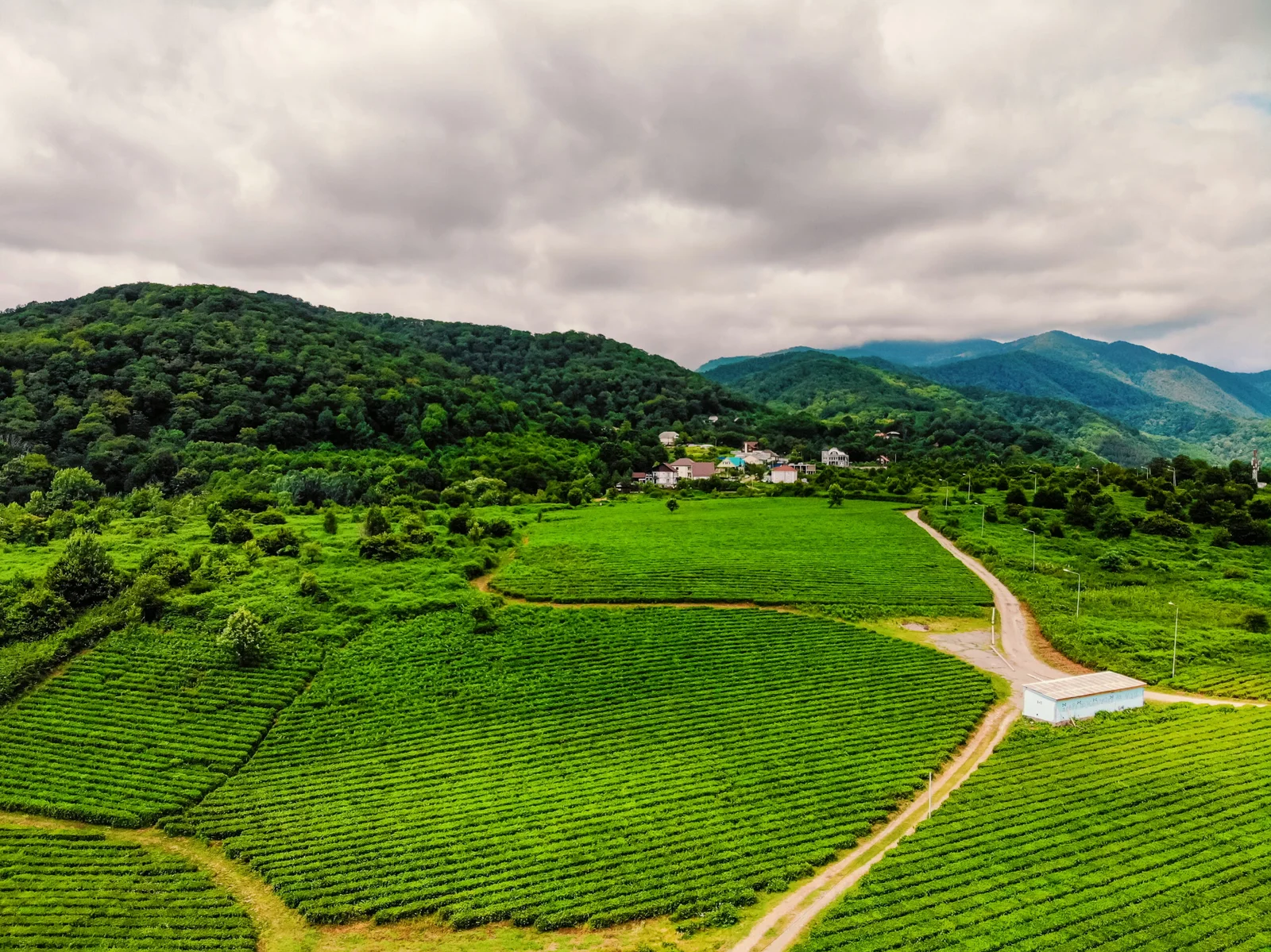
The road climbs through rubber plantations, through cardamom and pepper forests where the air actually smells of spice, and then into the plateau around Munnar where 67,000 acres of tea bushes cover the hills in geometric rows. The green changes as you gain altitude deeper, more saturated, the colour of somewhere that gets a lot of rain and never takes it for granted.
Munnar’s tea is worth understanding. The KDHP estates (the Tata Tea successor operation that manages most of the plateau) produce some of India’s finest orthodox tea fresh, floral, the kind of tea that makes the supermarket version seem like a different category of product. Buy it from the KDHP company store in town. It costs less than the same tea exported and packaged for Europe, and it tastes significantly better.
The second Munnar morning begins at 5:30am with the tea garden sunrise trek. Walking through the tea rows before light, with dew on every leaf and the mist filling the valleys below, is quietly extraordinary. The tea pluckers mainly Tamil women in bright saris whose families have worked these estates for generations begin arriving at around 6:30am. The sight of the workforce moving through the tea in the first light is one of the most photographically beautiful images in Kerala.
Eravikulam National Park, 15 kilometres from town, is home to the Nilgiri Tahr, a mountain ungulate endemic to the Western Ghats that was nearly extinct before the park’s protection reversed the population. The trail through the high-altitude grassland is easy walking, and the views to Anamudi South India’s highest peak, are worth the entry fee alone.
Day 12: Thekkady – Wildlife in the Forest
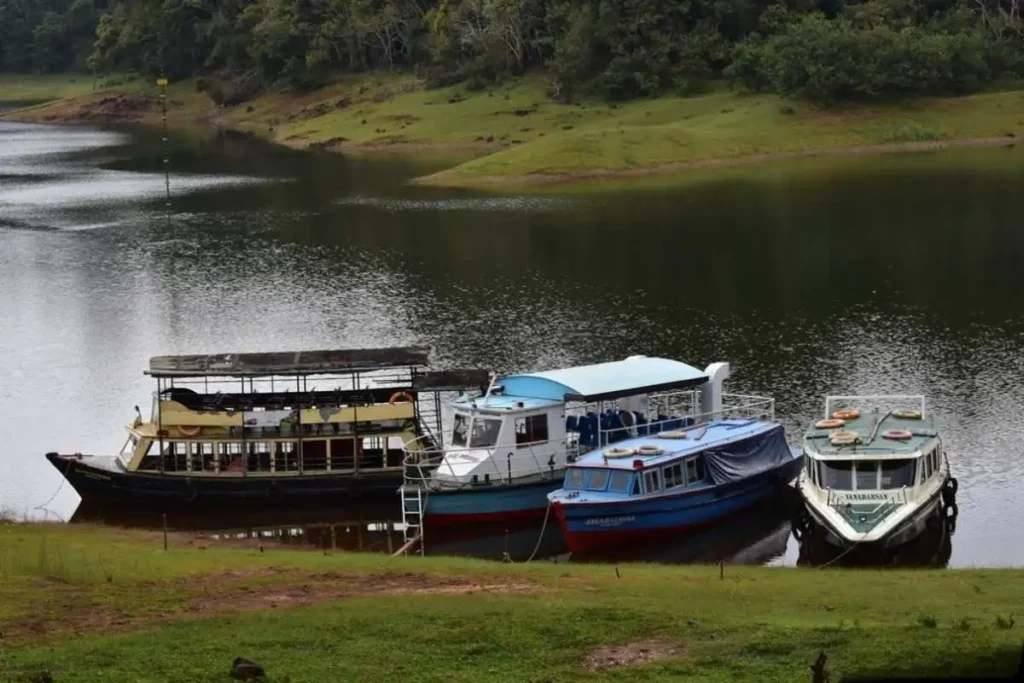
The drive from Munnar to Thekkady takes about three hours through Kerala’s spice country.
Stop at one of the family-run spice farms between Kumily and the park boundary. Cardamom on the plant, black pepper climbing its support trees, vanilla vines winding through the shade walking through what looks and smells like a living spice market is one of the small, genuine pleasures of this part of Kerala.
The Periyar Wildlife Boat Safari is the main reason to be here.
The KTDC runs boats across the Periyar Lake reservoir inside the tiger reserve, twice daily. Take the morning boat at 7:30am that’s when the elephants come to the water. Wild elephant herds at the shoreline are reliable enough that most boats see them. Gaur (Indian bison the world’s largest bovine) are common on the banks. The tigers in the reserve almost never show themselves from the water, but their pugmarks in the mud are visible from the boat.
It’s a quieter kind of wildlife encounter than a Rajasthan safari no pursuit, no tracking tension. Just the boat moving across the reservoir and the forest going about its morning with complete indifference to the audience.
The lake itself, surrounded by dense forest and the occasional dead tree rising from the water with a fish eagle perched on top, is beautiful enough to warrant the trip on days with no elephant sightings.
Days 13–15: Back to Kochi, and Home
The drive from Thekkady to Kochi takes about four hours, descending through the same rubber and cardamom country you climbed through four days ago familiar now, seen from the other direction.
Arrive back in Fort Kochi by early afternoon. Use the time for the things you might have missed on Day 8: the Mattancherry antique quarter (Kerala bronze, colonial maps, teak from dismantled heritage buildings), or a long lunch at Kashi Art Cafe a gallery and cafe in a 300-year-old building that serves excellent Kerala fish and the best filter coffee in the state.
Day 14 is intentionally flexible. If you’re flying home from Kochi, use it for a day trip to Cherai Beach the long, clean beach on Vypeen Island, accessible by a 25-minute ferry from Fort Kochi. If your itinerary includes a final night in Goa, the 45-minute IndiGo flight from Kochi makes it an easy addition.
The final morning is yours. A walk along the Fort Kochi seafront at dawn watching the Chinese fishing nets haul their morning catch, the colonial buildings still in shadow is a fitting last image.
Kochi International Airport is 45 minutes from Fort Kochi. Direct flights connect to Dubai, London, Doha, Singapore, and Kuala Lumpur.
Fifteen days in India. You’ll leave understanding why so many people come back.
What This Trip Costs
These figures cover everything inside India flights between cities, hotels, meals, transport, entry fees, and the houseboat night. International flights from your home country are separate. Prices assume travelling as a couple.
| What You’re Spending On | Budget (₹/person) | Mid-Range (₹/person) | Comfortable (₹/person) |
| Hotels — 14 nights | ₹16,000–26,000 | ₹40,000–70,000 | ₹1,00,000–2,50,000 |
| 3 domestic flights | ₹9,000–14,000 | ₹13,000–19,000 | ₹19,000–32,000 |
| Cars & local transport | ₹5,000–9,000 | ₹11,000–17,000 | ₹20,000–35,000 |
| Food (all meals) | ₹7,000–11,000 | ₹16,000–26,000 | ₹30,000–60,000 |
| Entry fees & guides | ₹4,000–7,000 | ₹8,000–13,000 | ₹15,000–26,000 |
| Houseboat — 1 night | ₹5,000–8,000 | ₹11,000–20,000 | ₹28,000–55,000 |
| Total per person | ₹46,000–75,000 | ₹99,000–1,65,000 | ₹2,12,000–4,58,000 |
| In USD (approx) | $550–$900 | $1,180–$1,970 | $2,530–$5,470 |
The biggest cost lever you control: the domestic flights. Book them eight weeks out on IndiGo or SpiceJet and each sector costs ₹3,000 to 5,000 per person. Book at two weeks and it’s ₹8,000 to 12,000. For two people across three flights, the difference is ₹30,000 or more enough for two extra nights in a heritage hotel. Book the flights first.
Frequently Asked Questions for India itinerary 15 days
Is 15 days enough for India?
Enough to see all of India? No. Enough to experience India properly across two regions? Absolutely.
The travelers who feel disappointed by a 15-day India trip are almost always the ones who tried to squeeze in too much a Rajasthan desert leg, a Goa extension, a Himachal detour — and ended up spending most of their time in airports and cars.
This itinerary is designed to avoid that. Two nights per city, genuine time in each place, three flights to cover distance without losing days. It works.
When is the best time for this itinerary?
November through February is the sweet spot. North India is cool, dry, and clear. Kerala is post-monsoon and beautiful. February and November are the two months with the best balance of weather, pricing, and crowd levels.
December and January are excellent but require advance booking and peak prices. April and May work for adventurous travelers the Taj at 6am in May is manageable, and the crowds are a fraction of December’s.
Can I do this trip solo?
Yes, comfortably. This route runs through India’s most developed tourism infrastructure English is widely spoken at every point, the Ola and Uber apps work in every city, and the guesthouses in Fort Kochi are some of the best in the country.
Solo female travelers consistently rate Kerala among India’s most comfortable destinations. The houseboat has a single supplement (the full boat rate regardless of how many guests), so it’s worth splitting with another solo traveler from your hostel if budget matters.
Should I hire guides?
At four specific places, a guide changes the experience so significantly that it’s worth every rupee: the Taj Mahal, Amber Fort, Fatehpur Sikri, and the Varanasi ghats.
At the Taj, the architectural details the calligraphy that increases in size as it ascends so it appears uniform from below, the minarets that lean outward to fall away from the mausoleum in an earthquake are invisible without explanation. A licensed ASI guide at the South Gate costs about ₹1,200 for two hours. Hire only from the official booth, not from touts who approach at the entrance.
What documents do I need?
A valid passport with at least six months’ validity and an India e-Tourist Visa. Apply at indianvisaonline.gov.in it takes three to five working days. Print the visa grant letter and carry it. The 30-day single entry visa is fine for this trip; if you think you might return within the year, the one-year multiple entry is worth the marginal extra cost.
Which domestic flights should I book first?
All three, simultaneously, as early as possible. The Jaipur–Varanasi sector is the most volatile fewer daily flights and prices spike quickly. Book them together in the first week of planning your trip. If you can’t find a direct Jaipur–Varanasi flight, Delhi–Varanasi is more frequent add a day in Delhi at the start or end to make it work.
What’s the single most important booking decision on this trip?
The houseboat operator.
The difference between a great houseboat experience and a forgettable one comes down to where the boat anchors overnight and how good the cook is. Both are invisible until you’re on the boat, which is why it matters who you book through.
When booking, ask specifically: ‘Where does the boat anchor overnight?’ You want to hear ‘open lake’ not ‘at the jetty.’ That one answer tells you whether the operator is worth booking.
Is India safe for first-time travelers?
Yes, with the same awareness you’d bring to any unfamiliar destination.
Use Ola or Uber instead of unmetered auto-rickshaws (GPS-tracked, fixed prices). Book accommodation with verified addresses. Keep a photocopy of your passport separate from the original. Chandni Chowk and the Varanasi gali lanes require the same attention to your belongings that any busy market anywhere in the world demands.
This is a well-traveled route. The infrastructure is set up for international visitors. The people are overwhelmingly welcoming. Go.
How to Book This Itinerary
You can book everything independently. Domestic flights on IndiGo.com, hotels on Booking.com, Taj Mahal tickets at asi.payumoney.com, the houseboat through the DTPC office in Alleppey. The IRCTC app handles train tickets (register with an Indian phone number get a SIM at the Delhi airport).
The case for using a tour operator isn’t convenience. It’s the specific decisions that are invisible until you’re in India — which houseboat anchors on open water, which Varanasi guide shows you the city rather than the waterfront, which Amber Fort timing gets you the Sheesh Mahal alone.
WishToGo’s 15-day North + South India package starts at ₹95,000 per person for two people in mid-range properties, October through February. It includes accommodation, private transfers, domestic flights, licensed guides at each city, and a vetted houseboat with confirmed lake anchoring.
Write to hello@wishtogo.in with your travel dates and we’ll send a detailed proposal within 24 hours.